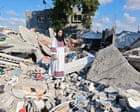
Media coverage of protracted conflict frequently defaults to human-interest portraiture, tracking isolated individuals through a diurnal cycle from dawn to dusk. While narrative journalism serves an empathetic function, it systematically obscures the systemic variables governing survival. Anecdotal observation captures the experiential texture of daily life under blockade or military siege, but it fails to quantify the economic, logistical, and infrastructural failures that dictate whether a population persists or collapses. To understand the operational reality of Gaza under extreme duress, one must strip away episodic storytelling and examine the underlying functional architectures: resource allocation, market degradation, energy rationing, and spatial compression.
Resource allocation during a prolonged blockade ceases to be a market-driven distribution network and instead transitions into a triage economy. When external supply lines are constrained by physical interdiction, naval blockades, and stringent border controls, the velocity of goods drops to a fraction of baseline demand. The economic response to this contraction is predictable: price inflation for basic caloric units, fuel, and medical supplies decouples from local purchasing power.
Households face an immediate operational bottleneck regarding caloric acquisition. In a functioning market, dietary diversity is a function of disposable income. Under siege, dietary diversity collapses into a monoculture dictated by whatever bulk commodities manage to cross checkpoints or persist in local agricultural remnants. The primary operational variable is not preference or nutritional balance, but caloric density per unit of currency. Households must allocate an unsustainable percentage of liquid assets to staple carbohydrates—primarily flour and legumes—while fresh produce, proteins, and fats become luxury assets reserved for elite tiers of the informal economy.
This creates a rigid stratification of survival capacity. The first tier consists of households with diversified liquidity or foreign remittances, who can absorb hyper-inflationary shocks for months. The second tier relies on humanitarian aid distribution, which is itself subject to severe logistical bottlenecks, bureaucratic delays, and route insecurity. The third tier falls into systemic insolvency, where individuals are forced to liquidate non-productive physical assets—appliances, tools, vehicle parts—just to secure daily rations.
Energy infrastructure under prolonged military operations undergoes total systemic decay. When centralized power generation fails due to fuel shortages or physical damage to transmission grids, the population reverts to decentralized, highly inefficient micro-energetics.
The primary energy vector shifts from grid electricity to secondary substitutes: biomass, agricultural waste, and smuggled or rationed liquefied petroleum gas. Each substitution introduces acute operational friction. Cooking with biomass inside densely packed urban environments degrades indoor air quality, precipitating respiratory pathologies that strain a collapsing medical sector. Furthermore, the reliance on makeshift fuel sources accelerates deforestation and the destruction of local infrastructure, as wooden doors, furniture, and structural timber are harvested for thermal energy.
Water and sanitation systems follow a parallel trajectory of degradation. Centralized municipal desalination and pumping stations require continuous power supply and specialized chemical inputs for water treatment. When these inputs are restricted, water supply transitions from a piped utility to a logistical transport problem.
Potable water must be moved via tanker trucks over damaged road networks, introducing severe contamination risks and distribution inequities. The mechanical failure of sewage treatment plants results in the pooling of untreated wastewater in streets and agricultural basins. This introduces a cascading epidemiological threat vector: waterborne pathogens proliferate, while vector-borne diseases surge due to standing water and the collapse of municipal solid waste management. The operational limit of human endurance under these conditions is ultimately bounded not by direct kinetic trauma, but by the cumulative metabolic burden of chronic dehydration, enteric infection, and sleep deprivation caused by structural noise and insecurity.
Spatial compression is perhaps the most immediate physical constraint governing daily existence in Gaza. Military operations and shifting perimeter definitions force displaced populations into shrinking geographic envelopes. This creates hyper-density conditions where the ratio of square meters per capita drops below minimum sanitary and psychological thresholds.
In high-density temporary settlements or overcrowded residential structures, privacy is eradicated, and interpersonal friction rises exponentially. More critically, high population concentration within fixed perimeters creates severe vulnerabilities to kinetic strikes and structural collapse. The architectural topology shifts from multi-story residential blocks to improvised shelters constructed from corrugated metal, plastic sheeting, and salvaged masonry. These structures offer zero thermal insulation and negligible physical protection against blast overpressure or shrapnel.
The psychological toll of spatial compression combined with sensory overload cannot be overstated. Chronic exposure to low-frequency structural vibration, aerial surveillance drones, and the unpredictability of kinetic events induces a state of persistent autonomic arousal. Sleep architecture is fragmented, resulting in cumulative cognitive fatigue. Decision-making capacity degrades, shifting human behavior from strategic long-term planning to immediate tactical reactivity focused purely on the preservation of life over the next twelve-hour cycle.
Labor markets evaporate under the dual pressures of physical destruction and freedom-of-movement restrictions. In a functioning economy, labor generates the capital required for consumption. When industrial, agricultural, and commercial sectors are incapacitated, the traditional employment model is replaced by a subsistence informal economy dominated by scavenging, micro-reselling of humanitarian aid, and manual transport of goods using carts or animal traction.
This informal economy lacks scalability. It is a zero-sum redistribution of diminishing internal resources rather than a generator of wealth. Every transaction carries a high friction cost due to cash shortages, as physical currency becomes scarce and digital banking infrastructure fails alongside telecommunications networks. Consequently, populations rely heavily on informal credit networks, mutual aid collectives, and familial debt-sharing. These social safety nets, while robust in the short term, reach a point of absolute saturation where no household possesses surplus assets to lend.
The institutional capacity to manage this crisis experiences a structural hollowing out. Local governance, municipal services, civil defense, and healthcare systems operate without structural redundancy. Hospitals function as acute triage centers operating in the dark, lacking anesthetic agents, surgical disposables, and reliable backup generation. Medical professionals work continuous shifts under conditions of extreme moral injury, forced to triage patients based on survival probability rather than clinical need due to resource scarcity.
Strategic forecasting under these parameters indicates that recovery cannot be achieved through incremental humanitarian aid injections alone. Short-term relief deliveries address acute caloric deficits, but they fail to repair the underlying systemic failures of the energy grid, water treatment facilities, and economic exchange mechanisms. Sustainable stabilization requires the total restoration of commercial supply chains, unrestricted import of capital equipment for infrastructure repair, free movement of labor and specialized personnel, and the reactivation of formal financial institutions. Until these structural dependencies are systematically addressed, survival will remain an exhausting, daily exercise in managing infrastructural collapse.