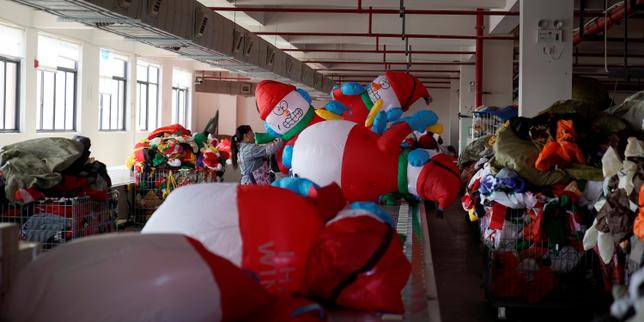
The traditional low-cost manufacturing model for the toy industry—defined by high-volume production in Chinese industrial hubs—has hit a hard ceiling dictated by the volatile cost of petrochemical derivatives. For decades, the industry operated on the assumption that plastic was a negligible commodity cost. That era ended when the convergence of surging oil prices, container shortages, and energy rationing in manufacturing provinces exposed a critical vulnerability: the toy industry is essentially a downstream packaging and molding business with razor-thin margins. When the price of Acrylonitrile Butadiene Styrene (ABS) or Polypropylene (PP) spikes, the entire unit economic model for a $15 retail product collapses.
The Triad of Margin Compression
The current crisis is not a singular event but a structural squeeze caused by three interlocking variables. These variables dictate the landed cost of goods sold (COGS) and determine whether a product line remains viable or becomes a liability.
- Feedstock Correlation: Most toys are comprised of 70% to 90% plastic by weight. The price of these polymers is inextricably linked to Brent Crude and natural gas prices. Unlike the automotive or aerospace sectors, which can absorb material price increases through high-value engineering, the toy industry lacks the price elasticity to pass these costs directly to a consumer base sensitive to the "gift price point" (typically under $25).
- Energy Arbitrage Dissipation: China’s historical advantage was built on cheap coal-fired power and subsidized electricity. As the Chinese government implements stricter environmental mandates and deals with fluctuating coal imports, factory power cuts have become common. This forces manufacturers to operate on "three days on, four days off" schedules, destroying labor efficiency and increasing the fixed cost per unit produced.
- Logistics Asymmetry: Toys are "high volume, low value" cargo. A container filled with high-end electronics might contain $500,000 worth of retail value; a container of plush toys or plastic playsets might only hold $30,000. When ocean freight rates jump from $2,500 to $15,000 per FEU (Forty-foot Equivalent Unit), the shipping cost as a percentage of retail price moves from 5% to nearly 30%, effectively wiping out the manufacturer's profit margin.
Polymer Physics and Economic Reality
To understand the crisis, one must analyze the specific materials involved. Most toys utilize a specific subset of thermoplastics. Each has a distinct price floor and manufacturing requirement.
- Polypropylene (PP): Used for flexible parts and living hinges. It is the workhorse of the industry. Its price is highly sensitive to the global supply of propylene monomer.
- Acrylonitrile Butadiene Styrene (ABS): Used for high-impact, rigid toys like building blocks. ABS is significantly more expensive than PP and its cost is driven by the price of styrene, which is notoriously volatile.
- Polyvinyl Chloride (PVC): Used for figurines and soft dolls. PVC faces increasing regulatory pressure due to phthalate content, forcing manufacturers to switch to even more expensive "eco-friendly" elastomers.
The "plastic storm" is actually a manifestation of the Bullwhip Effect. When resin producers anticipate a shortage, they hike prices. Toy manufacturers, fearing they won't have stock for the Q4 holiday season, over-order. This artificial demand spike further inflates prices, creating a feedback loop that penalizes small and medium-sized enterprises (SMEs) that lack the capital to hedge material costs or secure long-term contracts.
The Failure of "Just-in-Time" in a Fractured Geography
The "Made in China" model relied on a "Just-in-Time" (JIT) philosophy that assumed friction-less borders and stable input costs. This model is now being replaced by "Just-in-Case" (JIC) logic, which is fundamentally more expensive.
The Inventory Carrying Cost Trap
Manufacturers are now forced to hold months of raw resin and finished goods to buffer against supply chain shocks. This ties up massive amounts of working capital. For a company operating on a 10% net margin, doubling inventory holdings can increase financing costs to the point of insolvency.
Geographical Decentralization
We are seeing the beginning of a "China Plus One" strategy. To mitigate the risks of high shipping costs and Chinese energy volatility, brands are looking at:
- Near-shoring: Moving production for the European market to Poland, Turkey, or North Africa, and for the North American market to Mexico.
- Regional Hubs: Instead of one mega-factory in Dongguan, firms are diversifying into Vietnam and India. However, these regions often lack the sophisticated "ecosystem" of China—the specialized mold-makers, paint suppliers, and electronics assemblers that reside within a 50-mile radius in the Pearl River Delta.
The Substitution Myth
A common misconception is that toy companies can simply switch to "bio-plastics" or recycled materials to escape the petrochemical trap. The data suggests otherwise.
- Recycled Content Limitations: Recycled plastic often lacks the structural integrity and color consistency required for toys. More importantly, the supply of high-quality, food-grade or toy-grade recycled resin is limited and often more expensive than virgin plastic due to the high energy costs of sorting and cleaning.
- Bio-plastic Scalability: Materials like Polylactic Acid (PLA) are derived from corn or sugarcane. While they offer a lower carbon footprint, they often have lower melting points and higher brittleness, making them unsuitable for many safety-regulated toy categories. Furthermore, the land-use competition between food and bioplastics makes this a fragile long-term solution.
Quantifying the Value Chain Disruption
If we deconstruct the price of a standard $20 plastic toy manufactured in 2019 versus 2024, the shift in value capture is stark.
2019 Breakdown:
- Materials: $2.00 (10%)
- Labor/Overhead: $3.00 (15%)
- Shipping: $1.00 (5%)
- Marketing/Retail Margin: $10.00 (50%)
- Manufacturer Profit: $4.00 (20%)
2024 Current Projection:
- Materials: $4.50 (22.5%)
- Labor/Overhead: $4.50 (22.5%)
- Shipping: $4.00 (20%)
- Marketing/Retail Margin: $6.00 (30%) - Retailing pricing pressure limits this
- Manufacturer Profit: $1.00 (5%)
This 75% reduction in manufacturer profit margin is unsustainable. It leads to "skimping"—reducing the wall thickness of plastic parts, using cheaper pigments that may fade, or simplifying the mechanical complexity of the toy. This creates a secondary risk: a decline in brand equity as consumers pay more for a lower-quality product.
Structural Pivot: The Digital and Service Integration
The only logical path forward for toy companies is to decouple their revenue from pure material volume. This involves a shift toward "Hybrid Play."
- Physical-to-Digital (Phygital): Selling a smaller, high-quality physical item that serves as a "key" to an expansive digital world. This reduces the plastic weight per dollar of revenue.
- Subscription Models: Transitioning from a transactional model to a "Toy-as-a-Service" model, where high-quality toys are rented, returned, and refurbished. This maximizes the utility of the plastic already in the system.
- Additive Manufacturing (3D Printing): While not yet viable for mass-market high-volume production, 3D printing allows for decentralized, "on-demand" production of replacement parts or custom accessories, eliminating the need for international shipping and massive warehouse inventories.
Strategic Imperative for 2026
The "plastic storm" is not a temporary weather pattern; it is a permanent climate change in the manufacturing sector. Companies that continue to compete on the basis of "volume and low-cost plastic" will be liquidated. The strategy must shift toward Material Efficiency Engineering.
The immediate play is a radical overhaul of product design:
- Hollow-Core Optimization: Utilizing advanced gas-assist injection molding to create parts that use 30% less material without sacrificing structural rigidity.
- Modular Architecture: Designing toy lines where 80% of the components are standardized across the entire brand, allowing for massive bulk-buying of a single resin type and reducing mold-changeover downtime.
- Direct-to-Consumer (DTC) Pivot: Bypassing traditional big-box retailers to recapture the 15-25% margin currently lost to retail "slotting fees" and markups. This provides the necessary buffer to absorb higher feedstock costs without raising the shelf price to the point of consumer rejection.
The future of the toy industry belongs not to the best "toymakers," but to the most sophisticated supply chain orchestrators and material scientists.