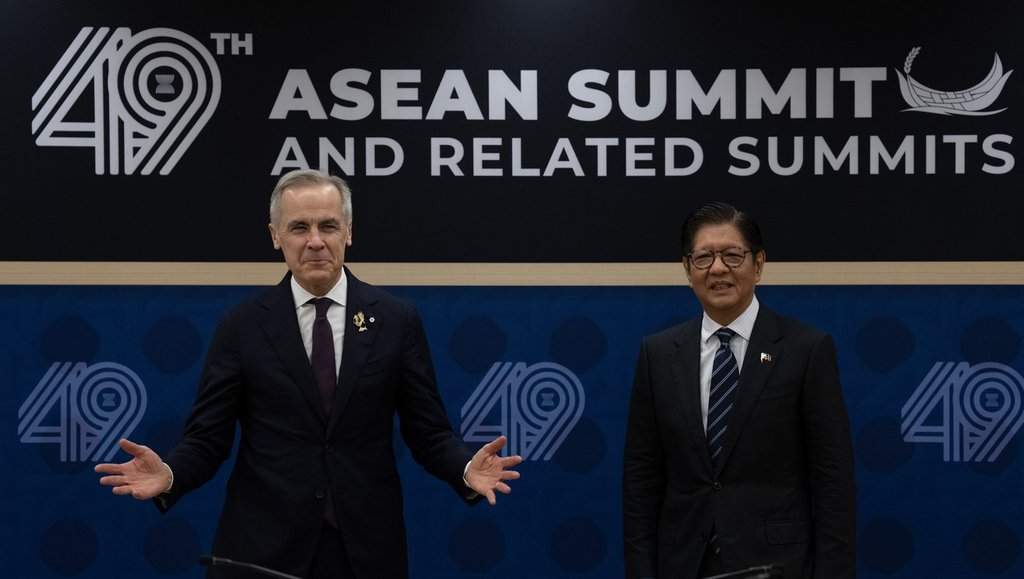
Bilateral trade agreements rarely fail at the negotiation table; they fail in the gap between tariff elimination and domestic supply chain readiness. The conclusion of negotiations for a Canada-Philippines Free Trade Agreement (FTA), targeting a 2027 entry into force, represents a strategic pivot for Ottawa’s Indo-Pacific Strategy and Manila’s industrial diversification. Rather than viewing this pact as a simple reduction in customs duties, corporate strategists and supply chain operators must evaluate it as an exercise in asymmetric factor endowment arbitrage and non-tariff barrier (NTB) compression. The core thesis of this agreement rests on matching Canada’s capital-intensive, resource-rich export base with the Philippines’ labor-abundant, rapidly urbanizing consumer and intermediate manufacturing market—while navigating the severe institutional friction that separates signing a treaty from realizing margin expansion.
The Economic Logic of Bilateral Complementarity
To understand why Ottawa and Manila prioritized a bilateral track alongside broader multilateral frameworks like the ASEAN-Canada FTA negotiations, one must apply the Heckscher-Ohlin model of international trade. Countries export goods that intensively use their abundant factors of production and import goods that intensively use their scarce factors.
Canada possesses high capital-to-labor ratios, vast arable land per capita, advanced clean technology intellectual property, and abundant critical minerals. Conversely, the Philippines operates with a young, expanding labor force, a dominant services export sector (Business Process Outsourcing), and an electronics assembly ecosystem that relies heavily on imported intermediate inputs. Because their export baskets exhibit low overlap, the risk of direct domestic industry displacement is significantly lower than in trade pacts between economies at identical stages of industrial development.
The Four Pillars of Value Creation
Agri-Food and Protein Security Arbitrage
The Philippines faces structural agricultural deficits driven by arable land constraints, typhoon exposure, and rapid population growth. Canadian exports of wheat, canola, pork, beef, and pulses directly address this caloric and protein gap. Under World Trade Organization (WTO) Most-Favored-Nation (MFN) rates, Philippine agricultural tariffs and tariff-rate quotas (TRQs) impose heavy landed-cost penalties on North American producers, placing them at a disadvantage against competitors operating under the ASEAN-Australia-New Zealand Free Trade Area (AANZFTA) or the Regional Comprehensive Economic Partnership (RCEP). Eliminating or expanding TRQs under a bilateral FTA immediately alters the price competitiveness of Canadian agribusiness.Critical Minerals and Clean Energy Supply Chains
The Philippines holds substantial reserves of nickel, copper, and cobalt—inputs essential for electric vehicle batteries and grid-scale storage. Canada possesses deep mining finance expertise, environmental remediation technologies, and processing capabilities. An FTA establishes investment protection protocols and reduces duties on mining equipment and clean-tech transfers, enabling Canadian firms to participate in upstream and midstream mineral development while helping Manila move beyond raw ore exports.Services Mobility and Digital Trade
Standard trade reporting focuses heavily on merchandise, yet the Canada-Philippines corridor is deeply anchored in services and human capital. The Philippines is a global hub for IT-BPM (Information Technology and Business Process Management), while Canada faces chronic labor shortages in healthcare, engineering, and skilled trades. A modern FTA codifies cross-border data flows, prohibits data localization mandates, and establishes mutual recognition frameworks for professional credentials, reducing transaction costs for Canadian enterprises offshoring back-office operations to Manila or Cebu.Light Manufacturing and Electronics Integration
Semiconductors and electronic integrated circuits account for the majority of Philippine merchandise exports. While electronics already enjoy low tariffs globally under the WTO Information Technology Agreement (ITA), ancillary sectors—such as aerospace components, garments, processed foods, and medical devices—face tariff escalation in North American markets. Preferential access into Canada allows Philippine manufacturers to diversify away from single-market concentration without relying solely on unilateral preference schemes like Canada’s General Preferential Tariff (GPT), which is subject to periodic legislative renewal and unilateral revocation.💡 You might also like: Starmer’s Blame Game and the Myth of Imported Energy Poverty
Deconstructing the 2027 Implementation Timeline
A concluded negotiation is a political milestone, not an operational reality. The gap between concluding talks and the 2027 target for entry into force involves a rigid sequence of legal, legislative, and administrative bottlenecks. Operational leaders planning capital allocation around this treaty must account for four distinct phases of friction.
Legal Scrubbing and Translation
Once negotiators close the text, trade lawyers conduct a comprehensive "legal scrub" to eliminate internal contradictions, align tariff schedules using the latest Harmonized System (HS) nomenclature, and ensure consistency across English and French versions (a constitutional requirement in Canada). For complex bilateral agreements covering 20 to 30 chapters, this phase routinely consumes six to nine months.
Domestic Ratification Mechanics
In Canada, treaty ratification requires tabling the agreement in the House of Commons for 21 sitting days, followed by the passage of implementing legislation through both the House and the Senate, and finally Royal Assent. Parliamentary calendar disruptions, minority government dynamics, or committee scrutiny over labor and environmental chapters can easily add six to twelve months to this timeline.
In the Philippines, the 1987 Constitution requires Senate concurrence by a two-thirds majority vote for any treaty or international agreement to become valid and effective. The Philippine Senate historically scrutinizes agricultural market access concessions aggressively, given the political sensitivity of domestic rice, pork, and poultry farming lobbies. Securing a two-thirds supermajority requires significant political capital from the executive branch.
Customs Administration and Rules of Origin Readiness
Even after legislative ratification, the treaty cannot enter into force until both nations exchange diplomatic notes certifying that their domestic customs agencies have updated their electronic clearance systems. The Bureau of Customs (BOC) in the Philippines and the Canada Border Services Agency (CBSA) must program thousands of new tariff lines, phase-out schedules, and origin verification protocols.
The Friction Function Why Tariff Cuts Fail Without Operational Execution
The central flaw in superficial trade analysis is equating a 0% statutory tariff rate with frictionless trade. In practice, utilization rates of free trade agreements—the percentage of eligible trade that actually claims preferential tariff treatment—often fall below 60% in the first three years of implementation. Three structural mechanisms explain this gap.
Rules of Origin (RoO) Compliance Costs
To prevent third-party nations (such as China or Vietnam) from routing goods through the Philippines to enter Canada duty-free—a practice known as trade deflection—the FTA enforces strict Rules of Origin. Exporters must prove that a product underwent "substantial transformation" within the partner country, typically measured via a Change in Tariff Classification (CTC) or a Regional Value Content (RVC) threshold.
Consider a Philippine manufacturer assembling mid-tier consumer appliances using printed circuit boards from Taiwan, plastics from South Korea, and sheet metal from Japan. If the FTA mandates a 45% RVC threshold, the manufacturer’s compliance team must audit every bill of materials, track currency fluctuations that alter component cost ratios, and maintain auditable supplier declarations. If the cost of compliance and audit risk exceeds the 5% to 8% MFN tariff savings, rational logistics managers will simply pay the standard MFN duty and bypass the FTA entirely.
Sanitary and Phytosanitary (SPS) Bottlenecks
For Canadian agricultural exporters, tariffs are rarely the primary barrier; Sanitary and Phytosanitary (SPS) measures are. Inspection protocols, pest risk assessments, facility accreditation delays, and divergent maximum residue limits (MRLs) for pesticides and veterinary drugs frequently halt shipments at port. Unless the FTA establishes binding, science-based dispute resolution mechanisms and accelerated mutual recognition of inspection systems, customs clearance delays at the Port of Manila will erode the shelf life and profit margins of perishable Canadian exports.
Infrastructure and Cold-Chain Deficits
Trade policy cannot compensate for physical logistics bottlenecks. Moving refrigerated protein or temperature-sensitive pharmaceuticals from Canadian ports like Vancouver or Prince Rupert to secondary cities in the Philippines exposes cargo to severe inter-island shipping fragmentation and cold-storage deficits. High domestic logistics costs within the Philippine archipelago—often accounting for over 20% of final retail prices—can neutralize a 10% to 15% reduction in import tariffs.
Strategic Risk Factors and Structural Limitations
No bilateral trade agreement operates in a geopolitical or macroeconomic vacuum. Strategists modeling the 2027 rollout must account for three systemic vulnerabilities that limit the upside of this pact.
- Preference Erosion via Parallel Agreements: Canada is simultaneously negotiating a broader ASEAN-Canada Free Trade Agreement. If the ASEAN-wide deal concludes shortly after the bilateral pact and offers comparable market access with cumulative Rules of Origin across all ten ASEAN member states, supply chains will favor the regional agreement. Cumulative RoO allow manufacturers to source inputs from Thailand, Malaysia, and Indonesia and still count them as originating content—an advantage a strictly bilateral Canada-Philippines pact cannot match.
- Geopolitical Supply Chain Realignment: Both Ottawa and Manila face intense pressure to de-risk supply chains from geopolitical adversaries. While this alignment drove the political will to conclude negotiations, it also introduces strict scrutiny over foreign direct investment (FDI) and beneficial ownership. Philippine firms with significant third-country equity stakes may face exclusion from FTA benefits under "Denial of Benefits" clauses designed to block state-owned or state-subsidized entities from third nations.
- Currency Volatility and Landed Cost Instability: Trade margins between the Canadian Dollar (CAD) and the Philippine Peso (PHP) remain exposed to divergent central bank monetary policies. A 10% depreciation of the Peso against the Dollar instantly wipes out a 10% tariff reduction for Philippine importers buying Canadian wheat or industrial machinery.
The Pre-2027 Corporate Execution Playbook
Waiting until the treaty enters into force in 2027 to adjust supply chain architecture cedes first-mover advantage to faster competitors. Procurement, tax, and supply chain leaders operating across North America and Southeast Asia should execute four concrete steps over the next 18 months.
- Audit HS Codes Against MFN vs. Preferential Spreads: Map your current and projected product portfolio at the 6-digit and 8-digit Harmonized System levels. Identify products where the spread between existing MFN tariffs and projected FTA rates exceeds 5%. Focus compliance engineering exclusively on high-spread SKUs; ignore low-spread items where administrative overhead outweighs duty savings.
- Re-Architect Bills of Materials (BoM) for Origin Qualification: For manufacturers exporting from the Philippines to Canada, conduct a mock Regional Value Content audit using standard 40% to 50% thresholds. Where non-originating inputs push a product below the threshold, qualify alternative domestic or Canadian component suppliers now so vendor onboarding is complete before the treaty takes effect.
- Establish Bonded Warehousing and Cold-Chain Partnerships: Canadian agri-food and industrial exporters should secure pre-cleared bonded warehouse space and accredited cold-storage partnerships in Luzon and Mindanao prior to 2027. Securing physical throughput capacity early prevents your goods from sitting in port congestion while competitors struggle with customs clearance.
- Draft Flexible Incoterms into Multi-Year Contracts: Ensure all supply contracts extending into 2027 and 2028 explicitly allocate tariff savings and compliance liabilities. Avoid rigid Delivered Duty Paid (DDP) pricing structures that lock in pre-FTA tariff assumptions; instead, insert tariff-adjustment clauses that split duty reductions or tie pricing directly to verified customs clearance rates upon entry into force.