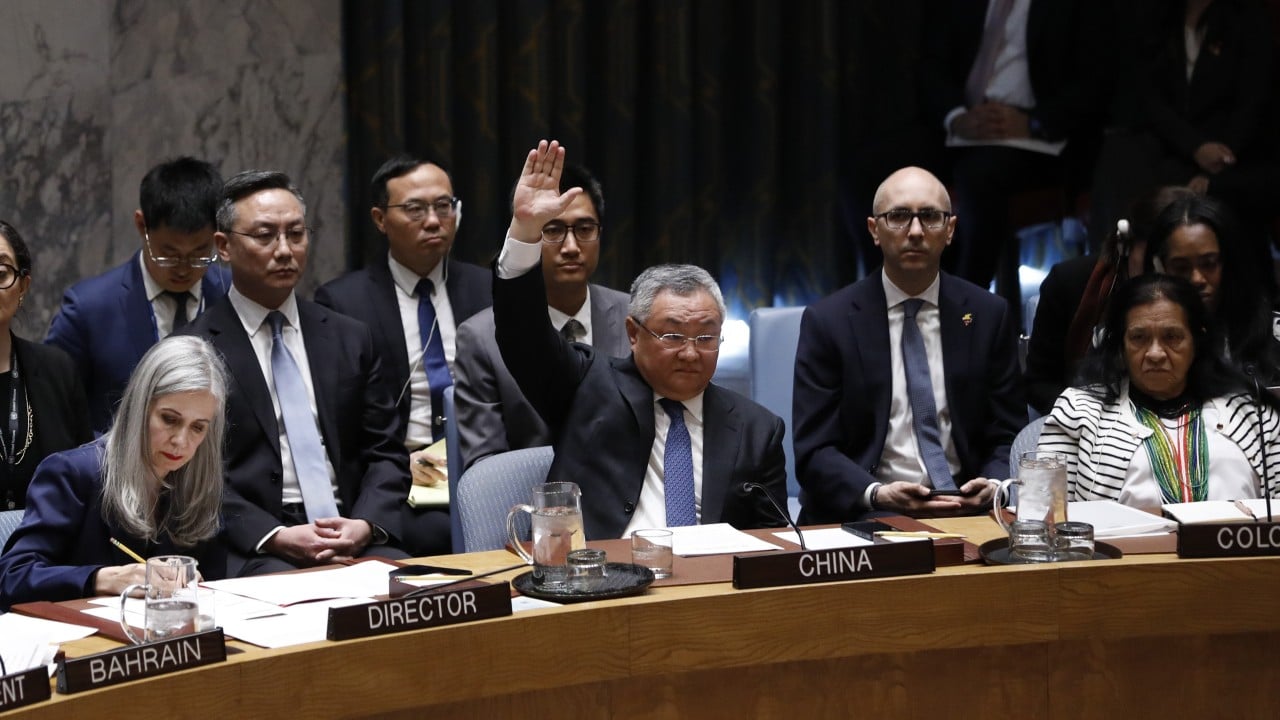
China’s recent diplomatic pressure on Iran to secure shipping in the Strait of Hormuz exposes a fundamental friction between Beijing’s "Belt and Road" trade requirements and Tehran’s "Axis of Resistance" strategy. While the 25-year Comprehensive Strategic Partnership is often framed as a unified anti-Western bloc, a cold analysis of maritime logistics and energy security reveals that China’s interests are more closely aligned with global status quo stability than with Iran’s regional brinkmanship. The Strait of Hormuz functions as the primary pressure valve for the Chinese economy; any restriction of flow there represents an existential threat to Chinese domestic social stability.
The Asymmetric Dependency Matrix
The relationship between China and Iran is defined by a deep structural imbalance in risk tolerance. For Iran, the ability to threaten the closure of the Strait of Hormuz is a primary instrument of national power—a low-cost asymmetric tool used to offset conventional military weaknesses. For China, however, the Strait is a critical infrastructure node that cannot be compromised without triggering a catastrophic failure in its industrial supply chain.
The dependency can be categorized into three distinct layers:
- The Energy Throughput Requirement: China imports roughly 10 million to 11 million barrels of crude oil per day. Approximately 40% of this volume passes through the Strait of Hormuz. Unlike the United States, which has achieved a high degree of energy independence through shale production, China remains a net importer. Any disruption in Hormuz forces China to compete for spot-market cargoes in the Atlantic basin, driving up global prices and depleting foreign exchange reserves.
- The Infrastructure Lock-in: China has invested billions in the China-Central Asia-West Asia Economic Corridor. While these land-based routes are designed to bypass maritime chokepoints, they currently lack the capacity to replace the massive volumes moved by Very Large Crude Carriers (VLCCs). The "Malacca Dilemma" and the "Hormuz Vulnerability" are twin constraints that dictate China's cautious approach toward its Middle Eastern partners.
- The Credit-Buyer Relationship: China is the largest purchaser of Iranian oil, often buying at a steep discount to Brent or Dubai benchmarks. This creates a "monopsony" effect where China has significant leverage over Iranian revenue. When Beijing calls for "restraint," it is not a request; it is a signal from the primary financier that the costs of regional escalation are beginning to outweigh the benefits of cheap, sanctioned oil.
The Conflict of Strategic Objectives
Iran’s regional strategy relies on "controlled instability." By empowering proxies and threatening maritime traffic, Tehran forces international concessions. Conversely, China’s global strategy is "predictable connectivity." The Chinese Communist Party’s legitimacy is tied to consistent GDP growth, which requires the friction-less movement of goods.
This creates a Strategic Misalignment Gap:
- Iran's Goal: Maximize the "Risk Premium" of the Persian Gulf to deter Western intervention.
- China's Goal: Minimize the "Risk Premium" to keep insurance rates and shipping costs low.
When Iranian-backed Houthi forces or Iranian naval assets disrupt traffic, they inadvertently tax Chinese exports. While Beijing may enjoy the spectacle of the U.S. Navy being stretched thin in the Red Sea or the Gulf, the second-order effects—increased freight rates, diverted vessels, and higher fuel costs—hit the Chinese manufacturing sector directly. This is the "Parasitic Cost of Proxy Warfare" that Beijing is now seeking to mitigate.
The Three Pillars of Chinese Maritime De-escalation
China does not use the Western playbook of "Freedom of Navigation" operations (FONOPs). Instead, it employs a tri-fold strategy of economic coercion, diplomatic signaling, and institutional hedging.
I. The Mechanism of Targeted Communication
China’s "shuttle diplomacy" in the Middle East operates through the Ministry of Foreign Affairs but is underpinned by the Ministry of Commerce. When Chinese officials meet their Iranian counterparts, the conversation focuses on the Cost Function of Escalation. Beijing likely highlights that if shipping risks continue to rise, Chinese state-owned enterprises (SOEs) will be forced to reconsider long-term infrastructure investments in Iranian ports like Chabahar. This isn't a political threat; it is a commercial reality based on risk-assessment models used by Chinese insurers and shipping giants like COSCO.
II. Regional Multilateralism as a Buffer
By brokering the Saudi-Iran rapprochement, China sought to create a regional environment where Iran’s neighbors—not the U.S.—hold Tehran accountable for maritime disruptions. If Iran closes the Strait, it hurts Saudi Arabia, the UAE, and Kuwait—all of whom are critical partners in China’s energy security. By embedding Iran into a web of regional economic dependencies, China effectively outsources the "policing" of Iranian behavior to the Gulf Cooperation Council (GCC) states.
III. The "Passive Security" Model
China relies on its "neutrality" as a form of armor. It expects its vessels to be granted safe passage because it provides the economic lifeline for the region's anti-Western actors. However, the rise of drone warfare and non-state actors (like the Houthis) has proven that "neutrality" is not a physical barrier to a loitering munition or a naval mine. This realization has forced China to move from passive observation to active, albeit quiet, mediation.
Quantifying the Limits of the 25-Year Agreement
The 25-year Comprehensive Strategic Partnership is frequently misunderstood as a military alliance. In reality, it is a framework for energy-for-infrastructure swaps. The agreement lacks a "Mutual Defense" clause, meaning China has no legal or strategic obligation to support Iran in a conflict that results from Iranian provocation in the Strait of Hormuz.
The limitations of this tie are codified in China’s Risk Mitigation Framework:
- Sanction Avoidance: Despite the partnership, major Chinese banks (such as ICBC and BOC) remain extremely cautious about dealing with sanctioned Iranian entities. They prioritize access to the SWIFT system and the U.S. dollar over marginal gains in the Iranian market.
- Energy Diversification: China has aggressively increased imports from Russia (via the ESPO pipeline) and Central Asia. Every barrel of oil that enters China via a pipeline reduces Iran’s leverage. Iran is a "swing supplier" for China—useful for its price and its location outside of U.S. control, but not indispensable.
- The Technology Bottleneck: Iran requires Chinese technology for its oil field modernization and surveillance capabilities. China controls the flow of this technology. If Iran’s actions in the Strait threaten the global economic order, China can simply slow the export of dual-use technologies or spare parts for Iran’s aging energy infrastructure.
The Strait of Hormuz as a Zero-Sum Variable
In geopolitical modeling, the Strait of Hormuz is often treated as a "binary" variable: open or closed. For China, it is a "gradient" variable. Even if the Strait remains technically open, a 15% increase in insurance premiums for tankers or a 10-day delay in delivery schedules constitutes a significant economic "leak" in China’s industrial engine.
The current friction points to a maturing of Chinese foreign policy. Beijing is moving away from the "Free Rider" era, where it benefited from U.S.-guaranteed maritime security while criticizing U.S. hegemony. It is now entering an "Active Stakeholder" phase, where it must directly confront the disruptive behaviors of its own "partners" when those behaviors threaten the flow of global capital.
Strategic Calculation for Global Markets
The internal logic of the CCP suggests that China will continue to provide Iran with enough economic support to prevent regime collapse—which would create a pro-Western vacuum—but will never provide enough support to embolden Iran to the point of a full maritime shutdown.
Investors and analysts should view China's calls for "opening the Strait" not as a sign of weakening ties, but as an assertion of Chinese primacy in the relationship. China views Iran as a junior partner in a larger Eurasian integration project. If the junior partner threatens the integrity of the project's central arteries, the senior partner will intervene through financial and technological throttling.
The move toward a "renminbi-denominated" oil trade further complicates this. As China seeks to internationalize the Yuan (RMB), it needs a stable, high-volume energy market. A chaotic, combat-heavy Persian Gulf is the single greatest obstacle to the "Petroyuan." Consequently, China’s primary strategic play is to transform the Strait of Hormuz from a "Geopolitical Weapon" held by Iran into a "Regulated Tollway" managed through Chinese economic influence.
The final strategic pivot is clear: Beijing will prioritize the integrity of the global maritime commons over the tactical maneuvers of the Iranian Revolutionary Guard Corps. Expect a continued increase in "Security Cooperation" between China and the GCC, specifically in the realm of maritime surveillance and port security, as a means to check Iranian volatility without requiring a permanent Chinese carrier strike group in the region.