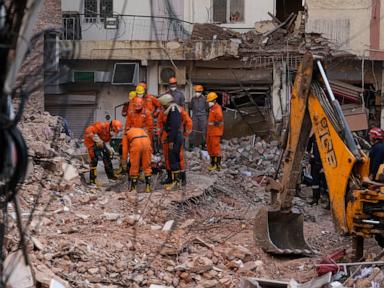
Urban infrastructure failures do not materialize at the moment of impact. They represent the culmination of delayed maintenance, unpermitted structural modifications, and institutional negligence converging on aging load-bearing systems. The collapse of a multi-storey structure in the Satya Niketan district of New Delhi, which operated as a student housing facility, illustrates the catastrophic breakdown of urban risk management. Analyzing this event requires looking past immediate operational updates to examine the structural mechanics, economic pressures, and regulatory vulnerabilities that govern densely populated student hubs.
The Mechanics of Material Fatigue and Foundation Failure
Aging structures degrade through predictable chemical and physical processes. Properties built decades ago were designed under historical load assumptions that rarely accounted for vertical expansion or heavy tenant partitioning. When a building comprising a basement and multiple upper levels undergoes unauthorized additions, the safety margins diminish rapidly.
The immediate catalyst identified in the Delhi collapse involved water accumulation within the basement combined with ongoing, unmonitored structural renovation work. Water infiltration undermines foundation soils, reducing bearing capacity through saturation and hydrostatic pressure. Simultaneously, excavation or cutting into foundational columns during renovations alters load distributions.
When structural integrity is already compromised by decades of material fatigue—such as carbonation of concrete or corrosion of internal reinforcement bars—even minor excavations can trigger progressive collapse. Load shifts to adjacent weakened columns, which fail sequentially in a chain reaction.
The Economic Drivers of High-Density Conversions
The concentration of educational institutions near Delhi University's South Campus creates intense demand for student housing. Institutional hostels cover only a fraction of the student body, forcing incoming populations into private residential conversions. This supply-demand imbalance generates powerful financial incentives for property owners to maximize usable floor space.
Residential buildings originally engineered for single-family loads undergo unauthorized vertical extensions and internal compartment modifications to maximize tenant capacity. Rooms are subdivided with heavy masonry walls, and basements are repurposed for commercial or utility use without engineering oversight. The economics of the paying-guest accommodation market reward maximum occupancy while penalizing capital expenditure on structural maintenance. Property owners routinely defer maintenance costs until structural degradation reaches a critical threshold.
Institutional Blind Spots and Regulatory Enforcement Deficits
Urban safety relies on continuous enforcement by municipal authorities. The administrative response to the Satya Niketan collapse—featuring the immediate suspension of multiple municipal engineering and administrative officials—highlights systemic vulnerabilities in oversight frameworks.
Regulatory agencies often operate reactively rather than proactively. Inspection regimes depend on complaints or visible violations, missing the gradual degradation of internal structural elements. Furthermore, informal real estate markets frequently bypass municipal approval processes for internal modifications. When enforcement agencies lack the staffing density or technical instrumentation to audit aging structures systematically, unauthorized alterations proceed unchecked. The imposition of sealing drives and retrospective bans on structures exceeding specific height thresholds functions as a blunt instrument applied only after catastrophic failure exposes regulatory inaction.
Mitigating Systemic Urban Vulnerability
Preventing future structural failures requires shifting from reactive punitive measures to predictive asset management. Municipal authorities must implement mandatory periodic structural audits for buildings repurposed for high-density public use, such as student hostels, nursing homes, and coaching centers.
Property certification should depend on non-destructive testing of concrete strength, reinforcement corrosion mapping, and geotechnical foundation assessments. Establishing a centralized registry of structural alterations and penalizing unauthorized basement excavations will directly target the primary technical precursors of progressive collapse. Without institutionalizing proactive engineering oversight, urban centers will continue to trade structural safety for high-density housing capacity.
Rescue operations continue after student hostel collapses in New Delhi
This video provides on-the-ground footage and context regarding the ongoing rescue operations and emergency response following the building collapse in New Delhi.