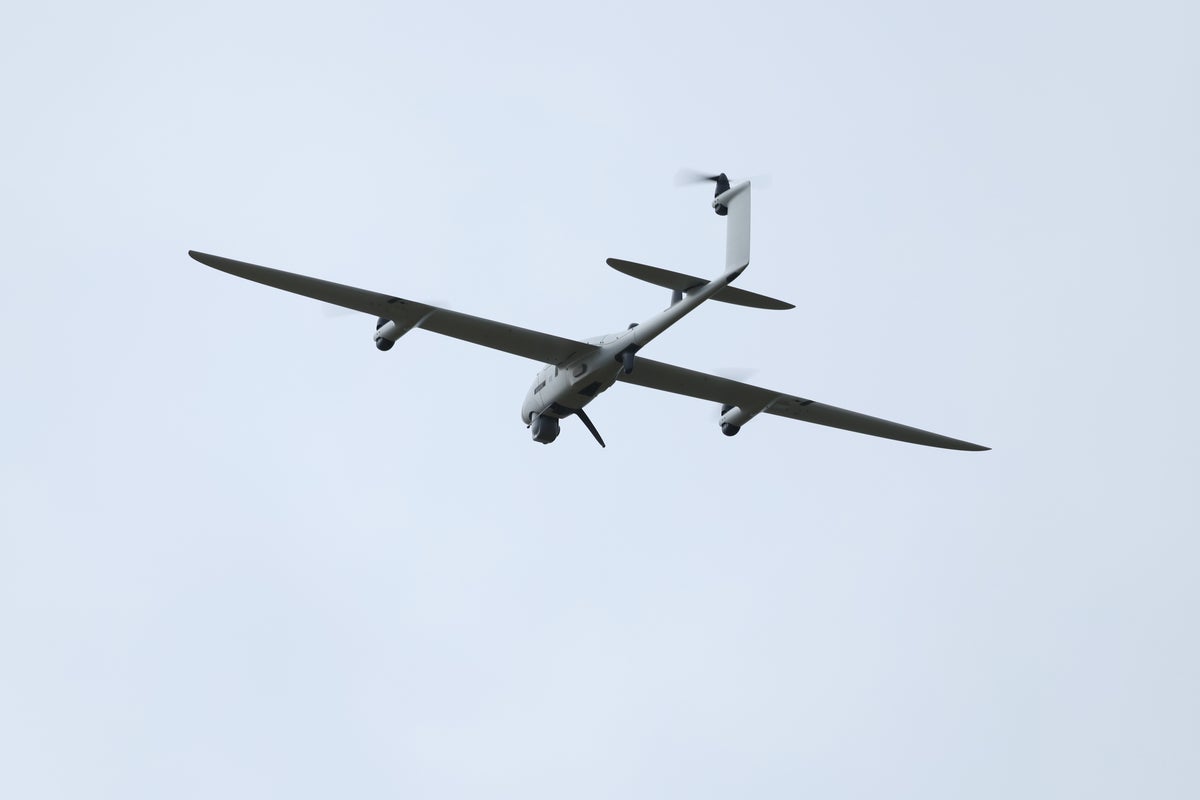
The institutional machinery of modern defense policy operates through organizational inertia rather than empirical adaptation. When the United States Army announced the structural rollback of the 3rd Battalion, 504th Parachute Infantry Regiment—an elite experimental unit designated to study and execute Ukrainian-style drone warfare within the 173rd Airborne Brigade—public discourse fractured into predictable political outrage. Commentators framed the decision as a willful blindness to the realities of modern attrition, pointing to the skies over Eastern Europe where first-person view systems systematically neutralize multi-million dollar armor.
This critique misdiagnoses the structural mechanics of military transformation. The dissolution of an isolated experimental battalion does not inherently signal the rejection of uncrewed warfare. Rather, it exposes a fundamental institutional tension: the friction between centralized boutique experimentation and the imperative of force-wide integration. Evaluating this operational pivot requires moving past political noise to examine the systemic costs, doctrine distribution models, and organizational bottlenecks governing force design.
The Structural Limits Of Boutique Experimentation
Establishing a single, isolated elite unit to absorb and operationalize lessons from an active foreign conflict creates an organizational illusion of progress. In November, the Army carved out a 600-soldier element tasked with building, testing, and deploying specialized uncrewed aerial systems. This model assumes that technological adaptation can be successfully quarantined within a bespoke formation while the broader institutional baseline remains conventional.
Economic and operational history demonstrates the fallacy of this approach. When an organization concentrates specialized capability into a single niche formation, it creates three distinct systemic failures:
- The Distribution Bottleneck: Lessons learned in a localized laboratory do not automatically diffuse across legacy brigade combat teams. The specialized unit develops proprietary standard operating procedures that fail to translate to conventional infantry or armored formations lacking identical organic engineering support.
- The Centralization Vulnerability: In a peer-to-peer conflict, a specialized uncrewed assault battalion becomes a high-value target. Concentrating all institutional expertise in drone design, counter-jamming, and electronic warfare into a single point of failure invites asymmetric targeting by adversaries proficient in signals intelligence.
- The Skill Degradation Trade-off: Units like the 173rd Airborne Brigade maintain core mandates centered on forced-entry parachute assaults. Dual-hatting elite airborne infantry to function simultaneously as software developers, electrical engineers, and tactical drone pilots generates chronic competency dilution. Soldiers cannot master the physics of vertical envelopment while simultaneously maintaining proficiency in rapid tactical spectrum dominance.
The Cost Function Of Institutional Integration
The transition of the experimental drone battalion back to traditional airborne infantry roles coincides with a broader shift in doctrine articulated by acting Army leadership under General Christopher LaNeve. The strategic pivot dictates that uncrewed systems must not belong to a privileged caste of specialists; instead, capabilities must saturate every tactical echelon down to the squad level.
This approach mirrors past military paradigm shifts. When the U.S. military confronted the emergence of cyber warfare, initial efforts were characterized by fragmented, independent experimental units across disparate commands. True operational capability only emerged when specialized stovepipes were dismantled and foundational digital defense literacy was integrated into standard professional military education.
The economics of modern attritional warfare reinforce this structural logic. As analytical assessments from defense research institutions indicate, low-cost uncrewed aerial systems frequently require high repetition densities to achieve effects against hardened positions. If operational doctrine relies on a bespoke battalion to execute these missions, scale is mathematically impossible. The logistical footprint required to sustain a specialized unit inhibits mass deployment. Dispersing drone manufacturing, tactical programming, and deployment authorization across every conventional platoon transforms uncrewed assets from luxury tools into consumable infantry munitions.
Operational Friction And Leadership Dynamics
Beneath the doctrine lies an internal institutional contest over institutional azimuth. The creation of the specialized drone battalion was driven by outgoing civilian and military leadership under the banner of the Army Transformation Initiative. Leadership changes at the Pentagon frequently result in a structural audit of predecessor programs. When administrative priorities shift from rapid, top-down boutique prototyping to a focus on foundational soldiering fundamentals and multi-domain defense against enemy uncrewed systems, experimental formations established under prior regimes face immediate viability reviews.
Critics argue that dismantling any structure touching Ukrainian tactical lessons amounts to strategic regression. This perspective overlooks the stated mandate of the experimental unit's deployment cycle. Large-scale exercises in Germany served as a designated culminating evaluation event. The objective was never permanent operational stasis; it was data extraction. The tactical data, software adaptations for frequency hopping, and field-improvisation blueprints generated over the operational window are intended for ingestion by force design command elements rather than perpetual retention by a single parachute regiment.
The Strategic Play
To prevent capability loss following the dissolution of the experimental battalion, force architects must institutionalize three distinct operational mechanics:
- Codify Distributed Procurement: Shift acquisition authority for micro-uncrewed systems from centralized program executive offices down to brigade-level commanders, bypassing multi-year bureaucratic validation cycles.
- Mandate Cross-Functional Curriculum: Embed mandatory tactical uncrewed aerial systems operation, spectrum awareness, and counter-drone kinetic mitigation into standard basic combat training and infantry schoolhouses rather than reserving them for elite units.
- Decouple Innovation From Force Structure: Maintain dedicated testing laboratories staffed by civilian contractors and technical researchers to iterate hardware and software updates continuously, feeding modular packages directly to conventional formations without requiring structural reorganization of combat brigades.
The test of military modernization is not the longevity of any single specialized battalion, but the velocity at which tactical innovations from active conflict zones are metabolized into standard operating procedure across the entire force structure.
https://www.youtube.com/watch?v=8RNPYLQkzzo
This video provides a detailed breakdown of the Army's experimental drone unit closure, analyzing reporting from major defense publications and examining how the military plans to integrate uncrewed systems across conventional formations.


