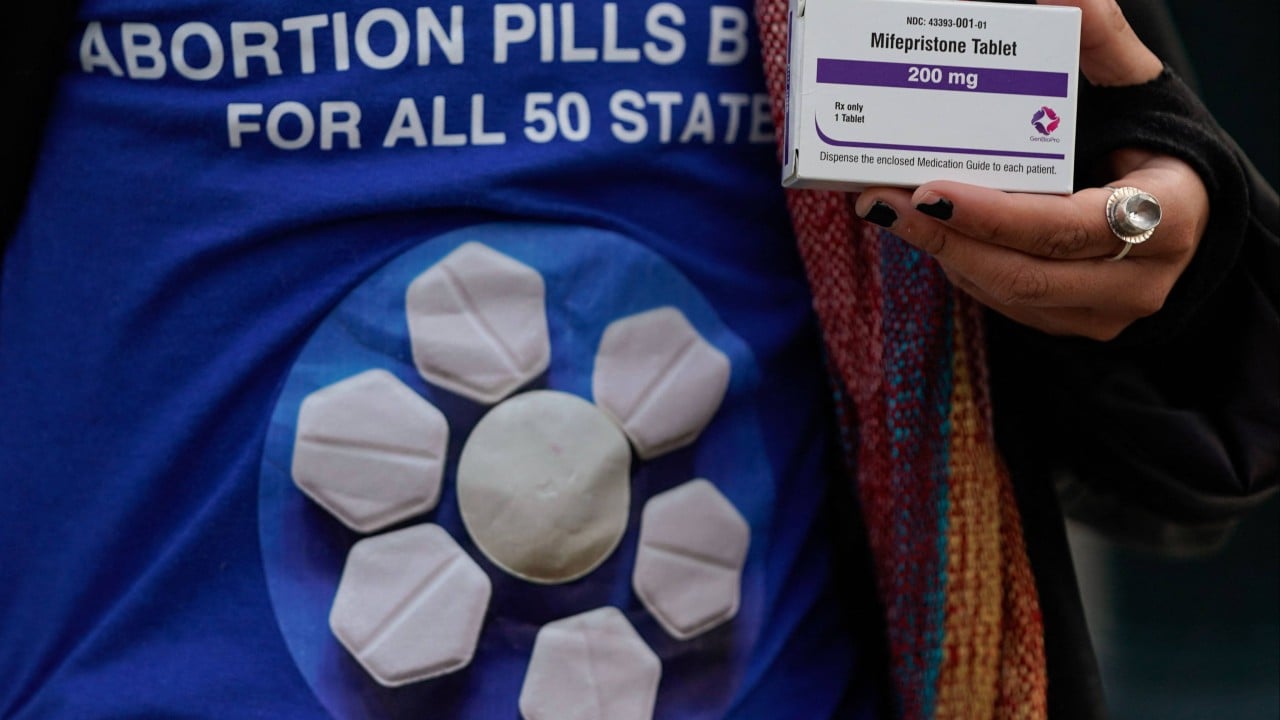
The United States Supreme Court decision to maintain access to mifepristone rests not on the moral or medical validity of abortion, but on the rigorous application of Article III standing—the constitutional requirement that a plaintiff must prove direct, concrete injury to bring a case. In FDA v. Alliance for Hippocratic Medicine, the Court identified a fundamental disconnect between the plaintiffs' ideological opposition and their legal right to sue. This ruling functions as a fortification of the administrative state, preventing federal courts from becoming "open forums" for policy disputes disguised as litigation. By rejecting the challenge to the Food and Drug Administration's (FDA) 2016 and 2021 regulatory relaxations, the Court preserved a predictable framework for pharmaceutical oversight while signaling a high barrier for future "conscience-based" standing claims.
The Three Pillars of the Standing Deficiency
The plaintiffs—a group of pro-life medical associations and doctors—argued that the FDA’s decisions to allow mail-order delivery and expand the gestational limit for mifepristone caused them harm. Justice Kavanaugh’s unanimous opinion dismantled this argument by categorizing the alleged injuries into three failed logical silos.
- The Conscience Gap: The doctors argued they might be forced to complete abortions in emergency rooms against their religious or moral beliefs. The Court countered that existing federal law already provides robust conscience protections. Because the plaintiffs could not identify a specific instance where a doctor was forced to perform an abortion despite these protections, the "injury" remained theoretical.
- The Economic Distortion: Plaintiffs claimed that mifepristone complications diverted their time and resources. The Court rejected this "probabilistic standing." If every doctor could sue a regulator because a drug's side effects might lead to more patients in the ER, the entire regulatory system would collapse under a perpetual cycle of litigation from every sector of the medical field.
- The Downstream Casualty Fallacy: The argument that the FDA’s actions made it harder for doctors to practice medicine was deemed too attenuated. For standing to exist, the injury must be "fairly traceable" to the defendant’s conduct. The Court found the link between the FDA’s 2016/2021 changes and the specific daily operations of these doctors to be statistically and legally insufficient.
Deconstructing the Regulatory Timeline and FDA Discretion
The core of the dispute involved the FDA’s iterative easing of the Risk Evaluation and Mitigation Strategy (REMS) for mifepristone. Understanding the technical shifts is vital to grasping why the Court viewed the challenge as a policy disagreement rather than a legal violation.
- 2000 Initial Approval: Mifepristone was approved under strict conditions, including a three-visit requirement and a seven-week gestational limit.
- 2016 Modifications: The FDA increased the gestational limit to ten weeks, reduced the number of required office visits from three to one, and allowed non-physician healthcare providers to prescribe the drug.
- 2021/2023 Permanent Mail-Order Access: During the COVID-19 pandemic, the FDA paused the "in-person dispensing" requirement, a change later made permanent. This allowed the drug to be prescribed via telehealth and delivered by mail.
The plaintiffs sought to roll back these specific changes, arguing the FDA ignored safety data. However, the legal hurdle was not whether the FDA was "right" in its scientific assessment, but whether the plaintiffs were the right parties to challenge it. The Court’s refusal to reach the merits of the FDA’s scientific process reinforces the principle of Administrative Deference. In the absence of a plaintiff with a "concrete stake," the executive branch retains the authority to calibrate drug safety protocols based on internal agency data without judicial second-guessing.
The Cost Function of Third-Party Standing
The case attempted to establish a dangerous precedent: that a person or organization can sue over a government action because they believe that action encourages third parties to act in ways that offend the plaintiff. If the Court had accepted the Alliance for Hippocratic Medicine’s logic, the "Cost Function" of governing would have shifted toward total paralysis.
- Environmental Context: If an organization could sue the EPA because a new regulation might lead to a third-party factory increasing its output—thereby causing the organization's members psychological distress—the EPA would be unable to finalize any rules.
- Economic Context: If a business group could sue the Treasury because a tax change might influence consumer behavior in a way that indirectly shifts market dynamics, the stability of the financial system would be compromised.
By insisting that "desire to make a drug less available for others" does not constitute a personal injury, the Court insulated the pharmaceutical industry from a specific type of ideological litigation that could have otherwise threatened the market lifespan of any controversial medication, from vaccines to contraception.
The Mechanism of Federal Conscience Protections
A critical component of the Court’s reasoning was the existing statutory framework that shields healthcare workers. The Emergency Medical Treatment and Labor Act (EMTALA) and the Church Amendments provide a legal buffer that the plaintiffs failed to account for in their risk modeling.
The Church Amendments, enacted in the 1970s, explicitly prohibit hospitals receiving federal funds from requiring individuals to perform or assist in abortions if it violates their religious or moral convictions. The Court’s logic dictates that these protections are "on-off" switches. If a doctor has a conscience objection, they flip the switch to "off" and do not perform the procedure. Therefore, the FDA’s regulation of a drug—which takes place miles away from that doctor’s individual conscience—cannot be seen as the "cause" of a violation that is already legally prohibited.
Identifying the Bottleneck for Future Challenges
While this ruling is a victory for the FDA and proponents of mifepristone access, it is a procedural victory, not a substantive one. The "bottleneck" for abortion access remains the state-level legislative environment.
The Court’s decision was "without prejudice" to the underlying arguments regarding the Comstock Act—an 1873 law that prohibits the mailing of "obscene" or "lewd" materials, including drugs used for abortion. Because the Court dismissed the case on standing, it avoided interpreting whether the Comstock Act currently forbids the mailing of mifepristone. This creates a strategic vacuum. Future litigation, perhaps brought by states (who have different standing requirements than private doctors) or by the Department of Justice, will eventually force a confrontation with this nineteenth-century statute.
Strategic Divergence: Private vs. Sovereign Standing
The most significant takeaway for legal strategists is the distinction between the doctors in this case and the three states (Idaho, Kansas, and Missouri) that attempted to join the suit. The Supreme Court did not allow the states to intervene at the high court level, but their claims—based on "sovereign injury" to their state laws and tax bases—remain live in lower courts.
States have a different standing profile. They can argue that federal regulations interfere with their ability to enforce state-level bans or that they incur specific costs in state-run medical facilities. This suggests that the "masterclass" in litigation strategy will move away from individual medical associations and toward state Attorneys General. The battle over mifepristone has moved from the "injury to conscience" framework to a "conflict of laws" framework, where the supremacy of federal FDA approval is pitted against the police power of the states to regulate health and safety within their borders.
The Final Strategic Play
Organizations and stakeholders in the pharmaceutical and healthcare sectors must now pivot their risk assessments. The Supreme Court has signaled that it will not use standing as a tool to dismantle the administrative state for ideological reasons, provided the agency follows its own procedural rules. However, the vulnerability of the Comstock Act remains a "tail risk"—a low-probability but high-impact event that could still disrupt the distribution of mifepristone.
The strategic imperative for healthcare providers and distributors is to maintain the status quo of telehealth and mail-order delivery while concurrently building legal contingencies for a Comstock Act challenge. This involves auditing supply chains to ensure that the "last mile" of delivery can survive a potential re-interpretation of federal mailing laws by a future administration. The focus must shift from the "who" of the litigation to the "how" of the distribution, as the procedural barriers of Article III standing have, for now, provided a reprieve for the FDA’s regulatory autonomy.


