Brooms move glass. They do not move power.
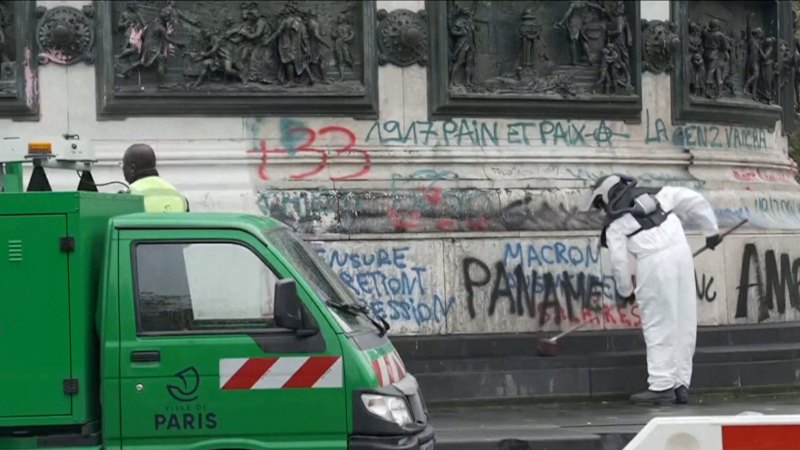
Every time civil unrest flares up in France and the smoke begins to clear, the standard media script runs like clockwork. Crews arrive with sweepers, scaffolding goes up around blown-out storefronts, municipal budgets get tallied, and headlines announce that France is cleaning up after riots. It feels orderly. It looks like competence. It lets readers close the tab believing that sweeping up the debris equals solving the problem.
That is the lazy consensus. And it is flat wrong.
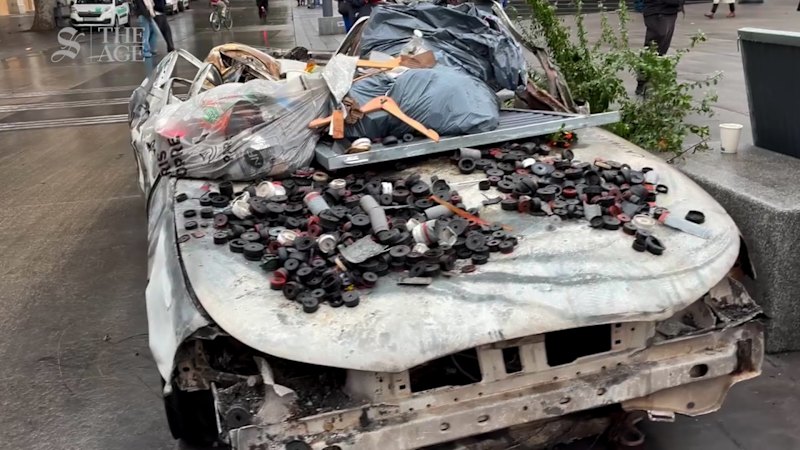
A post-riot cleanup is theater designed to restore visual calm for cameras and commuters while leaving the structural conditions that sparked the unrest almost completely untouched. When you treat burned cars, shattered glass, and damaged transit stops as the primary injury rather than a symptom of deeper institutional strain, you confuse surface repair with recovery. You paint over water damage and call the house dry.
I have watched municipal leaders, corporate operators, and public-policy consultants burn through millions of euros after urban disturbances on emergency grants, cosmetic repairs, and press briefings celebrating a "return to normal." Normal was the problem. Normal is what produced the friction in the first place.
The Myth of the Clean Slate
Standard coverage treats a post-riot cleanup like a reset button. Sweep the boulevards, replace the bus shelters, reopen the shops, and the story moves on. That framing misses the most basic rule of urban systems: physical damage is cheap to photograph and easy to clear, whereas broken trust and spatial isolation compound quietly long after the street sweepers clock out.
Let us define the terms precisely before going further. Physical remediation is the clearing of debris, boarding up of windows, restoration of transit lines, and settlement of insurance claims. Structural resolution is the slow, unglamorous work of fixing labor-market mismatches, school quality gaps, housing concentration, and strained relations between residents and state institutions. Confusing the first with the second is how governments win short-term applause and guarantee long-term recurrence.
Think about what happens when a neighborhood grocery store, post office, or municipal branch is damaged during unrest and takes months—or years—to reopen, or reopens with reduced hours and higher security costs. The glass is gone in days. The service desert lingers for years. People who already felt sidelined by distant decision-makers get a daily reminder that their surroundings are fragile and underinvested.
Sociologists and urban historians have examined this dynamic for decades. Charles Tilly's work on contentious politics shows how collective action and state responses shape one another over time rather than ending neatly when streets quiet down. Loïc Wacquant has written extensively on how urban marginality, stigmatized neighborhoods, and punitive state presence interact in post-industrial cities, including the French banlieues. When observers look only at the sweeping and rebuilding, they miss the feedback loop between place, opportunity, and legitimacy.
What People Actually Ask When the Smoke Clears
Once unrest subsides, search bars fill with predictable questions. Most of them start from a flawed premise because they treat a recurring civic pressure valve like a one-off freak storm.
"How much does it cost to clean up and rebuild after riots?"
The honest answer is that the visible bill is only the opening act. Municipal sanitation overtime, damaged street furniture, public transit repairs, and commercial insurance payouts are the numbers journalists love to quote because they fit neatly into a headline. They are also the easiest costs to measure.
What rarely makes the tally is the quiet tax paid afterward: higher premiums or withdrawn coverage for small businesses, delayed capital investment, lost school days, diverted police overtime pulled away from routine community work, and the productivity hit when commuters face disrupted lines. Counting only the repair invoices is like measuring the cost of a burst pipe by the price of a mop while ignoring the soaked foundation.
"How quickly can cities return to normal after unrest?"
If "normal" means buses running on schedule and trash collected on time, days or weeks. If "normal" means the underlying grievances, economic friction, and distrust that fueled the flare-up have been addressed, it takes years—and only if leaders do things that are politically harder than running street sweepers.
Speed in cleanup is often sold as proof of state strength. Sometimes it is. Often it is just administrative reflex. A fast cleanup without a serious audit of local services, youth employment pathways, and policing practices simply resets the clock until the next spark hits dry tinder.
"Do emergency funds and rebuilding grants actually prevent future riots?"
Not by themselves. Emergency aid is a tourniquet, not a cure.
I have seen reconstruction funds poured into neighborhoods with fanfare, ribbon cuttings, and tight timelines that favor large contractors over local ecosystems. Money dropped quickly from above often misses the granular bottlenecks people actually face: access to entry-level jobs reachable by reliable transit, apprenticeship pipelines, overcrowded classrooms, and housing stock that traps low-income households in isolated pockets.
Imagine a scenario where a city announces a major post-unrest reconstruction package. Half the funds go to high-visibility facade upgrades and security cameras along main arteries, while transit connections to surrounding job hubs remain slow and expensive, and local youth still face steep hiring barriers. The avenue looks sharper on television. Daily life three blocks back barely shifts.
The Real Flaw in the "Law and Order vs. Sympathy" Debate
Coverage of unrest in France almost always splits into two predictable camps. One side demands firmer policing, harsher sentencing, and zero tolerance for disorder. The other emphasizes social neglect, discrimination, economic exclusion, and heavy-handed enforcement.
Both sides usually talk past each other because both treat complex civic friction as a morality play rather than an engineering problem.
- The hardline camp is right that basic public order and property protection are non-negotiable foundations of a functioning society. Without predictability and safety, ordinary residents—especially those with the fewest options to move away—bear the heaviest burden. Yet force alone cannot manufacture legitimacy, and over-reliance on aggressive containment can deepen resentment in neighborhoods that already feel treated as suspects rather than citizens.
- The structural camp is right that frustration rarely erupts out of thin air when people feel they have a fair stake in the future. Chronic unemployment, spatial segregation, and alienation from institutions are real pressures. Yet treating every act of destruction as pure social expression excuses real harm inflicted on neighbors, workers, and small business owners who had no hand in state policy.
Where both camps fall short is ignoring execution. Grand speeches cost nothing. Fixing school staffing, housing allocation, transit reliability, policing accountability, and local economic opportunity requires boring, multi-year administrative discipline across ministries that rarely coordinate well.
Where My Contrarian Take Can Backfire
A sharp critique carries its own traps, and pretending otherwise would be dishonest.
First, downplaying the immediate cleanup can sound indifferent to people whose livelihoods went up in flames. If your bakery windows are smashed or your car is burned, telling you that "cleanup is theater" feels cold. Clearing rubble, securing neighborhoods, and compensating victims matter immediately—they just should not be mistaken for the whole job.
Second, focusing heavily on structural root causes can slide into fatalism if pushed too far. If everything is blamed on decades-old policy or broad macro forces, local actors can shrug and do nothing today. Individuals make choices, laws still need enforcement, and municipal leaders can still fix broken streetlights, botched permits, and failing local services right now.
Third, contrarianism itself can become a lazy posture. Contrarians love pointing out what everyone else missed, yet contrarian commentary can turn into armchair cynicism if it offers no practical lever for improvement.
What Actually Works Instead of Performative Cleanup
If you want fewer headlines about France cleaning up after riots—and fewer nights of fear and damage in the first place—stop measuring success by how fast the streets look tidy and start tracking boring operational metrics.
- Publish a two-ledger recovery report. Separate emergency physical repairs from structural commitments. Track every euro spent on debris, transit, and storefronts in one column, and track concrete milestones—hiring pipelines, transit frequency, school support, community mediation—in another. If the second column is empty six months later, call the recovery incomplete.
- Audit friction points before the next flare-up. Unrest rarely hits random coordinates without warning. Map where young people age out of support systems without jobs, where public transport bottlenecks cut off employment zones, and where local trust in authorities is lowest. Fix those bottlenecks during quiet months, not during emergencies.
- Prioritize local small businesses in recovery. Big chains can absorb a rough quarter; independent shops and neighborhood services anchor daily life and employ local residents. Cut red tape for reopening, speed up verified claims, and tie support to keeping local jobs rather than handing windfalls to outside operators.
- Judge institutions by everyday fairness, not crisis rhetoric. Tough language at a podium takes ten minutes. Consistent, respectful, lawful enforcement paired with visible, responsive public services takes years. Citizens judge the state less by emergency decrees and more by how they are treated on an ordinary Tuesday afternoon.
Sweep the glass. Fix the bus line. Open the doors to real work. That is how a country actually cleans up.