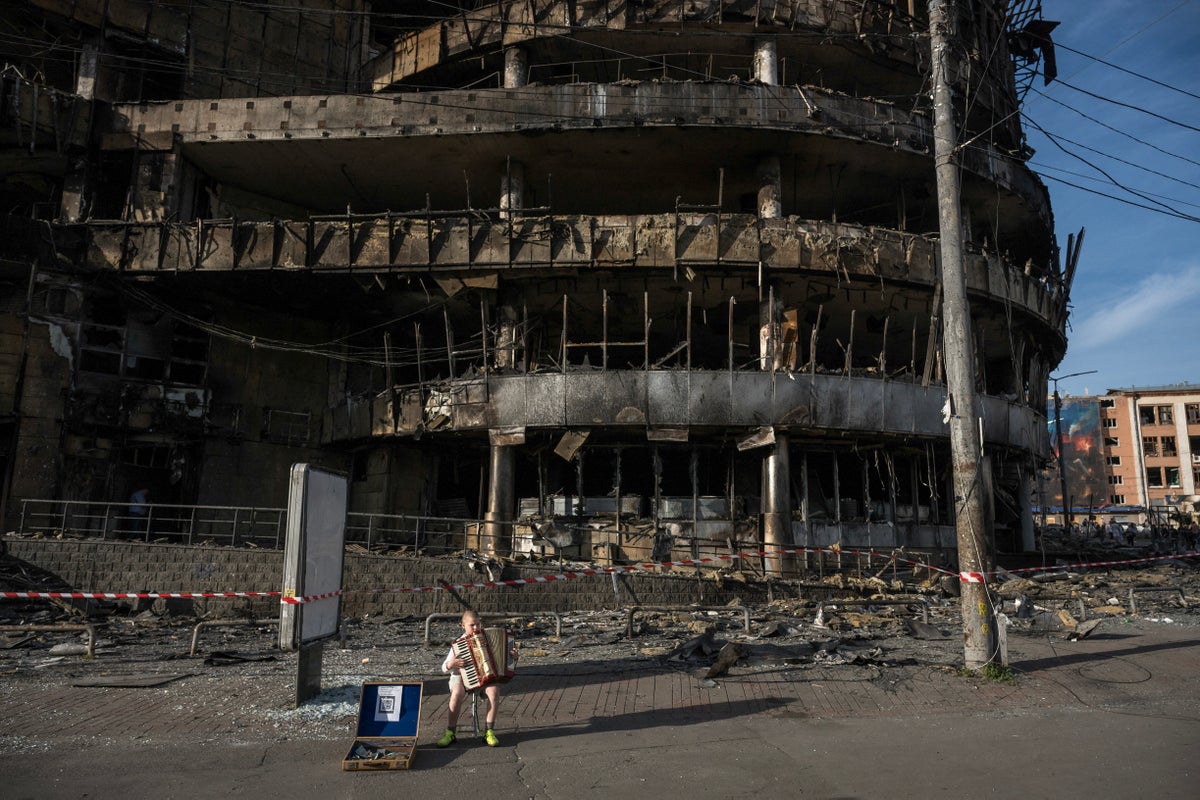
Moscow’s recent ultimatum demanding that foreign nationals evacuate Kyiv represents a calculated shift from attritional warfare to symbolic and psychological dominance. Media narratives frequently frame these threats as impulsive acts of vengeance; however, an analytical dissection reveals a structured strategy designed to disrupt Western diplomatic infrastructure, alter the risk calculus of foreign backers, and establish domestic political justification for intensified missile campaigns.
To understand the trajectory of this escalation, analysts must look past the emotive rhetoric of "revenge attacks" and evaluate the operational mechanisms at play. The Kremlin is executing a classic coercive diplomacy framework, leveraging the threat of high-intensity strikes on capital infrastructure to achieve specific strategic imperatives without necessarily expending finite precision-guided munitions stockpiles.
The Tri-Axiom Framework of Moscow’s Ultimatum Strategy
The warning issued to foreign citizens in Kyiv operates across three distinct strategic vectors. Each vector targets a specific audience with unique psychological and operational objectives.
                  ┌────────────────────────────────────────┐
                  │   Kremlin Coercive Ultimatum Strategy  │
                  └───────────────────┬────────────────────┘
                                      │
         ┌────────────────────────────┼────────────────────────────┐
         ▼                            ▼                            ▼
┌──────────────────┐        ┌──────────────────┐        ┌──────────────────┐
│ Diplomatic Null- │        │ Western Domestic │        │ Russian Domestic │
│   ification      │        │ Risk Friction    │        │  Consolidation   │
└──────────────────┘        └──────────────────┘        └──────────────────┘
1. Diplomatic Nullification
By designating Kyiv an active, high-risk strike zone for foreign nationals, Moscow aims to induce a voluntary evacuation of Western diplomatic missions. The physical presence of foreign embassies in the capital serves as an informal human-shield mechanism and a tangible symbol of Ukraine’s integration with its Western allies. Forcing embassies to relocate to western cities like Lviv or evacuate to Poland signals a degradation of Ukrainian sovereignty and structurally disrupts real-time intelligence sharing and diplomatic coordination on the ground.
2. Friction in Western Domestic Risk Calculi
The ultimatum shifts the burden of escalation from Moscow to Western capitals. If a foreign diplomat or security contractor is casualties in a subsequent strike after a explicit warning was issued, the sending nation faces an intractable political dilemma. They must either escalate their involvement—potentially triggering a direct confrontation with a nuclear-armed state—or absorb the loss, which signals weakness. Moscow uses this friction to exploit the risk aversion inherent in democratic political systems.
3. Domestic Narrative Consolidation
Within the Russian domestic information space, framing upcoming strikes as pre-announced retailatory actions serves a vital legitimizing function. It portrays the state as an organized, rule-abiding superpower giving fair warning, contrasted against perceived provocations by Ukraine or its proxies. This insulates the political leadership from internal criticism regarding the costs of the campaign while preparing the public for a phase of intensified operations.
The Economics of Precision Strike Volatility
Media coverage routinely miscalculates Russia's strike capacity by treating missile stocks as a binary variable: either "running out" or "unlimited." A rigorous economic model of military supply chains reveals a different reality governed by the interaction of production bottlenecks, sanctions evasion, and target prioritization.
The intensity of Russia's missile campaigns against Kyiv is constrained by a strict cost-and-inventory function:
$$I_{t+1} = I_t + P_t - C_t$$
Where:
- $I$ represents the current inventory of precision-guided munitions (such as Kh-101 cruise missiles and Iskander ballistic variants).
- $P$ represents the rate of domestic production, heavily dependent on the illicit acquisition of Western-fabricated microelectronics through transshipment hubs in Central Asia and the South Caucasus.
- $C$ represents the consumption rate during strike packages.
Because $C_t$ frequently exceeds $P_t$ during multi-axis saturation attacks, Moscow faces a structural depletion problem. Consequently, threats of "revenge attacks" often serve as an inventory-preservation tactic. By substituting physical strikes with psychological threats, Russia attempts to achieve the strategic effects of a blockade—deterring foreign visitors and slowing economic normalization—without depleting its weapon reserves.
When physical strikes do occur following these ultimatums, they are engineered to overwhelm specific defensive architectures. The operational objective is rarely the random destruction of civilian infrastructure; instead, it is the saturation of Patriot and NASAMS air defense systems protecting the capital.
By forcing Ukraine to expend highly expensive, finite western-supplied interceptor missiles against a mix of cheap Shahed-type loitering munitions and older decoy cruise missiles, Russia attempts to create air defense deficits in the frontline sectors, where Russian close air support can then operate with greater impunity.
Defensive Fragility and the Air Defense Bottleneck
The Western response to Moscow's escalation strategy has revealed a critical mismatch in industrial capacity. Ukraine’s defensive capability is dictated by a supply bottleneck that cannot be quickly resolved by financial commitments alone.
- The Interceptor Production Deficit: The global production rate of high-tier air defense interceptors (such as MIM-104 Patriot missiles) is measured in hundreds per year, while the consumption rate during a concerted Russian saturation campaign can reach dozens in a single week.
- The Mobility Dilemma: Kyiv requires constant protection to safeguard the political leadership and diplomatic core. However, tying down advanced air defense assets in the capital leaves critical industrial centers and frontline logistics nodes vulnerable to Russian tactical aviation. Moscow’s threats are explicitly designed to lock these defensive systems in place, preventing their redeployment to the south or east.
This creates a compounding vulnerability. If Western nations heed the evacuation warnings and withdraw personnel, Ukraine loses political leverage. If they stay, Ukraine must misallocate scarce air defense resources to guarantee the safety of the capital's diplomatic quarter at the expense of protecting its industrial base or offensive military formations.
Strategic Forecasting: The Next Operational Phase
Based on the structural constraints and incentives acting on both sides, the conflict is entering a phase where symbolic signaling will increasingly dictate kinetic actions. Moscow is unlikely to launch a sustained, daily bombardment of Kyiv due to the aforementioned inventory constraints; instead, expect a cyclical pattern of high-intensity, multi-axis strikes spaced weeks apart to allow for inventory replenishment and maximum psychological shock value.
Western nations will likely adopt a bifurcated response. High-profile political figures will maintain transient, highly secured visits to Kyiv to project resolve, but permanent diplomatic footprints will be streamlined, moving essential operations to remote or hardened facilities.
The primary indicator of a true shifts in the strategic balance will not be the rhetoric coming from the Kremlin, but rather the rate of Western industrial expansion for air defense munitions and the success of counter-sanctions networks in strangling Russia’s access to specialized dual-use components. Until those production lines shift, Moscow will continue to utilize the threat of capital escalation as a highly efficient tool of asymmetric leverage.