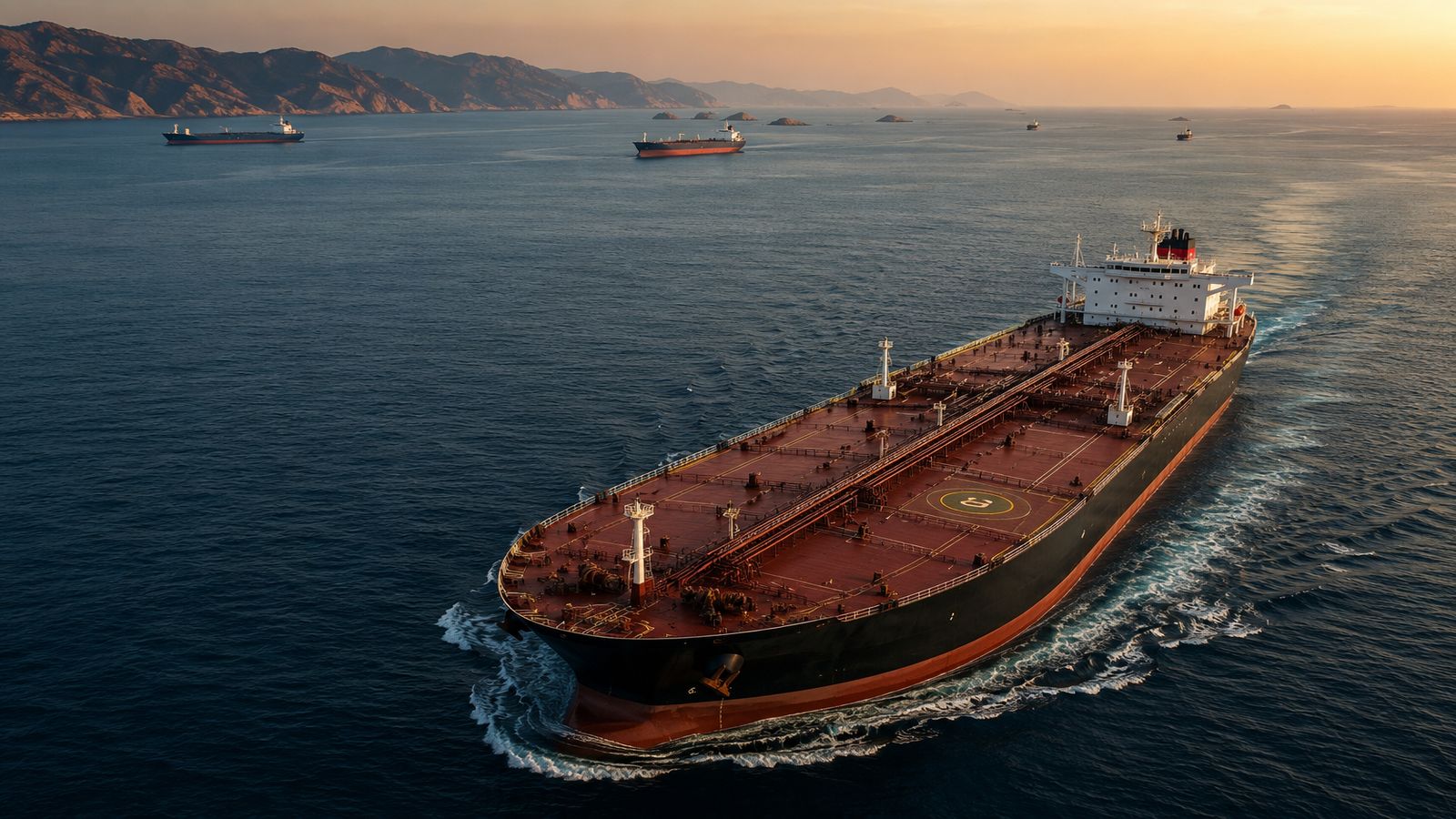
The mainstream media loves a maritime tragedy. For weeks, the headlines have blared the same alarmist tune: 11 India-linked ships and 148 seafarers are "stranded" in the Strait of Hormuz. The narrative is always woven with threads of helplessness, supply chain collapse, and geopolitical catastrophe.
It is a lazy, surface-level consensus.
What the talking heads call a "crisis," the global shipping industry recognizes as a Tuesday. The reality of international maritime commerce is built on a foundation of calculated risk, artificial bottlenecks, and the undeniable truth that disruption is incredibly profitable. Stop weeping for the "stranded" assets. Start looking at the ledger.
The Myth of the Stranded Ship
Let’s dismantle the foundational lie of the current coverage: the idea that these ships are victims of an unpredictable, black-swan event.
In shipping, there are no surprises in the Strait of Hormuz. It is one of the most heavily monitored chokepoints on the planet. Every ship owner, charterer, and insurer who sends a vessel through the Persian Gulf knows the exact risk profile of those waters.
They do it anyway because the math works.
When a ship is "stranded" or delayed due to regional tensions, the public imagines a catastrophic loss of revenue. The reality? Demurrage and detention fees. Contracts are designed to account for delays. Under standard charterparty agreements, if a vessel is prevented from loading or discharging due to factors outside its control, the charterer—not the ship owner—often bears the financial brunt. The meter keeps running.
A Quick Lesson in Maritime Finance
Shipowners do not make money solely by moving cargo from Point A to Point B. They make money by managing risk. A ship anchored in a high-risk zone is frequently earning premium daily rates paid for by cargo owners desperate to secure their supply lines.
Why High Risk Equals High Reward
The panic merchants want you to believe that regional volatility is destroying the shipping sector. The opposite is true. Volatility is the lifeblood of maritime profitability.
Consider the mechanics of the War Risk Premium.
When tensions rise in the Strait of Hormuz, joint war committee insurers adjust their listed areas. Insurance premiums skyrocket. To the uninitiated, this looks like a devastating blow to the industry. But watch how the cost cascade actually functions:
- Insurers raise rates on vessels transiting the Gulf.
- Shipowners pass these costs directly to the charterers, usually with a healthy administrative markup.
- Freight rates spike globally because the perceived risk reduces the active supply of vessels willing to enter the region.
- The entire fleet enjoys higher margins as overall market capacity tightens.
I have spent years analyzing maritime supply chains, and I have seen logistics directors panic-spend millions of dollars to reroute cargo, only to realize they paid double the freight rate to a carrier that simply pocketed the premium. The shipping giants do not want a completely peaceful, friction-free world. A frictionless world is a low-margin world.
Dismantling the "People Also Ask" Delusion
When search engines crawl the web for queries surrounding maritime crises, the questions asked by the public reveal a deep misunderstanding of how global trade functions. Let us answer them with brutal honesty.
"Will the Hormuz crisis cause global oil shortages?"
No. The global energy market is highly fungible. If supply through Hormuz constricts slightly, Atlantic basin crude diverted to Europe or Asian markets fills the void. What actually happens is a temporary reshuffling of trade routes, which—guess what?—increases ton-mile demand.
Ton-mile demand is the distance cargo travels multiplied by its volume. When trade routes get longer, ships are on the water longer. This absorbs vessel capacity, drives up charter rates, and makes shipowners incredibly wealthy. The "crisis" is a mechanism for wealth transfer, not energy starvation.
"Are the seafarers in immediate danger?"
While the physical safety of crew members is a genuine human concern, the hyper-focus on "stranded" crews ignores the industry's standard operating procedures. Under the Maritime Labour Convention (MLC), seafarers have strict rights regarding repatriation and danger pay.
In high-risk zones, crews often receive double their basic wages. For many seafarers from developing nations, these high-risk transits are the most lucrative contracts they can sign. The narrative of "helpless captives" is a media construction; the crew members are professional risk-managers who understand exactly what they signed up for.
The Indian Shipping Blind Spot
The specific focus on "India-linked" ships in recent reports exposes a fundamental flaw in how national maritime interests are calculated.
Many of these "India-linked" vessels do not fly the Indian flag. They are flagged in open registries—Panama, Liberia, the Marshall Islands—popularly known as Flags of Convenience (FOC).
+------------------------------------+------------------------------------+
| National Registry (e.g., India)    | Flag of Convenience (e.g., Panama) |
+------------------------------------+------------------------------------+
| Strict labor laws and tax regimes  | Minimal taxation, flexible crewing |
| High regulatory compliance costs   | Low operational overhead           |
| Direct diplomatic protection       | Commercial anonymity and obscurity |
+------------------------------------+------------------------------------+
When a ship flagged in Panama with an Indian crew and Greek ownership gets stuck, calling it an "Indian shipping crisis" is a joke. The ownership structure is intentionally fragmented to insulate the real stakeholders from liability.
India's domestic shipping policy has long suffered from protectionist tendencies that stifle local fleet growth. By relying on foreign-flagged, foreign-owned tonnage to move its own cargo, the Indian market has outsourced its maritime security to the private sector. You cannot complain about your strategic vulnerability when you actively chose the cheapest, most legally compromised logistics option available.
The Real Cost of the "Fix"
The naive solution proposed by politicians and armchair generals is always the same: naval escorts and military intervention to "secure" the shipping lanes.
This is a disastrous approach for anyone who actually wants stable markets.
Imagine a scenario where a coalition of naval forces begins escorting every commercial convoy through the Strait of Hormuz. The immediate consequence is a massive operational slowdown. Convoy operations require ships to wait for assembly, match the speed of the slowest vessel, and adhere to rigid military schedules.
The resulting inefficiency would cut global shipping capacity by an estimated 15% overnight. Freight rates would rocket to astronomical heights, dwarf any insurance increases, and create actual, structural inflation.
The cure is infinitely worse than the disease.
The shipping market is self-correcting. When risks get too high, the price of cargo reflects that risk, consumption patterns shift, and carriers adjust their routes. The system works because it is flexible, decentralized, and driven by raw capital. The moment you try to bureaucratize maritime security through forced military intervention, you break the only mechanism that keeps goods flowing.
Stop looking at the 11 stranded ships as a sign of failure. They are the cost of doing business in a globalized economy that values cheap transport over total security. The shipping lines aren't panicking. They're sending the bill to you.