Every entertainment journalist covering Nekrogoblikon falls into the exact same trap. They treat John Goblikon like a punchline.
They see a green goblin in a suit hosting a talk show, writing a self-help book, or front-manning a melodic death metal band, and they reduce the entire operation to a quirky bit. When Dave Rispoli—the actor, comedian, and voice behind the mask—jokes about wanting to fire his ghostwriter only to realize he is his own ghostwriter, the lazy consensus reads it as standard self-deprecating comedian banter.
They miss the real story completely.
That offhand joke exposes the exact structural flaw destroying modern creator-led intellectual property. Most media executives, talent managers, and brand strategists spend millions trying to manufacture viral mascots in boardrooms. Meanwhile, an independent metal band and a sharp comedic actor built one of the most resilient, multi-platform character franchises in alternative entertainment without a single studio note.
If you look at John Goblikon purely through the lens of heavy metal comedy, you are asking the wrong question entirely. The real question is how a single performer maintains narrative separation between creator and creation when the market demands constant, unscripted access.
The Myth of the Effortless Mascot
The mainstream music and entertainment press loves a good gimmick. Gwar, Slipknot, Ghost, Babymetal—whenever theatricality enters heavy music, commentators immediately categorize it as a marketing trick designed to mask thin songwriting.
That narrative is lazy and factually bankrupt.
Audiences will click on a novelty once. They will share a thirty-second clip of a goblin interviewing a metal guitarist at Warped Tour because the visual contrast is absurd. They will not, however, buy thousands of copies of a hardcover book, sell out international club tours for over a decade, or tune into long-form video podcasts unless the underlying writing holds up under scrutiny.
When Dave Rispoli stepped into the John Goblikon role—taking over a character originally conceived by Nekrogoblikon frontman Nicky Calonne for the 2012 "No One Survives" music video—the character was a silent physical presence. Rispoli turned that blank slate into a fully realized, neurotic, mid-level corporate middle-manager trapped in the body of a mythical creature.
That distinction matters. A mascot wears a costume. A character has a worldview.
In entertainment strategy, we call this kayfabe—a term borrowed from professional wrestling referring to the absolute commitment to maintaining the illusion that staged events and personas are real. Most modern entertainers break kayfabe the second a camera turns off because they are terrified audiences won't give them personal credit for their own wit. They want the safety net of the character while simultaneously begging for validation as the writer.
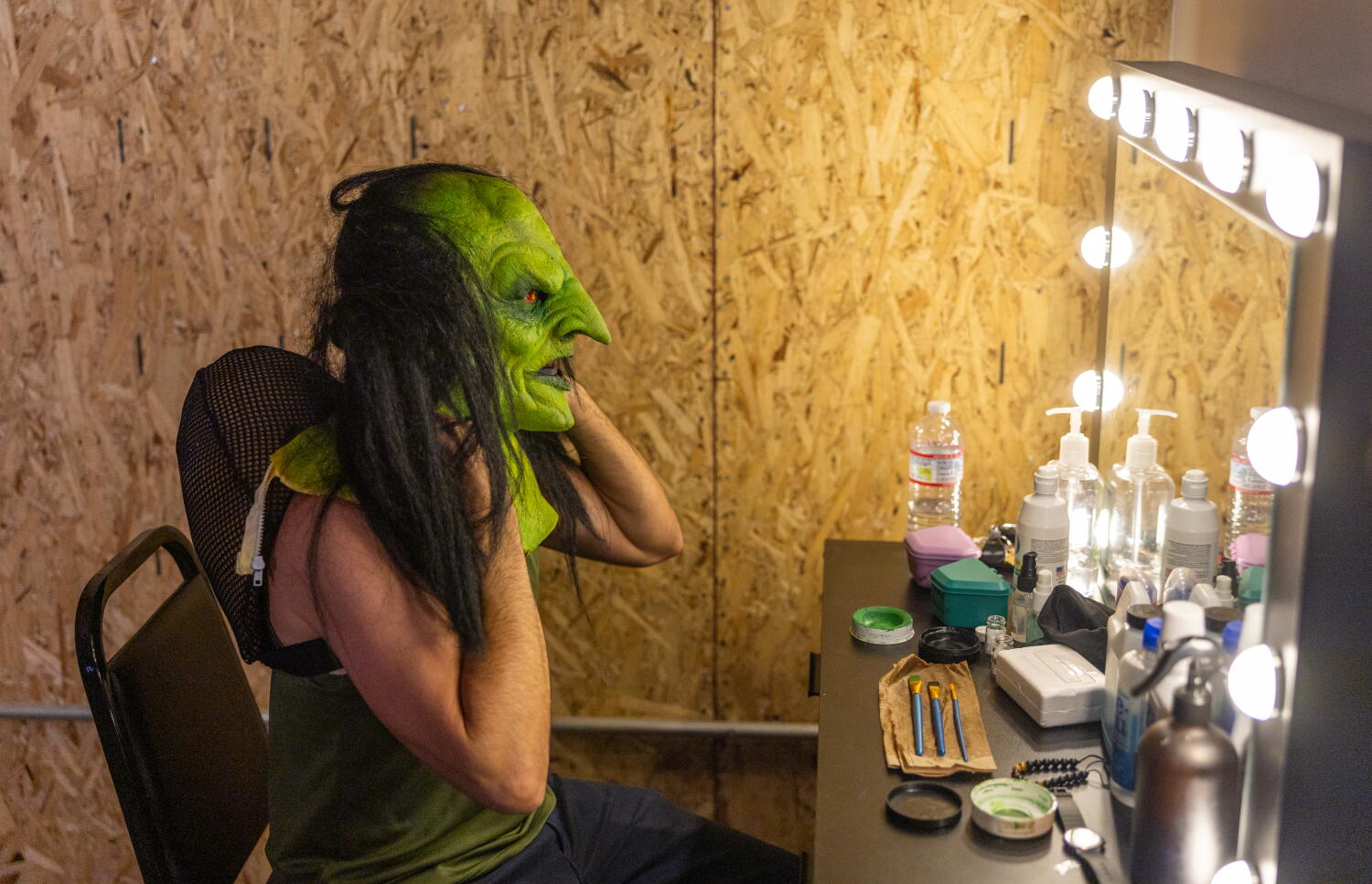
Rispoli did the opposite. For years, he buried his own ego beneath latex and stage makeup, letting the goblin take the credit, the interviews, and the spotlight.
Why the Ghostwriter Paradox Actually Happens
So what happens when the guy inside the rubber mask wants to fire the guy writing the material?
You hit the exact wall that breaks almost every solo creator who scales a character past its original medium.
In traditional television or film production, character development relies on friction. A showrunner writes the bible. A room of writers pitches jokes that push the character into uncomfortable corners. An actor interprets those lines on set, adding physical nuance the writers never anticipated. When the material goes stale, the studio fires the head writer and brings in fresh blood to revitalize the voice.
Solo character creators do not have that luxury.
When Rispoli wrote John Goblikon's Guide to Living Your Best Life, or scripted episodes of RIGHT NOW, he was operating as a closed loop. Let's break down the mechanics of why this closed loop becomes suffocating:
- Zero Surprise: A great improviser thrives on reacting to unexpected prompts. When you write your own scripted material months in advance, you rob your own comedic instincts of the element of surprise. By the time you step in front of the lens or onto the stage, the joke has already died in your head three times during the editing process.
- Voice Drift: Without an external editor policing the boundaries of the persona, the character's voice slowly bleeds into the performer's actual personality. You stop asking what the goblin would say and start writing what you think is funny, slapping a raspy voice on top of it.
- Creative Burnout: Carrying the administrative burden of drafting, revising, and formatting copy drains the exact mental battery required to deliver a high-energy physical performance. Performing under heavy prosthetics is physically brutal. Doing it while silently critiquing your own sentence structure is psychological torture.
I have watched independent creators burn out entirely at this exact stage. They build an audience on raw, spontaneous chemistry, attempt to monetize that audience through structured publishing or scripted series, and suddenly find themselves trapped in a creative sweatshop where they are both the abusive boss and the exhausted intern.
When Rispoli jokes about firing his ghostwriter, he is articulating a genuine structural bottleneck. He outgrew the one-man-band model, yet bringing in outside writers carries a massive risk: nobody else knows how to walk that razor-thin line between existential dread and mundane corporate boredom without turning the character into a cheap cartoon.
Dismantling the Common Misconceptions About Character Brands
If you search for information on Nekrogoblikon or John Goblikon, you run into the same tired questions from casual observers and industry analysts alike. Almost every single one of those questions rests on a flawed premise.
Does the gimmick distract from the music?
No. The character is the distribution engine for the music. In an era where Spotify pays fractions of a cent per stream and algorithmic discovery buries independent metal bands beneath major-label playlist placements, attention is the only currency that converts to ticket and merch sales. Nekrogoblikon's technical melodic death metal—anchored by sharp musicianship and complex arrangements—gets heard by millions of people who would never touch extreme metal because John Goblikon acts as an accessible front door. Calling it a distraction is like claiming the packaging on a luxury product distracts from the contents. Without the packaging, nobody picks it off the shelf.
Why doesn't the actor just drop the mask and do straight stand-up?
Because scarcity creates value, and anonymity creates freedom. Stand-up comedy is oversaturated with performers talking about their personal neuroses into a microphone. Put those exact same observations into the mouth of a three-foot-tall goblin wearing a tailored suit and tie, and suddenly the audience drops its cynicism. The mask allows the performer to say things that would sound bitter, arrogant, or overly earnest coming from a regular guy in a t-shirt. Dropping the mask destroys the very mechanism that makes the comedy land.
Is this sustainable long-term without Hollywood backing?
The entire premise that Hollywood backing equals sustainability is dead wrong. Look at the graveyard of digital characters acquired by major studios over the last decade. Executives buy the IP, strip out the edgy, weird specifics that made the fanbase rabid in the first place, hire a team of safe network writers to sand off the rough edges, and cancel the project after one bloated, unfunny season. Independence is not a limitation here; it is the sole reason the property hasn't been ruined by committee.
The Blueprint for Scaling Persona-Driven IP
Most brands and creators try to replicate this kind of organic cult success and fail miserably because they reverse-engineer the wrong elements. They focus on the aesthetics—the costume, the logo, the catchphrases—instead of the architecture underneath.
If you are building a character, a brand mascot, or a persona-driven media property, the John Goblikon trajectory offers a brutal, practical playbook:
1. Anchor the Absurd in the Mundane
A monster acting monstrous is boring. A monster worrying about his credit score, complaining about traffic, and offering mediocre life advice is hilarious. Contrast generates comedy. The further you push the visual absurdity of a character, the more grounded and relatable their emotional problems need to be. If your character is outlandish, give them pedestrian anxieties.
2. Protect the Fourth Wall at All Costs
Modern media culture is obsessed with "behind-the-scenes" content. Creators fall over themselves to show the green screen, the makeup chair, and the blooper reel because they think transparency builds trust. For character IP, transparency is poison. Every time you remind the audience that a hired actor is reading a teleprompter, you lower their emotional investment. Keep the illusion intact during all public-facing appearances. Let the audience play along with the lie; they want to believe in the magic trick far more than they want to see how the trapdoor works.
3. Separate the Architect from the Performer
This is the exact lesson buried inside the ghostwriter dilemma. A single mind can birth a character, but it rarely sustains one across multiple mediums indefinitely. Imagine a scenario where a solo creator attempts to write a book, host a weekly video show, tour internationally, and manage social media copy simultaneously. Within eighteen months, every medium starts sounding identical, and the jokes become recycled variations of the same three premises.
To scale without losing the soul of the character, you do not hire a traditional ghostwriter to replace the creator. You hire a sparring partner—an editor or co-writer whose sole job is to feed the performer raw setups, absurd premises, and structural outlines, leaving the performer free to react, improvise, and inject the authentic voice in real time. You split the labor between architecture and execution.
4. Build a Multi-Platform Flywheel
Notice how the character operates across distinct revenue channels without feeling like a desperate cash grab:
- Music: Establishes credibility and delivers high-energy live experiences.
- Video Interviews/Talk Show: Acts as top-of-funnel discovery, leveraging guest audiences (from metal legends to mainstream comedians) to pull new viewers into the ecosystem.
- Publishing: Converts hardcore fans into high-margin buyers while deepening the character's lore and philosophy.
- Merchandise: Turns the character's visual identity into wearable tribal signaling for fans.
Each pillar feeds the others. Someone discovers a clip of the talk show on YouTube, buys the book, listens to the album, and buys a ticket when the tour hits their city.
The Real Cost of the Mask
Let's be completely honest about the downside of this approach, because pretending it is all upside would be dishonest.
When you build an empire inside a prosthetic mask, you build a golden cage.
Dave Rispoli is an exceptionally sharp comedic talent, yet the vast majority of the people laughing at his timing do not know his real face or his real name. In an industry where personal name recognition dictates casting decisions, residual checks, and mainstream representation, sacrificing your face for the sake of the bit carries a steep professional tax. You cannot easily pivot that clout into a standard sitcom role or a conventional stand-up special without starting halfway back down the mountain.
Furthermore, physical characters age differently than human performers. Vocal cords take a beating from character voices. Hot stage lights and heavy latex wear down the body over hundreds of tour dates. You cannot simply phone in a performance when the entire premise relies on manic physical commitment.
That is the trade-off nobody in marketing wants to admit. True, unforgettable IP requires total submission to the bit. You either dilute the character so your own ego gets the credit, or you disappear completely behind the creation and watch it take on a life of its own.
John Goblikon works precisely because his creator chose the second path—even on the days he wishes he could fire the guy writing his lines.
Next time a studio executive pitches a three-million-dollar focus-grouped brand mascot, hand them a rubber goblin mask, a cheap suit, and a blank page, and see how long they survive without calling for a rewrite.