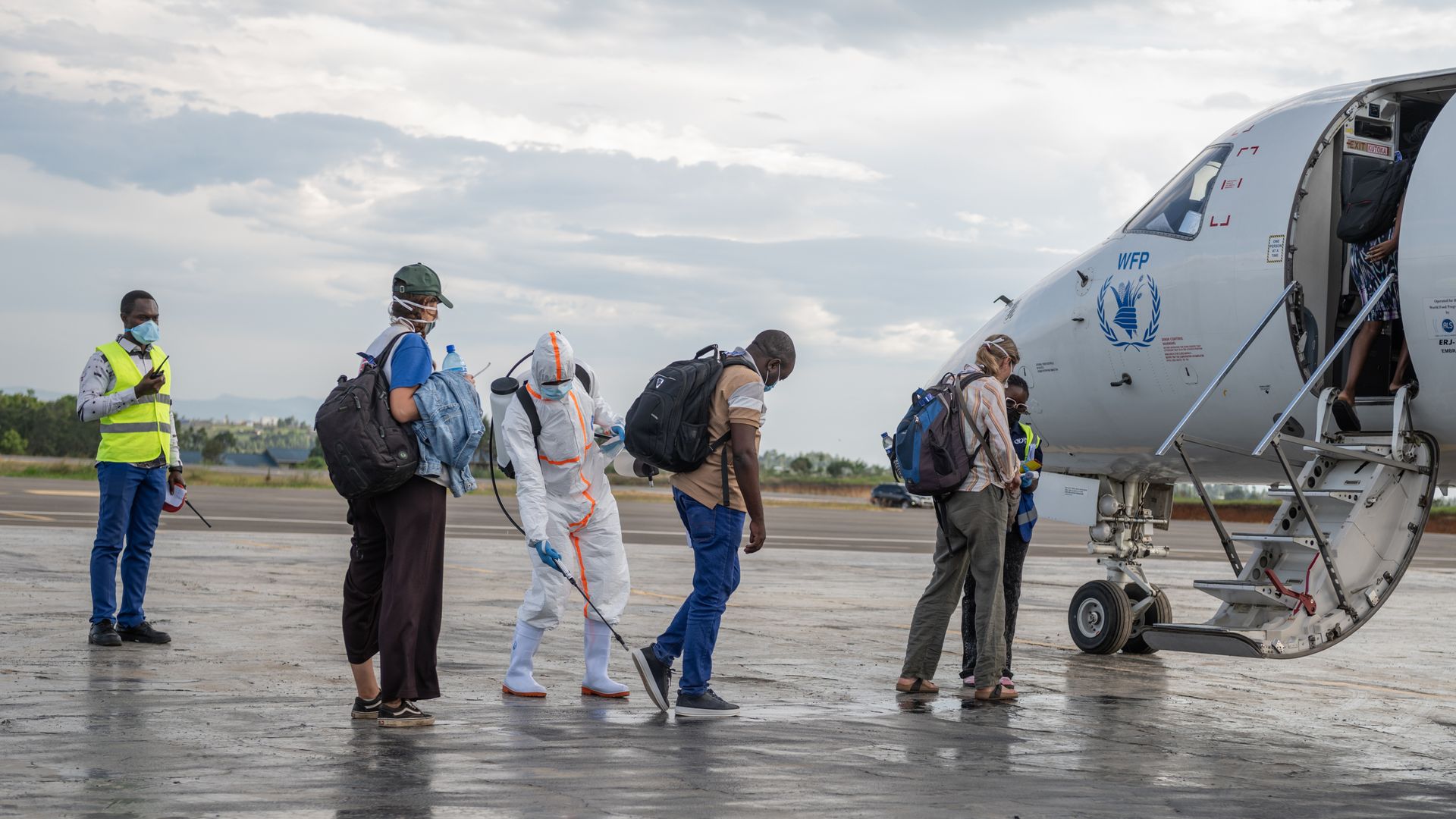
Global health bureaucrats are running the exact same playbook they used a decade ago, expecting a different result. The latest announcements out of Kampala and Washington herald a shiny new multi-million-dollar plan to "fight Ebola as cases rise" in the Democratic Republic of Congo and Uganda. The Pandemic Fund is fast-tracking $220 million, regional delegates are begging for upwards of $300 million, and Western nations are frantically writing checks while simultaneously erecting travel bans and externalized isolation camps.
It is a theatrical, reactive waste of money.
Throwing a massive pile of emergency cash at an active epidemic in a conflict zone is the public health equivalent of pouring premium gasoline onto a house fire and calling it firefighting. I have watched international agencies blow through hundreds of millions of dollars during successive outbreaks in Central and West Africa, only to leave behind the exact same broken infrastructure that allowed the virus to spread in the first place. The lazy consensus insists that a massive surge in emergency funding, heavy-handed border controls, and top-down international coordination will squash the virus. It will not.
The current outbreak is driven by the Bundibugyo strain of the virus. Unlike the Zaire strain, which benefited from the Ervebo vaccine during previous crises, the Bundibugyo strain has no approved vaccine, no standard therapeutic treatment, and no rapid, field-deployable diagnostic test. You cannot vaccinate your way out of this, and you cannot buy your way out with overnight grant approvals.
When an outbreak hits an area plagued by deep-seated civil insecurity and historic exploitation, money from Washington or Geneva does not buy trust. In fact, it often does the exact opposite. Health ministers admit that community resistance is so high that local residents recently set fire to a treatment tent in Mongbwalu.
Why? Because when a community lacks clean drinking water, basic maternal healthcare, and protection from armed militias 365 days a year, the sudden arrival of white SUVs, foreign workers in spacesuits, and millions of dollars dedicated exclusively to one terrifying disease looks less like humanitarian aid and more like a foreign business venture. The locals are not stupid. They see the sudden influx of resources and deduce that the disease is being used as a monetization mechanism by outsiders or corrupt officials.
If we actually want to stop Ebola from becoming a regional disaster, we must dismantle the current crisis-response apparatus entirely. Here is the brutal truth about what is failing, and the actionable strategy required to fix it.
The Myth of the Overnight Emergency Fund
When the World Health Organization declares a Public Health Emergency of International Concern (PHEIC), it triggers a predictable financial reflex. The money moves, but it moves too late, and it moves to the wrong places. Emergency funds are overwhelmingly funneled into ad-hoc international logistics: chartering flights, setting up temporary field hospitals, and paying Western consultants hefty per diems.
Imagine a scenario where a local clinic in an at-risk border town lacks disposable gloves, basic running water, and reliable electricity. Giving an international agency $50 million to deploy an elite medical team three weeks from now does nothing for the nurse who is exposing themselves to infected blood today.
True health security is built on boring, unsexy, permanent investments. It means funding local, decentralized laboratories that can run basic blood work year-round, ensuring frontline healthcare workers are paid a reliable living wage so they do not flee when a crisis hits, and keeping supply chains stocked with basic personal protective equipment (PPE) before an outbreak even starts. Instead, the global health apparatus starves these systems during peacetime, then panics and over-funds temporary infrastructure during a crisis.
Western Isolationism is a Dangerous Delusion
The geopolitical response to the rising case numbers exposes a deeper, more cynical flaw in the global strategy. Instead of focusing resources purely on stopping transmission at the source, Western governments are retreating into isolationist panic.
The United States recently instituted strict entry restrictions on travelers from the region and even attempted a bizarre, legally fraught plan to set up an off-shore quarantine facility in Kenya to treat exposed American citizens rather than bringing them home. The plan was immediately blocked by Kenyan courts on constitutional and public health grounds, and rightly so.
This brand of bio-defense nationalism is counterproductive. When you impose sweeping travel restrictions on countries that report cases honestly, you do not stop the virus; you simply incentivize governments to stop reporting data. If a nation knows that declaring an outbreak will trigger immediate economic strangulation and international isolation, they will hide the numbers.
Furthermore, diverting millions of dollars to build ad-hoc, politically motivated quarantine camps in third-party countries strips vital funding and personnel away from the actual epicenter. You cannot contain a highly infectious pathogen by building a moat around your own borders while letting the center of the fire burn unchecked.
Radical Transparency and Decentralized Accountability
The alternative to the current top-down, billionaire-funded paradigm is not comfortable, and it comes with its own distinct downsides. It requires Western donors to relinquish control, which they hate doing.
To break the cycle of panic and neglect, we must transition to a model of direct, decentralized funding. Instead of routing hundreds of millions through massive international NGOs and UN agencies—where a massive percentage is chewed up by administrative overhead—funds must be disbursed directly to municipal health zones and verified local community networks.
The risks are obvious. Direct local funding requires navigating complex regional political dynamics and accepting a higher tolerance for messy, decentralized execution. But it is the only way to build actual community buy-in. When the people running the isolation centers, managing the contact tracing, and distributing the educational materials are local leaders, pastors, and community nurses who are trusted implicitly by the neighborhood, the conspiracy theories evaporate. The tents stop burning down.
Stop treating Ebola as an isolated tactical warfare problem that can be defeated with a massive surge of cash and a colonial-style medical intervention. It is a systemic symptom of broken, starved health infrastructure. Until global health agencies stop funding the circus and start funding the foundation, every single dollar spent on these emergency plans is just expensive theater.



.png?width=1200&auto=webp&trim=0%2C0%2C0%2C0)