You are literally burning your money. Every time you strike a match and drop it onto the wick of a twenty-dollar jar candle, you're lighting cash on fire. The wax evaporates alongside the scent oils, black soot coats your walls, and half the fragrance disappears into thin air within the first hour. It makes no sense. If you want your living room to smell like a high-end boutique without turning your home into a fire hazard or destroying your favorite candles halfway through their life cycle, you need to ditch the flame entirely.
Candle warmers changed everything. They aren't just trendy gadgets for people who are afraid of matches. They are a genuinely smarter way to experience home fragrance. But walk into any home goods store or scroll through online reviews, and you will find an overwhelming sea of heated plates, overhead lamps, adjustable dimmers, and dubious design choices. Most people buy the wrong style, get weak scent throws, and give up. Let's fix that right now.
The Physics of Flameless Scent
It helps to understand what is actually happening inside your candle jar. When you burn a candle, the flame creates combustion. That flame consumes the wick, melts the wax, and pulls liquid wax upward to feed the fire. Along the way, it burns off volatile fragrance compounds, but it also creates smoke, carbon particulate, and soot. That black ring around your favorite glass jar? That is incomplete combustion.
A candle warmer removes the flame from the equation entirely. Instead of combustion, you are using controlled thermal energy to liquefy the top layer of wax. Once the wax turns into a liquid pool, the fragrance oils begin to evaporate peacefully into the room.
You get the exact same aroma profile without the smoke, without the burnt wick smell, and without the anxiety of wondering if you left a flame unattended while you ran to the grocery store. It is clean, controllable, and shockingly efficient.
Top-Down Lamps Versus Heating Plates
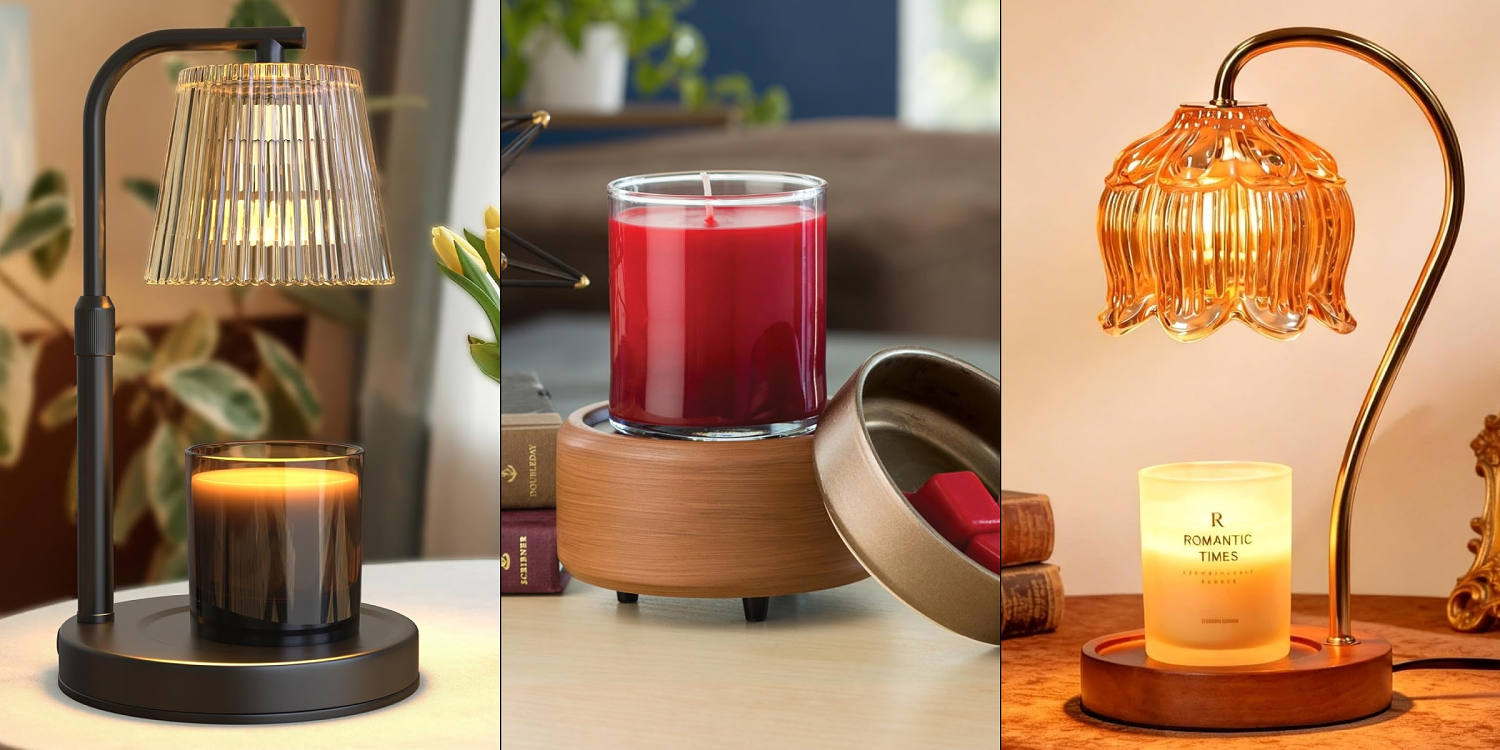
Not all warmers are created equal. You basically have two main design camps to choose from: warming plates and top-down lamps. Choosing the wrong one will leave you disappointed with your scent throw.
Warming plates sit at the bottom of the container. They heat the entire glass vessel from underneath. While this sounds practical, it has major drawbacks. Heat has to travel through the entire mass of solid wax before it melts the surface layer. This process takes a painfully long time. By the time the top layer finally liquefies enough to release a decent aroma, the lower wax has overheated repeatedly, degrading the fragrance oils. Some users even report uneven melting or pressure buildup inside jars. Plates are cheap and compact, but they lack precision.
Top-down lamp warmers operate on an entirely different level. These units feature a specialized halogen bulb suspended directly above the candle. When you flip the switch, radiant heat streams down onto the surface of the wax. A full melt pool forms within fifteen to thirty minutes.
Because the heat source is right where the fragrance needs to escape, the scent throw is noticeably stronger and cleaner. You can adjust the height of the lamp to fit different jar sizes, and many models include built-in dimmers. Turning down the dimmer lets you control how fast the wax melts and how potent the fragrance becomes. If you want performance, a lamp-style warmer wins every single time.
Why Your Candles Last Three Times Longer
Let's talk about the economics. Quality candles are expensive. A luxury soy wax candle can easily cost thirty to forty dollars. When you burn it normally, the flame eats the wax as fuel. The wax level drops steadily until the jar is empty after forty or fifty hours.
With a candle warmer, the wax mass stays almost entirely intact. Because there is no flame consuming the material, only the volatile scent oils evaporate. The wax stays right where it is.
This means your candles will last two to three times longer than they would under a traditional flame. A candle that normally lasts a couple of weeks can easily stretch across months of regular daily use. Furthermore, warmers eliminate tunneling completely. Tunneling happens when a candle burns straight down the middle, leaving a hard wall of wasted wax around the edges. A top-down warming lamp melts the entire surface evenly from edge to edge on every single session. You use one hundred percent of what you bought.
Safety Realities Nobody Talks About
Marketers love to sell flameless warmers as completely foolproof. They aren't. Yes, you eliminate the open flame, which removes the primary cause of residential candle fires. But you are still dealing with electricity, high heat, and a pool of scorching hot liquid.
Halogen bulbs get very hot. The metal shade surrounding the bulb can reach temperatures that will instantly blister skin if you touch it carelessly while it is running. The glass jar itself becomes hot enough to burn your fingers if you try to pick it up immediately after turning the unit off.
Surface protection matters immensely. Placing a hot warming plate or a lamp base directly onto a polished wooden coffee table or a lacquered nightstand can leave permanent heat rings or ruin the finish. Always place your warmer on a heat-safe coaster, a protective tray, or a solid stone surface.
Keep clearance in mind, too. Do not tuck a tall lamp warmer underneath a low bookshelf or tight cabinet overhang. The concentrated heat needs room to disperse safely into the open air. Treat the appliance with the same baseline respect you would give a coffee maker or a toaster.
How to Handle Faint Scent and Spent Wax
Eventually, you will run into a strange problem. Your candle is still sitting there looking full, but the room doesn't smell like anything anymore.
This confuses a lot of first-time warmer owners. Because the warmer only evaporates the fragrance oils and leaves the wax behind, the wax eventually runs out of scent molecules entirely. The physical block of wax remains, but the aroma is exhausted.
You have a few straightforward options when this happens. You can pour off the top layer of liquid wax while it is warm—safely dumping it into a disposable container or onto a paper towel—to expose fresh scented wax underneath. Alternatively, you can take a paper towel and gently dab up the top millimeter of melted wax to strip away the spent layer.
Some people like to stir the warm wax pool to redistribute whatever is left, though removing the top spent layer yields much better results. Once you have stripped away the exhausted surface wax a few times over the life of the candle, you will eventually reach the bottom. At that point, clean out the remaining residue and start fresh.
Choosing the Right Setup for Your Space
Before you buy a warmer, look at your current candle collection. If you mostly buy wide-diameter multi-wick jar candles, a standard small warming plate will fail to melt the outer edges evenly. You need a top-down lamp with a wide enough base and adjustable clearance to accommodate large vessels.
Pay close attention to the bulb wattage and type included with lamps. Halogen GU10 bulbs are the industry standard because they provide intense, directional heat that melts wax quickly. If a manufacturer uses a weak incandescent bulb, you will wait forever for a melt pool to form.
Look for models that feature integrated timers. Human error is the single biggest hassle in home maintenance. You will eventually forget the lamp is running and leave it on for eight hours straight. A simple two-, four-, or eight-hour auto-shutoff timer prevents your home from smelling like an artificial fragrance factory all night and preserves your fragrance oils for future sessions.
Clear off a sturdy side table, plug your new lamp directly into a reliable wall outlet, slide your favorite jar underneath the glow, and enjoy a cleaner, safer, and drastically more cost-effective home fragrance routine.