Archaeologists love a good story, but they are notoriously bad at business. When news breaks about a 5,000-year-old Sumerian clay tablet recording a beer transaction, the media swoons. They call it the "world’s first receipt." They wax poetic about the "surprising message" of ancient hospitality or the "dawn of civilization."
They are dead wrong.
That tablet isn't a quaint relic of a local pub. It is the cold, hard evidence of the first military-industrial complex. If you think that slab of clay represents a "breakthrough in human communication," you’re missing the fact that it was actually a tool for mass surveillance and forced labor.
The Myth of the Happy Sumerian Drinker
The standard narrative suggests that writing emerged because people wanted to keep track of their stuff. It’s framed as a logical, "helpful" evolution. "Oh, look! Kushim recorded the delivery of barley for beer! How relatable!"
It isn't relatable. It’s terrifying.
Writing did not emerge to help the common man. It emerged to tax him. In the Uruk period (roughly 4000 to 3100 BCE), beer wasn't a recreational beverage enjoyed at a happy hour. It was a caloric ration. When you see a "beer receipt," you aren't looking at a voluntary exchange of currency for goods. You are looking at a payroll ledger for a conscripted workforce.
The "surprising message" isn't about the beer’s quality or a friendly note from a merchant. The message is: We know exactly how much we gave you, and we know exactly how much work you owe the state in return. ## Why History Books Lie About Cuneiform
Most historians treat the transition from oral tradition to written record as a net positive for human agency. In reality, it was the first time in history that a human being could be reduced to a data point.
Before writing, if a king wanted to know how much grain was in a silo, he had to trust a human memory. Memory is flexible. Memory has empathy. Memory can "forget" a debt if a family is starving.
Clay tablets have no mercy.
The invention of cuneiform was the "Big Data" of the Bronze Age. It allowed a centralized elite to manage resources at a distance, effectively decoupling the ruler from the ruled. Once you can record a transaction on a tablet, you don't need to know the farmer’s name. You just need to know his ID and his debt.
I have spent years looking at how modern "efficiency" metrics destroy corporate culture. The Sumerians did it first. They used technology to strip the humanity out of labor. That "beer receipt" is the direct ancestor of the automated firing algorithm used by modern logistics giants. It’s not a celebration of culture; it’s the birth of the spreadsheet.
The Liquid Currency Trap
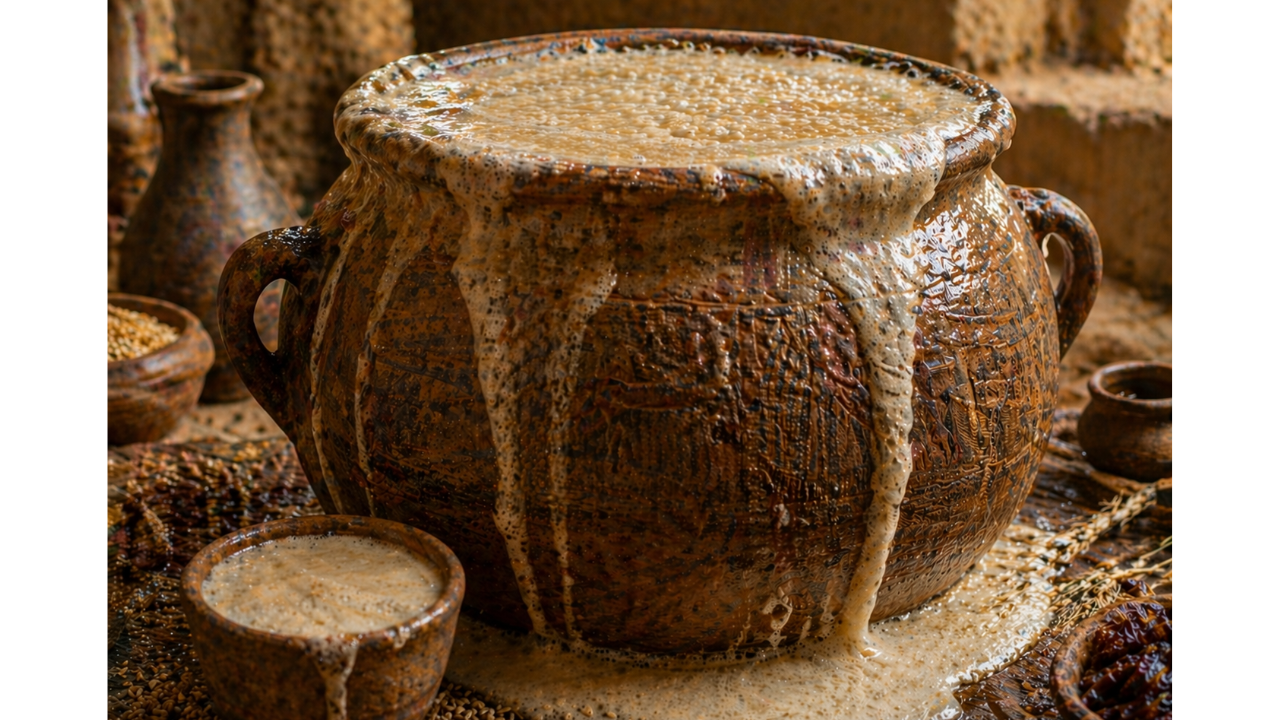
Let’s talk about the beer itself. The "receipts" often list ingredients: barley, hops (or their ancient equivalents), and quantities.
People ask: "Was ancient beer better than ours?"
The answer is: "It didn't matter."
Beer was used as a stable currency because it was easier to store and transport than raw grain and safer to drink than the local water. By controlling the production of beer, the temple elite controlled the survival of the population.
When an archaeologist decodes a message about "5,000 liters of best quality ale," they see a flourishing economy. I see a monopoly. If the state is the only entity issuing the "receipts" for the only safe thing to drink, the state owns your life. This wasn't a marketplace; it was a company town.
The Fraud of the "First Name in History"
Many articles point to "Kushim" as the first person whose name we know from history, found on these very beer tablets. They treat him like a celebrity.
"Imagine a scenario where your only legacy is a grocery list."
That’s the joke people tell. But Kushim wasn't a person in the way we think. Kushim was likely a title or an office. Even if it was an individual, he wasn't a poet or a king. He was an accountant.
The fact that the first name recorded in the history of our species belongs to a bean-counter should tell you everything you need to know about the purpose of technology. It isn't for art. It isn't for love. It’s for audit.
Dismantling the "Progress" Narrative
We are taught that writing led to the Epic of Gilgamesh. That’s the bait and switch. For every one tablet containing poetry, there are tens of thousands of tablets recording grain shipments, livestock counts, and, yes, beer rations.
The technology of writing was used for nearly a millennium purely for accounting before anyone thought to write down a story.
We need to stop using words like "civilization" as a synonym for "good." The "world's oldest beer receipt" proves that civilization began as a way to ensure no one got a calorie they didn't pay for with their sweat.
- The Receipt was a Tracking Device: It verified that a worker had received their minimum sustenance, preventing them from claiming they were owed more.
- The Message was Command: These weren't "receipts" given to a customer. They were internal memos between bureaucrats to ensure the labor force was being fueled at the lowest possible cost.
- The Medium was Permanent: Unlike a spoken agreement, the clay tablet could be filed. It created a permanent record of debt that outlived the debtor.
The Brutal Reality of Ancient Logistics
If you want to understand the "surprising message" on these tablets, stop looking at the symbols and start looking at the logistics.
To produce the beer mentioned on a single large tablet, you need acres of irrigated land, hundreds of laborers, and a massive storage infrastructure. You don't get that through "cooperation." You get that through coercion.
The "beer receipt" is a monument to the end of human freedom. It marks the moment where humans stopped being hunter-gatherers who owned their time and started being "units of production" who were managed by a central processor.
We shouldn't be marveling at the fact that they wrote it down. We should be mourning the fact that they had to.
The next time you see a headline about an "ancient discovery" that makes the past seem "just like us," look for the ledger. Look for the tax man. Look for the debt.
The Sumerians didn't invent writing to share their thoughts. They invented it because they didn't trust you.
Stop looking at the clay and start looking at the cage.