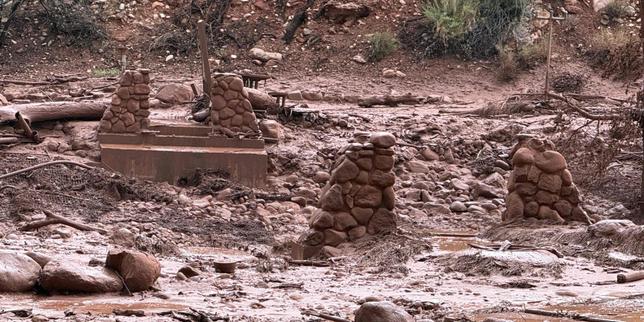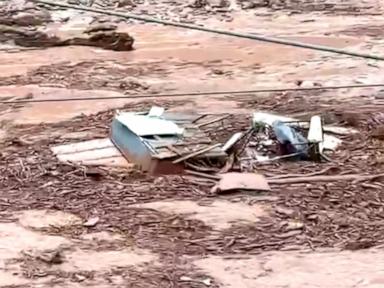
Every time a monsoon surge tears down a slot canyon and someone manages to scramble up a vertical wall just seconds before a wall of muddy water sweeps through, the media turns them into a hero. We read the breathless accounts of survivors outrunning nature, dodging debris, and beating impossible odds through sheer grit. It makes for compelling cinema. It also happens to be a dangerous fairy tale that gets people killed.
The lazy consensus in every single survival narrative surrounding the Grand Canyon and its surrounding tributaries is that quick reflexes and heroic scrambling are what save lives. This perspective frames flash floods as unavoidable acts of god where victory belongs to the fleet-footed.
That framing is pure garbage.
Survival in a slot canyon has almost nothing to do with how fast you can run when the water starts rising. If you are already running from a flash flood, you have already lost. You made fatal errors hours earlier, miles away, while the sun was shining and the sky overhead looked deceptively clear.
The Anatomy of a Manufactured Disaster
Let us look at the mechanics of these events without the Hollywood filter. A flash flood in the American Southwest does not require rain where you are standing. A thunderstorm thirty miles away drops an inch of water onto impermeable slickrock, funnels that volume into a network of narrowing stone chutes, and creates a moving wall of hydraulic destruction that travels faster than an Olympic sprinter.
When survival stories focus on the dramatic sprint to safety, they romanticize a catastrophic failure of basic risk assessment. They teach the public that intuition and athleticism can outrun physics.
I have spent decades watching amateurs wander into remote drainages with zero understanding of catchment basins or weather patterns fifty miles upstream. They check the local forecast for the canyon floor, see a pristine blue sky, and assume they are safe. They fail to understand that a flash flood is a hydraulic ambush. By the time you hear the low, ominous roar that sounds like a freight train echoing off the sandstone walls, the water is already rounding the final bend. You do not have minutes. You have seconds. And human legs do not outrun gravity channeled through a narrowing stone funnel.
The Myth of the Heroic Escape
Consider what actually happens when someone outruns a flash flood. They did not outsmart the storm; they won a lottery ticket. They happened to be fifty yards closer to an un-undercut ledge than the unfortunate soul swept away behind them. Crediting athleticism for surviving a flash flood is like crediting good posture for surviving a lightning strike.
When we label survivors as heroes, we create a cognitive bias. We imply that the outcome was a test of character rather than a statistical anomaly born of poor planning. Future visitors read these accounts and think, If they could outrun it, maybe I can too. They rely on reaction time instead of avoidance.
The National Park Service and local search and rescue teams spend millions pulling bodies and bruised egos out of these chasms every single year. The common denominator in almost every rescue report is not bad luck. It is ignorance of upstream meteorology and a total disregard for the hard math of water displacement.
The Uncomfortable Solution
If you want to stay alive in canyon country, throw away your running shoes and invest in paranoia.
First, stop looking at the weather above your head. Look at the weather over the entire drainage basin. If there is a cloudburst anywhere upstream, you treat the canyon floor like a loaded gun pointed at your chest. You do not wait to see if the water is coming. You assume it is already on its way.
Second, recognize the structural trap of slot canyons. These geological formations are literal bottlenecks. When cubic yards of water are forced through a gap meant for cubic feet, velocity spikes exponentially. No human being can swim against a current laden with boulders, logs, and silt moving at twenty miles per hour.
Third, embrace the absolute necessity of turning around before the adventure even starts. The best mountaineers, river runners, and desert explorers share one defining trait that never makes it into the glossy magazines: they turn back early. They cancel trips when monsoon humidity spikes. They abandon routes when cumulus clouds start building over the distant high country. They accept the bitter disappointment of a ruined weekend over the alternative.
The next time you read a harrowing tale of a tourist scrambling up a cliff face while a wall of brown water devours their backpack, do not applaud their speed. Ask why they were standing in a drainpipe during monsoon season in the first place.
Nature does not negotiate, and it does not care about your grit. Respect the math, or become a cautionary statistic.