Every two years, the exact same manufactured hysteria infects the national press. Reporters stare at progress bars in Sacramento and Los Angeles, wringing their hands because California ballot measures remain undecided days or weeks after polls close. They treat a deliberate, statutory verification process like a technological failure.
It is not a failure. It is the entire point. Don't forget to check out our earlier post on this related article.
When mainstream outlets run headlines lamenting that multiple California ballot measures remain undecided as the vote tally continues, they are peddling a lazy consensus. They assume that election night speed equals democratic competence. They compare California to states like Florida, ignoring the fundamental structural, legal, and demographic differences that make fast results in the Golden State not just unlikely, but actively dangerous to ballot integrity.
If you want fast results, you have to sacrifice voter access and security checks. California chose accuracy and universal enfranchisement over cable news graphics. And if you understand how the machinery actually works, you realize the slow drip of November results is proof that the system is catching fraud, verifying signatures, and respecting the law. If you want more about the history of this, Associated Press offers an informative breakdown.
The Myth of Election Night Closure
Cable news executives love a clean narrative by 11 PM Eastern. They want red and blue maps colored in before the late-night monologues air. When California refuses to play along, pundits frame the delay as incompetence.
This mindset confuses media convenience with civic duty. Legally, Election Day is never the deadline for counting votes in any state. Every single jurisdiction in the United States takes weeks to certify results. The only difference is whether the initial batch of ballots counted on Tuesday night is large enough to statistically project a winner before the remaining ballots are processed.
In states that strictly limit mail-in voting or process mail ballots weeks before Election Day, the Tuesday night dump represents 90 percent or more of the total electorate. The remaining 10 percent rarely changes the outcome, allowing the Associated Press to call races early.
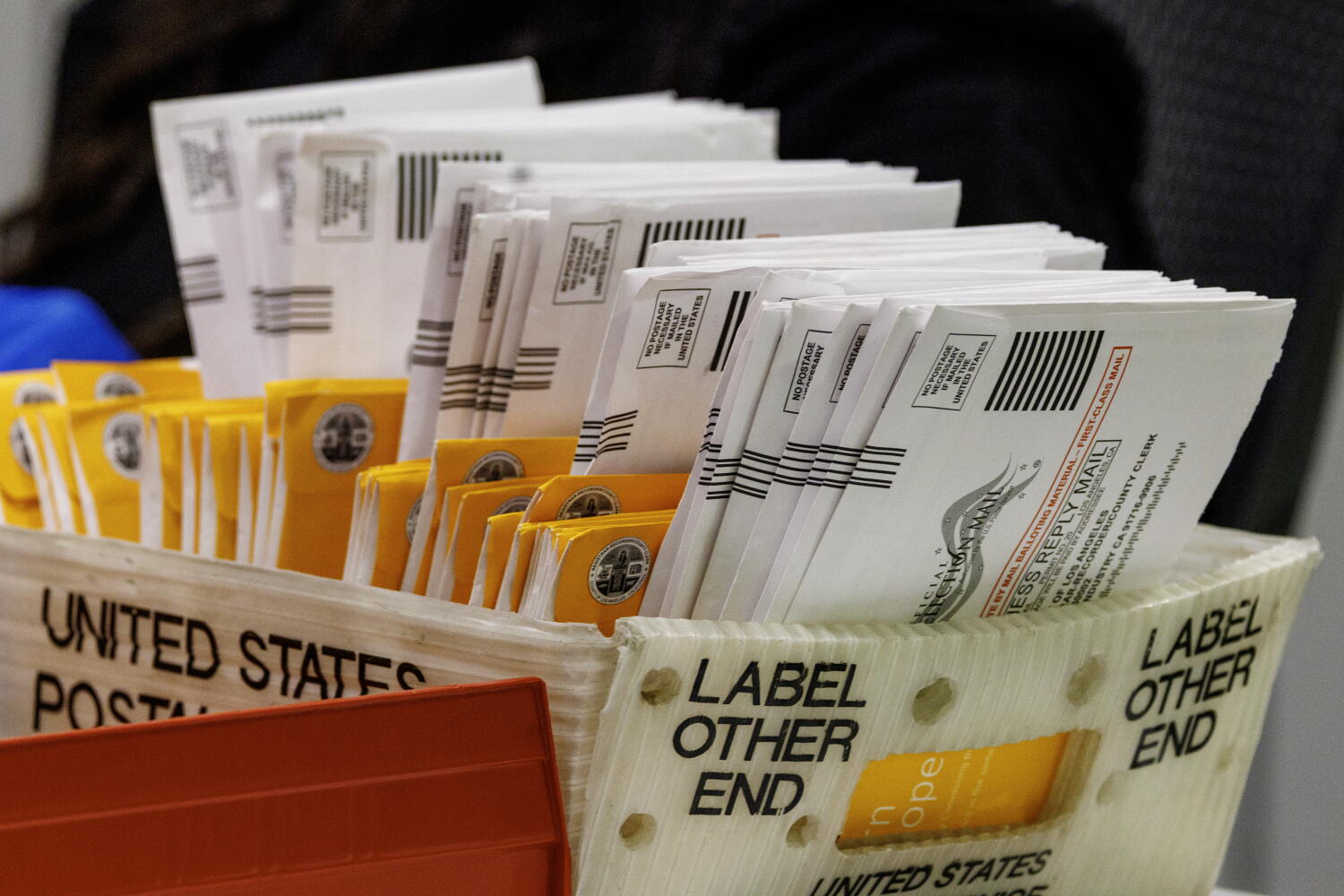
California operates under a completely different set of rules. Under the Voter's Choice Act, every single active registered voter in the state automatically receives a mail-in ballot weeks before the election. Millions of Californians use their kitchen tables as voting booths. And crucially, they wait until the final 48 hours to return those ballots.
I have sat in county registrar war rooms from Alameda to San Diego watching the physical reality of this surge. On the Monday before Election Day, ballot drop boxes are moderately full. By Tuesday at 7:55 PM, tens of thousands of voters are dropping off envelopes at polling places and post offices simultaneously. You cannot magically scan, verify, and tabulate two million paper envelopes that arrived five minutes before the polls closed.
Why California Takes So Long to Count Ballots
To understand why ballot measures hang in limbo for weeks, you have to look at the mechanics of a mail-in ballot under the California Elections Code. People think counting a mail ballot is like feeding a dollar bill into a vending machine. It is not. It is a multi-stage forensic audit.
When a ballot envelope arrives at a county elections office, it undergoes a strict chain of custody before the vote inside is ever seen:
- Automated Sorting and Imaging: High-speed sorters photograph the outside of every envelope, logging the barcode to ensure that specific voter has not already voted in person or submitted a duplicate ballot.
- Signature Verification: Election workers—and optical recognition software—compare the signature on the outer envelope against the voter's signature on file from their DMV records or voter registration card. If the signature does not match, or is missing entirely, the ballot is pulled from the stream.
- The Cure Process: Under California law, a mismatched signature does not mean a discarded vote. Counties are legally required to notify the voter and give them until two days before certification—nearly a month after Election Day—to submit a signature verification statement to "cure" their ballot.
- Extraction and Flattening: Once verified, envelopes are sliced open, ballots are extracted, and the paper is flattened so it does not jam high-speed optical scanners.
- Adjudication: If a voter circled a bubble instead of filling it in, or spilled coffee on the page, or crossed out a mistake, the scanner flags the ballot. A bipartisan team of human adjudicators must visually inspect the ballot on a screen to determine voter intent according to strict state guidelines.
Now multiply that five-step process by three or four million late-arriving ballots.
And remember the postmark rule. Under California Elections Code Section 3020, any mail ballot postmarked on or before Election Day is valid as long as it arrives at the county elections office within seven days. A voter in San Francisco can drop their ballot in a blue USPS mailbox at 4:00 PM on Tuesday, and that ballot might not even land on a county sorting table until the following Monday. You literally cannot count a ballot that is still riding in the back of a mail truck.
The Structural Reality of Direct Democracy
When reporters whine about undecided ballot measures, they also ignore what Californians are actually voting on. California is not just electing a mayor or a senator. Voters are acting as a fourth branch of government, deciding the fate of complex statutory and constitutional propositions.
Consider the sheer cognitive load of a California ballot. Voters regularly face ten or more statewide propositions covering everything from municipal bond issuance and criminal sentencing guidelines to rent control, healthcare reimbursement formulas, and environmental regulation. Add local city charter amendments, school board measures, and regional transit taxes, and a single ballot can span four to six double-sided pages of dense, 8-point legal text.
Because these measures lack party labels, voters do not just check a straight-ticket box. They research. They argue at dinner. They wait for newspaper endorsements and voter guides. Consequently, ballot measures experience the highest rate of late decision-making and the highest rate of undervotes—where a voter skips a specific question—of anything on the ballot.
Furthermore, ballot measures frequently pass or fail by razor-thin margins. While a statewide candidate might win by 15 percentage points—allowing outlets to call the race on Tuesday night despite millions of uncounted ballots—a contentious proposition on minimum wage or property taxes often hovers at 50.4 percent to 49.6 percent.
When a measure is separated by fewer than 100,000 votes out of 15 million cast, calling it early is journalistic malpractice. The late-arriving ballots in California are not statistically identical to the early-arriving ballots. Political scientists like Paul Mitchell of Political Data Inc. have documented this phenomenon for decades. Early mail voters skew older, more partisan, and more affluent. Election Day drop-off voters and late mail voters skew younger, more diverse, and more independent.
A proposition that leads by two points on Tuesday night routinely flips by Friday afternoon once the late drop-box ballots from Los Angeles and the Bay Area are processed. Treating the Tuesday night snapshot as the "real" result—and viewing the subsequent shift as suspicious—shows a complete ignorance of voter demographics.
Dismantling the Bad-Faith Talking Points
Whenever a ballot measure swings during the post-election canvass, bad-faith actors immediately scream fraud. They point to the slow count as evidence that operatives are manufacturing ballots in back rooms to tip the scales.
Let's dismantle that premise with basic operational reality.
If someone wanted to rig a California election, a slow, transparent, multi-week canvass is the worst possible environment to do it. Every single day at 5:00 PM, the California Secretary of State publishes an updated unprocessed ballot report broken down by county and ballot type. Observers from both political parties, independent watchdogs, and campaign lawyers are physically present in the tabulation rooms watching the machines run.
Every ballot is tied to a unique, registered voter in the statewide VoteCal database. Once a voter's envelope is scanned, their record is locked. If a phantom ballot were injected into the system, the number of ballots tabulated would exceed the number of checked-in voters in the precinct—an immediate, fatal audit failure that triggers a mandatory manual investigation.
The real reason critics hate the slow count has nothing to do with security. It has to do with money and political momentum. Consultants, lobbyists, and corporate sponsors who dump $100 million into a proposition campaign hate sitting in limbo for three weeks. They want their return on investment immediately, or they want to pivot their legislative strategy for the upcoming session in Sacramento. Their impatience is not a valid reason to disenfranchise millions of legitimate voters who followed the rules.
The Trade-Off Nobody Wants to Admit
To be entirely honest, California's system is not without serious flaws. Pretending there are no downsides to a month-long ballot count is just as dishonest as claiming the system is rigged.
Here is the uncomfortable truth: Prolonged uncertainty breeds legitimate public distrust.
Even when a system is 100 percent secure, the perception of dysfunction erodes democratic legitimacy. When an election drags on for 30 days, conspiracy theories fill the information vacuum. Voters lose interest, local news coverage moves on to holiday shopping, and by the time a crucial local school bond or criminal justice reform measure is finally decided in early December, half the electorate has stopped paying attention. That is a massive failure of civic engagement.
There is also an enormous financial cost. Keeping temporary election workers on payroll for four weeks, renting secure warehouse space, running 24/7 security details, and printing millions of cure notices drains county budgets across the state. Smaller, rural counties in the Central Valley and Northern California struggle immensely under the administrative weight of state mandates designed primarily with Los Angeles County's budget in mind.
And yes, California could speed up the count without sacrificing security—if lawmakers were willing to make politically unpopular choices.
How to Actually Fix the Bottleneck
If you want to solve the California counting delay, stop yelling at county registrars and look at the state legislature. Registrars do not write the laws; they just execute them. If Sacramento actually wanted results within 72 hours of polls closing, there are three immediate policy levers they could pull:
- Eliminate the Seven-Day Postmark Grace Period: Require all mail ballots to be received by the county elections office by 8:00 PM on Election Day, not merely postmarked. Over 30 states already use this standard. If voters know their ballot must arrive by Tuesday night, they will mail it the week before instead of waiting until Tuesday afternoon. This single change would eliminate nearly a week of waiting for the postal service.
- Shorten the Signature Cure Window: Reduce the deadline to cure mismatched signatures from 28 days to 7 days. Give voters one full week after Election Day to fix their signature via text, email, or mail. Three weeks of additional lag time yields diminishing returns while paralyzing close races.
- Mandate Pre-Processing Deadlines: California already allows counties to begin verifying signatures and opening envelopes 29 days before Election Day, which is great. However, smaller counties lack the automated machinery to take full advantage of this window. The state should tie election funding directly to automated sorting infrastructure so every county clears 100 percent of its early mail backlog before Tuesday morning.
Notice why California politicians have not passed these reforms. Every single one of those changes would result in a small percentage of late ballots being rejected. In a state where political identity is tightly bound to expanding ballot access to the absolute theoretical maximum, no legislator wants to be accused of suppressing a single vote just to satisfy pundits on cable news.
Stop Watching the Progress Bar
When you see headlines announcing that California ballot measures remain undecided days after an election, stop treating it like breaking news. It is entirely normal.
You are watching a state of 39 million people conduct a massive, decentralized, paper-trail audit in real time. The system is not broken because it refuses to give you instant gratification. The system is working precisely because it refuses to guess.
If you want to understand who is actually winning a close California proposition, ignore the Tuesday night totals completely. Look at the unprocessed ballot report from the Secretary of State, check which counties still have the largest piles of uncounted drop-box envelopes, and look at the historical partisan and demographic breakdown of those specific zip codes.
Everything else is just noise designed to keep you refreshing a webpage.