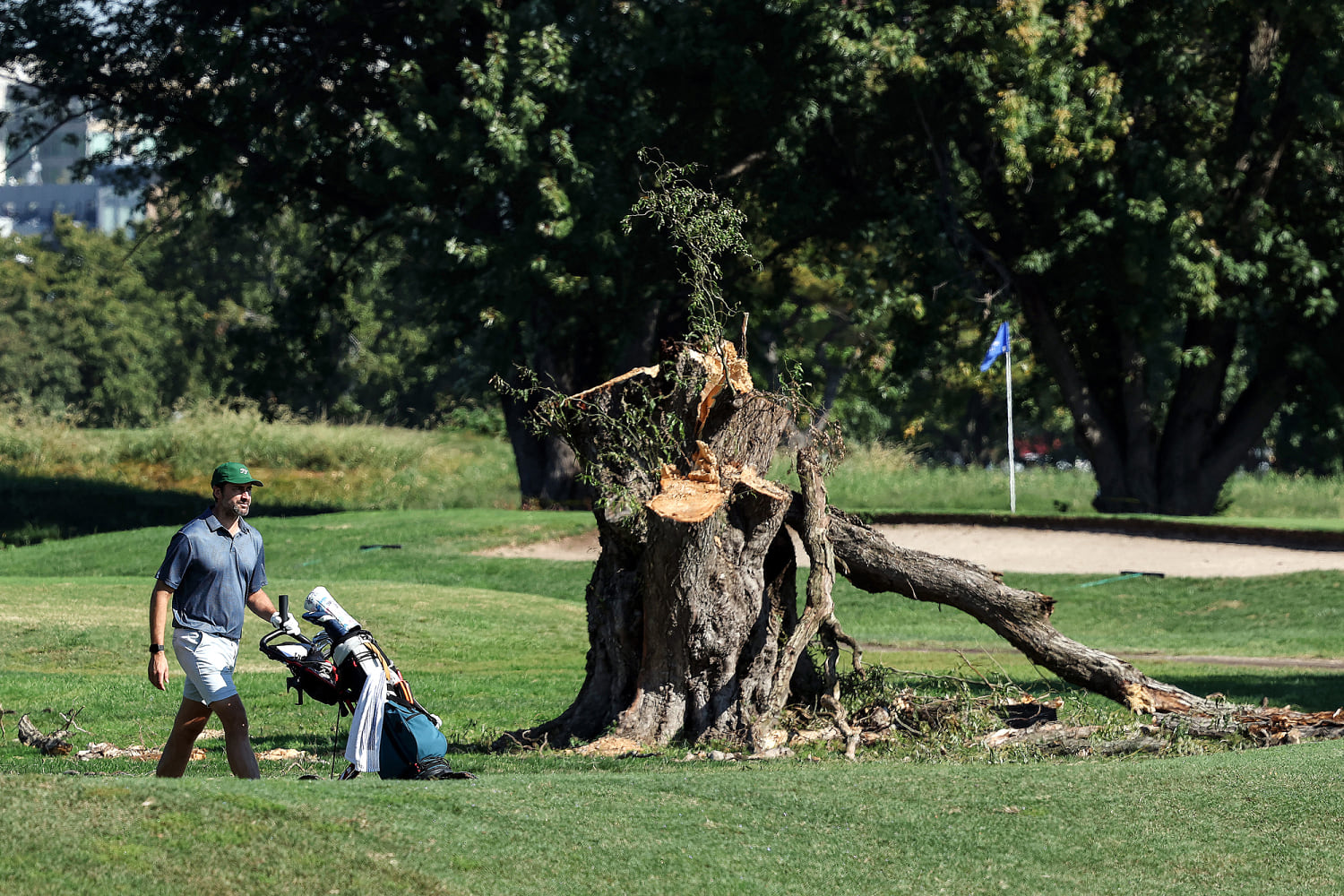
Every time a court extends a restraining order over a tree-clearing dispute at a public golf course in Washington, D.C., half the internet acts like the cherry blossoms just got air-lifted to Mars. Chainsaws stop. Lawsuits fly. Headlines scream about federal overreach or ecological tragedy.
Relax. Both sides are arguing over the wrong piece of the board.
When a judge extends an order blocking the Trump administration from clearing trees at a D.C. golf course, the lazy consensus splits along predictable tribal lines. One camp treats every mature oak or sycamore on public turf as sacred heritage under siege by political bulldozers. The other camp treats any environmental review or judicial pause as bureaucratic sabotage slowing down a revitalization project.
Both camps miss the real mechanics of urban land management, municipal budgets, and golf course agronomy. A single extended court order does not settle who owns the narrative, let alone who understands how urban canopy, drainage, turf health, and public infrastructure actually collide on a golf course.
The Lazy Consensus Around Tree Clearing and Court Orders
Conventional coverage frames a judicial extension as a dramatic standoff between preservation and executive muscle. You get neat heroes and villains. You get quotes about scenic vistas, historical value, or urgent property upgrades.
What you rarely get is basic operational literacy.
A golf course is not a pristine wilderness preserve left untouched since the Pleistocene. It is an intensively managed cultural landscape built for turfgrass health, sightlines, ball flight corridors, drainage, and player safety. At the same time, mature trees in an urban watershed like Washington, D.C. provide real stormwater interception, shade, soil stabilization, and habitat value.
When a judge extends a block on tree removal, the court is typically enforcing procedural guardrails—such as environmental review requirements, public notice, or administrative standards—rather than declaring a permanent ban on all future maintenance. Treating an interim judicial order like a final verdict on every tree on the property is bad reporting. Treating every tree on a golf course like an untouchable monument is bad ecology.
Let's define terms cleanly before going further:
- Canopy management means selective pruning, disease control, spacing, and targeted removal to keep remaining trees healthy and turfgrass viable.
- Clear-cutting means stripping broad swaths of vegetation indiscriminately, which creates severe erosion, runoff spikes, and heat stress if done carelessly on sloped or riparian terrain.
- Injunctive relief or an extended order is a temporary legal freeze designed to preserve the status quo while legal or regulatory questions are argued.
People blur those distinctions constantly. Once you separate them, the noise drops by half.
Why Everyone Asks the Wrong Questions About Urban Golf Courses
When a dispute hits the docket over clearing trees at a D.C. golf course, search behavior spikes around the same tired questions. Most of them start from a broken premise.
"Is the government destroying nature when it clears trees on public land?"
Not automatically. That question assumes all tree removal equals ecological destruction, which ignores forest succession, invasive species pressure, shade-starved turf, and overstocked stands where weak trees crowd out stronger ones.
In mid-Atlantic urban parks and public courses, invasive vines, storm-damaged limbs, and overcrowded canopies can weaken tree health and choke out native groundcover. Removing specific trees can actually improve long-term canopy resilience if replaced or managed thoughtfully. Conversely, wiping out mature buffers along creeks or steep embankments without stormwater controls can dump sediment and heat straight into local waterways.
The right question is never "Did a saw cut wood?" The right question is: Which exact trees, on what exact slopes or soil types, under which legal authority, and with what stormwater and replanting plan?
"Do golf courses hurt the environment or help it?"
Ask that question binary-style and you will get bad answers from both sides.
Turfgrass requires sunlight and air movement. Dense tree shade kills cool-season turfgrass, which often pushes superintendents toward heavier chemical inputs, overseeding costs, or water stress just to keep playable grass alive. Opening selective corridors can let sunlight hit the turf, improve air circulation that reduces fungal disease, and lower maintenance strain.
On the flip side, public golf courses in dense cities sit on large tracts of open space that absorb rainwater, buffer noise, and offer green corridors that small pocket parks cannot match. Poorly managed courses with excess fertilizer runoff or stripped tree lines can degrade local water quality. Well-managed courses with native roughs, buffer zones, and disciplined tree care can function as functional green infrastructure.
Golf courses are neither environmental saints nor ecological villains by default. They are high-maintenance hybrid landscapes where agronomy and ecology constantly negotiate for space.
"Why does a judge extending an order matter so much if it is temporary?"
Because in public projects, time is leverage.
Construction seasons are short. Budgets have fiscal clocks. Political momentum shifts fast. When a judge extends an order blocking tree removal, the immediate impact is not always permanent preservation; it is delay, legal cost, and forced compliance with review rules.
Sometimes a pause catches real flaws in planning or statutory compliance. Sometimes a pause simply raises costs and stalls work while litigants posture. Either way, a court order is a legal brake, not a master agronomist.
What Happens Inside the Dirt, Roots, and Budgets
To see why this fight gets messy fast, look past the press releases and examine what happens on the ground.
Imagine a scenario where a municipal or federally tied golf property has dozens of aging, crowded trees along fairways and slopes. Half the trees are shade-stressed or leaning; the other half anchor soil above a drainage swale. An administration wants fast clearing to push a vision forward quickly. Opponents file suit to halt work. A judge extends the block so the legal standards can be tested properly.
In that scenario, neither side wins by shouting slogans.
If clearing goes ahead without proper hydrological and legal vetting, runoff accelerates, roots stop holding bank soil, neighbors push back harder, and lawsuits multiply. If clearing gets frozen indefinitely without a clear management plan, hazardous limbs drop, disease spreads through crowded stands, turf dies in deep shade, and the property degrades while everyone argues in court.
I have watched public and private land projects burn millions of dollars because leaders treated land management like a public relations campaign instead of an engineering and ecological sequence. When you skip sequence—rushing tree work before permits, drainage plans, and baseline inventories are rock solid—you invite injunctions. And once an injunction lands, every hour of delay costs money, credibility, and operational focus.
Heavy hitters in urban forestry, landscape architecture, and turf science—researchers and practitioners working through organizations like the Golf Course Superintendents Association of America, the American Society of Landscape Architects, and municipal urban forestry programs—have emphasized the same core principle for decades: healthy landscapes depend on matching tree species, spacing, soil conditions, and water flow to the site's actual function.
Ignore site mechanics and nature collects the bill eventually. Ignore legal process and the courts collect it right away.
Where This Contrarian Take Can Burn You
I am pushing a pragmatic, non-dogmatic view here: treat tree removal on a D.C. golf course as a technical, legal, and ecological trade-off rather than a cartoon culture-war battle.
That approach has real downsides, and pretending otherwise would be dishonest.
First, nuance loses attention in a polarized media environment. Nuance does not fit on a bumper sticker. People who want outrage over a court ruling or outrage over government action will get frustrated when you point out procedural details, turf biology, and watershed math.
Second, procedural fairness is not a triviality. When courts extend blocks on executive or administrative action, they are often enforcing rules designed to keep power accountable and prevent irreversible mistakes before facts are settled. Downplaying a court order as "just a delay" can understate real legal checks and balances.
Third, pragmatism can look like indifference to people who love a place. For regular players, neighbors, and walkers, familiar trees carry emotional weight. Telling someone to look at canopy ratios and drainage slopes when their favorite shaded hole or walk is at stake can sound cold if you strip out human attachment entirely.
Actionable Moves That Actually Work
If you are covering this story, managing a public asset, or trying to make sense of the next court filing without getting played by spin, do this instead:
- Read the exact scope of the order, not just the headline. Check which parcels, tree categories, and legal claims are covered by the extension, and how long the freeze runs.
- Map the trees against hydrology and turf needs. Separate hazard/invasive/shade-problem trees from riparian, slope-stabilizing, and high-value specimen trees.
- Audit the paperwork trail. Look for environmental assessments, historic or park land rules, public comment records, and contractor timelines. Those boring documents predict outcomes far better than cable news hits.
- Demand replacement and stormwater math. Any serious plan to remove significant canopy on a public course should show how runoff, soil stability, and tree canopy are balanced over time.
- Keep politics and agronomy separate in your analysis. Political motives may spark the fight, but soil, sunlight, water, and law determine what survives on the ground.
Stop rooting for a courtroom knockout punch and start watching the dirt, the drainage, and the docket.