The United Nations is shocked—again.
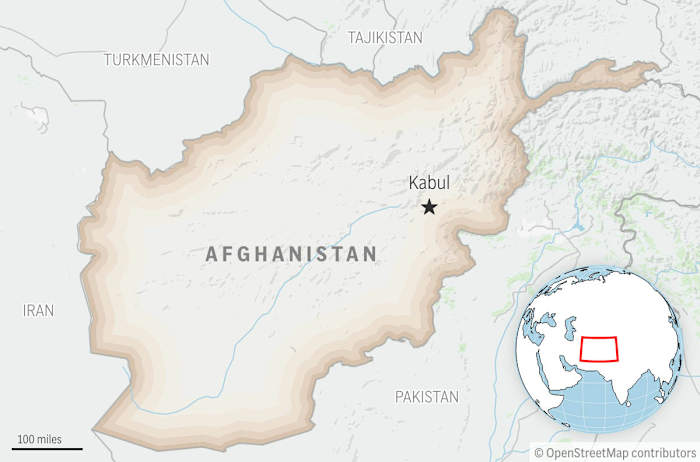
Following the publication of Decree No. 18, "on judicial separation of spouses," the United Nations Assistance Mission in Afghanistan (UNAMA) issued its standard, boilerplate condemnation. The western headlines followed right on cue, shrieking that the Taliban has officially legalised child marriage because the decree states a girl’s silence at puberty can be interpreted as consent.
This reaction is lazy, performative, and entirely misreads the operational mechanics of the Taliban state.
For twenty years, Western nation-builders operated under the delusion that human rights could be secured via top-down constitutional declarations. When the Taliban took Kabul in 2021, that entire paper-thin apparatus dissolved. Now, the international community continues to make the exact same analytical error. They treat a highly tactical, localized, bureaucratic codification project as if it were a Western legislative debate.
I have watched international agencies burn billions of dollars trying to install formal legal frameworks in regions governed entirely by customary law. The reality on the ground does not care about your press releases. If you want to understand what is happening to women and girls in Afghanistan, you have to look past the moral outrage and analyze the structural reality of the Taliban’s consolidation of power.
The Illusion of the Legal Blank Slate
The primary flaw in the UN’s analysis is the assumption that Decree No. 18 introduces child marriage to a system where it did not previously exist. This is historically and sociologically illiterate.
Child marriage and forced marriage are deep-seated economic coping mechanisms in rural Afghanistan. They are driven by extreme poverty, systemic food insecurity, and tribal customs that predate the Taliban by centuries. When the previous Western-backed government set the legal marriage age at 16, it changed absolutely nothing outside a few neighborhoods in Kabul. The law existed on paper; the reality existed in the villages.
What the Taliban is doing now is not "permitting" child marriage. They are taking a decentralized, chaotic web of tribal customs (Pashtunwali) and local clerical rulings and bringing them under centralized state control.
By defining the exact conditions under which a marriage arranged by a patriarch can be ruled invalid—such as an inadequate dowry or an abusive husband—the Taliban judiciary is establishing its own supreme authority over local tribal elders. Look at the text of the decree itself. It explicitly outlines the khiyar al-bulugh (the option upon puberty), giving a girl the right to approach a state court to cancel a marriage contract arranged by her father or grandfather if certain conditions of kindness and suitability are breached.
The real story here is not a sudden shift in social morals. It is an aggressive bureaucratic power grab. The Taliban is telling rural patriarchs: You no longer have absolute, unchecked authority over family law. The state courts do.
The Hypocrisy of the "Consent" Outrage
International observers are fixated on the clause stating that a virgin girl’s silence can be interpreted as consent. They call it a horrific rollback of human rights.
It is certainly a rejection of modern Western standards of affirmative consent. But within Classical Islamic jurisprudence (Fiqh), this provision is standard. The Taliban didn't invent this out of thin air; they copied it from centuries-old Hanafi legal texts to project religious legitimacy to their conservative base.
Meanwhile, the UN ignores the internal contradictions within the Taliban's own governance. Just last year, Taliban Supreme Leader Hibatullah Akhundzada issued a decree strictly banning the forced marriage of girls. The Ministry of Vice and Virtue claims to have investigated thousands of forced marriage cases over the past twelve months.
Are they doing this out of a sudden progressive awakening? Absolutely not. They are doing it because forced marriages frequently spark violent inter-tribal feuds that destabilize the regime's control.
+---------------------------------------------------------------------------------------+
|                       THE DUELING MECHANISMS OF TALIBAN FAMILY LAW                    |
+------------------------------------+--------------------------------------------------+
| REGIME STABILITY DRIVER            | BUREAUCRATIC CONSOLIDATION DRIVER                |
+------------------------------------+--------------------------------------------------+
| Bans forced marriages to prevent   | Codifies traditional jurisprudence to strip      |
| destabilizing tribal blood feuds.  | local elders of independent judicial authority.  |
+------------------------------------+--------------------------------------------------+
When you look at this as an exercise in state-building rather than a moral crusade, the strategy becomes clear. The Taliban is building a predictable, hyper-conservative legal monopoly. Condemning them for violating international treaties they never signed is a useless exercise in self-congratulation.
The Real Crisis is Economic, Not Legal
Stop looking at the courtroom. Look at the market.
The rise in early and forced marriages in Afghanistan since 2021 is not being driven by Decree No. 18. It is being driven by the total collapse of the Afghan economy, fueled in part by Western sanctions and the freezing of central bank assets.
When a family cannot afford bread, a daughter becomes a financial liability and a potential source of income via a bride price (mahr). No amount of legal reform or UN condemnation will change that math. If tomorrow the Taliban issued a decree setting the minimum marriage age to 21 with a penalty of death, child marriages would still happen in secret because hunger overrides the law.
The international community loves to focus on the text of these decrees because it allows them to look occupied without doing the hard, uncomfortable work of economic engagement. It is far easier to write a press release about "gender apartheid" than it is to navigate the complex reality of unfreezing humanitarian liquidity without enriching a terrorist regime.
Dismantling the UN's Strategy
The current international playbook for dealing with the Taliban's social policies consists entirely of two moves: public shaming and conditional aid. Both have failed completely.
The Taliban leadership thrives on Western condemnation. Every time a UN official expresses "grave concern," it signals to the Taliban's internal radical factions that the leadership is successfully resisting Western cultural imperialism. The condemnation is fuel for their propaganda machine.
If the goal is actually to protect vulnerable young girls on the ground, the approach must pivot away from Western legal frameworks entirely.
- Fund localized economic incentives: Tie community agricultural aid directly to the enrollment of girls in local, informal primary education and home-based vocational training.
- Exploit internal regime rifts: Use the Taliban’s own judicial structures against them. Since Decree No. 18 allows marriages to be invalidated if a husband is "well-known for his bad choices," local advocacy should focus on funding legal representation for women within the Sharia court system, utilizing the regime's own rules to secure annulments.
- Accept the reality of the regime: The Taliban is not going anywhere. They survived a twenty-year war against the world's most powerful military. They will not change their theological stance on gender because of a UN resolution.
The Western obsession with formal legal text is a luxury of stable, developed societies. In a survival economy, laws are just ink on a page. The UN can continue to express its grave concerns until the ink runs dry, but until they realize that family law in Afghanistan is an arena of state consolidation and economic desperation rather than pure ideological malice, their words will remain entirely irrelevant.