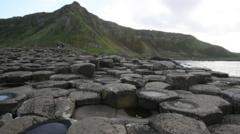
Every time someone pulls another clump of oxidized copper and nickel out of a hexagonal basalt crack at the Giant's Causeway, local media treats it like a tragedy. Reporters clutch their pearls over tourists tossing small change into Northern Ireland's most famous geological wonder. National Trust wardens talk about environmental contamination, visual pollution, and the painstaking, back-breaking labor required to pry ten thousand coins out of ancient volcanic stone.
The media narrative is predictable. Tourists are reckless. Nature is being defaced. Authorities must intervene to protect the sacred integrity of a UNESCO World Heritage site from the scourge of loose pocket change.
It is completely backwards.
I have spent decades watching heritage managers freak out over visitor engagement while quietly begging for operational funding. The pearl-clutching over coin tossing is pure theater. Those tiny metal disks sitting in basalt crevices are not an insult to geology. They are a decentralized, frictionless micro-donation model that visitors choose to participate in entirely on their own volition.
Instead of treating this as a crime scene, let us look at the reality of site maintenance, human psychology, and why trying to sanitize every square inch of a tourist attraction destroys the very magic that brings people there in the first place.
The Myth of Pristine Purity
Heritage conservation has a religious obsession with an artificial past. The prevailing consensus says that sites like the Giant's Causeway should look untouched, sterile, and frozen in time, as if human feet and human culture have never touched them.
This is a fantasy.
The Causeway has been a major tourist destination since the seventeenth century. Visitors have been leaving their mark, walking on the stones, chipping off souvenirs, and yes, throwing coins into wells and crevices for generations. The idea that we can surgically remove every trace of modern human interaction and restore a pristine, pre-industrial wilderness is delusional.
When workers spend days chiseling pocket change out of basalt joints, they are not saving the stones. Basalt is cooled magma, formed roughly sixty million years ago. A modern UK one-pound coin or a stray euro cent is not going to chemically erode or structurally compromise columns that withstood the tectonic breakup of the North Atlantic.
What the clean-up crew is actually doing is performing an expensive, performative ritual of erasure. They are spending administrative budget to sanitize a landscape because a bureaucrat decided that a coin in a crack violates an aesthetic guideline.
The Economics of Micro-Donations
Let us talk about money, because heritage sites are chronically starved of it.
Getting visitors to open their wallets for preservation is notoriously difficult. Donation boxes sit quietly in visitor centers, ignored by ninety percent of the foot traffic. Digital tap-to-donate terminals require infrastructure, electricity, and transaction fees. People walk right past them.
Yet, humans have an innate psychological compulsion to cast tokens into places of wonder. Trevi Fountain style mechanics are hardwired into our cultural DNA. We throw currency into wishing wells, rivers, and rock formations because it marks our presence. It creates a physical tether between the traveler and the place.
When tourists drop coins into the Giant's Causeway, they are spontaneously micro-funding the local economy and the site itself. Yes, the currency needs to be retrieved so it does not accumulate indefinitely, but the correct response is not moral outrage. The correct response is setting up a dedicated collection box right next to the hot spots that funnels those exact coins directly back into conservation projects, with a sign thanking visitors for their contributions.
Instead, authorities complain about the labor cost of extraction. If the labor cost of clearing coins is too high, change the operational workflow. Put up a clear, non-preachy sign: Coins are collected monthly to fund local path maintenance. Watch how fast the volume triples. People want to contribute when they feel part of the ecosystem, rather than treated like unruly children who need discipline.
The Sanitization Trap
There is a broader disease in modern tourism management: the theme-parkification of natural wonders.
Administrators want tidy pathways, roped-off viewing areas, zero friction, and absolute visual control. They want every rock face looking like a rendered computer graphic for a promotional brochure.
This approach completely misses why people travel to raw geological sites. The Giant's Causeway is powerful precisely because it is ancient, chaotic, and indifferent to human rules. The interlocking polygonal columns feel otherworldly. They invite touch, exploration, and direct interaction.
When you turn a site into a sterile museum exhibit where touching a stone or leaving a trace is treated as a misdemeanor, you kill the visceral connection. Visitors stop feeling like explorers and start feeling like inmates on a guided bus tour.
I have seen management teams spend millions on visitor centers, paved boardwalks, and surveillance infrastructure while cutting the actual field staff who talk to travelers. They prioritize visual perfection over authentic engagement.
What Actually Works
If heritage managers want to stop wasting time and money on endless coin extraction cycles, they need to stop fighting human nature and start leveraging it.
- Repurpose the Ritual: Accept that coin-tossing is not going away. Channel it. Designate specific, non-ecologically sensitive catchment zones where coins can accumulate safely for a month before being harvested by staff.
- Transparent Redistribution: Use the recovered funds visibly. Put a ledger in the visitor center showing how much coin collection funded trail repairs or local wildlife protection that month. Turn a compliance headache into a community success story.
- Ditch the Scolding: Stop running press releases that frame tourists as vandals for interacting with the landscape. When you tell people they are ruining a place by participating in an ancient tradition, you alienate your core audience. Educate without condescension.
The obsession with removing every foreign object from the Causeway columns is a symptom of managerial anxiety. It is easier to pick metal out of rocks than it is to solve the complex funding and capacity challenges facing modern heritage sites.
Leave the stones alone, stop treating visitors like an invasive species, and figure out how to monetize the magic you are currently paying people to sweep away.