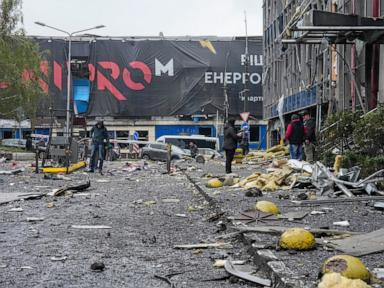
Every time a tragic headline hits the wire about a vehicle breaching an unprotected public space, the media apparatus grinds into its predictable, lazy routine. A truck plows into a youth soccer game in Kansas, ending two lives and scattering eleven others to emergency wards, and the immediate chorus begins. We scream for tighter background checks on vehicle owners, harsher prison sentences, or better perimeter policing. We treat a structural urban design failure as a moral failing of an individual.
It is a comforting delusion. It lets civic planners sleep at night and allows park districts to avoid spending a dime on actual infrastructure. If you liked this piece, you might want to check out: this related article.
Let us dispense with the fairy tale right now. Relying on social contracts, honor systems, and flimsy chain-link fences to separate eighty-mile-per-hour multi-ton kinetic hazards from children kicking a ball on a Saturday morning is not safety. It is architectural negligence.
The Myth of the Perimeter
I have walked municipal sports complexes across this country. I have stood at the edge of county parks where a fifty-foot drop of manicured turf leads straight off a four-lane arterial road with nothing between a runaway hatchback and a U-10 goalie except a pathetic row of decorative shrubbery. For another look on this story, see the recent update from TIME.
When a crash like the one in Kansas happens, commentators immediately lock onto the proximate cause. Was the driver intoxicated? Did they suffer a medical emergency? Were they texting?
Those questions matter for a criminal prosecutor, but they are entirely irrelevant to the civil engineer. From a systemic safety perspective, focusing solely on the driver is like blaming gravity when someone steps off a skyscraper. If your public recreation space can be breached by a passenger vehicle simply turning the steering wheel six degrees to the right, your design is defective. Full stop.
We have engineered our roadways with passive safety features for decades. We use crash cushions, Jersey barriers, rumble strips, and breakaway signposts on our highways because we acknowledge a fundamental truth of human civilization: people make catastrophic mistakes, vehicles lose control, and medical episodes happen behind the wheel without warning.
Yet the moment we design a park, a playground, or a community sports field, we completely abandon this engineering pragmatism. We pretend that public parks exist in a physics-free vacuum where kinetic energy pauses at the property line.
Hostile Architecture We Actually Need
For years, urbanists have bickered over hostile architecture—those spiked benches designed to deter the unhoused or slanted window sills meant to discourage loitering. We rightly critique cities that weaponize concrete and steel against society's most vulnerable.
But we have developed a bizarre cultural blind spot regarding the protection of children and crowds from vehicular violence. The same city council members who clutch their pearls over an anti-homeless spike will sign off on a youth league soccer pitch situated ten feet from a high-speed rural highway with zero physical barriers.
Real security is boring. It looks like heavy reinforced bollards spaced four feet apart, deep earthen berms, structural retaining walls, and strategic grade separations.
When you install steel-reinforced concrete bollards capable of stopping a ten-thousand-pound truck dead in its tracks around the perimeter of a community field, you eliminate the entire vector of catastrophe. You do not need to rely on the driver's sobriety. You do not need to rely on a panic-stricken parent pulling their kid out of the way in four-tenths of a second. You let physics do the heavy lifting.
[ Unprotected Field ]  --->  [ Zero Resistance ]  --->  [ Catastrophe ]
[ Protected Field ]    --->  [ Steel Bollards ]   --->  [ Zero Threat ]
Cities balk at the cost. They tell taxpayers that retrofitting hundreds of community parks with kinetic-rated barriers is economically unfeasible.
Calculate the alternative. Factor in the lifetime medical costs of eleven hospitalized survivors, the multi-million dollar tort settlements paid out by municipal insurance pools, the emergency response deployment, and the immeasurable human devastation inflicted on a community. A steel bollard is cheap. Negligence is bankrupting us.
The Legal Fiction of Municipal Liability
Talk to municipal risk assessors off the record, and they will tell you the quiet part out loud. Cities are terrified of installing robust physical barriers because doing so explicitly acknowledges a known hazard. In the twisted logic of municipal tort liability, if you acknowledge a danger by trying to block it and fail, you are exposed. If you leave the field completely exposed to traffic, you can hide behind sovereign immunity or claim the incident was an unforeseeable act of God.
It is a legal shell game played with human lives.
An unforeseeable act of God is a meteor strike. A car leaving a paved roadway and entering an adjacent grassy expanse is not an act of God. It is a statistical certainty. Roadways fail. Tires blow out. Drivers black out. Seniors confuse the accelerator with the brake. These are predictable failure modes of an automotive-dependent society. Designing civic spaces as if these failure modes do not exist is professional malpractice.
If an engineer designed a bridge with support beams rated for half the expected load, they would lose their license and face criminal charges. Yet civic planners routinely lay out public gathering spaces adjacent to high-speed vehicular corridors with zero structural deflection capability, and we call it an accident when tragedy strikes.
Rewriting the Playbook for Public Safety
We need to completely reverse how we approve public recreation zones. Every park, field, and playground located within five hundred feet of a motorized thoroughfare should be classified as a high-risk zone requiring mandatory physical traffic mitigation.
- Mandatory Kinetic Barriers: Outlaw the use of decorative landscaping hedges or cable fences as primary perimeters near active roadways. Require structural concrete or steel barriers rated to deflect a heavy-duty vehicle at posted speed limits.
- Buffer Zone Expansion: Enforce minimum setback requirements between playing surfaces and curb lines. A ten-foot grass buffer provides zero meaningful deceleration time for an out-of-control vehicle. We need a minimum fifty-foot lateral separation combined with grade changes—depressed fields or raised berms.
- Traffic Calming at Scale: If a community sports league operates adjacent to a municipal road, the speed limit on that road during game hours must be hard-capped at twenty miles per hour with active speed-enforcement cameras and raised intersections.
Stop calling these incidents freaks of nature. Stop treating them as unsolvable mysteries of human behavior. Every time we mourn the victims of a vehicle intrusion into a public space without demanding structural redesigns, we are complicit in the next one.
The truck in Kansas did not invent a new way to kill. It simply exploited a vulnerability we were too cheap, too lazy, and too cowardly to fix.