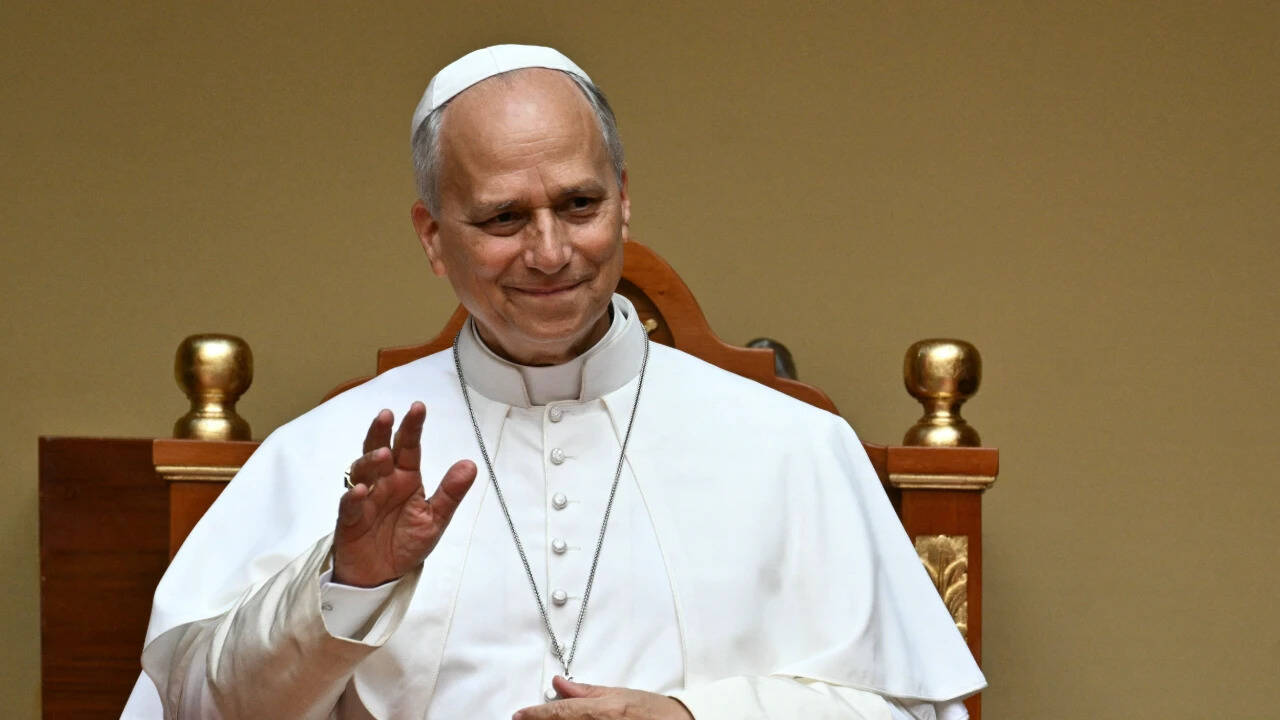
Every time a papal remark about clerical celibacy hits the wire, the commentary class goes into autopilot. You know the drill. A headline drops—something safe and noncommittal like "'Married men as clergy is complicated': Pope Leo on Catholic priests"—and two predictable camps immediately rush to their keyboards.
Progressives treat priestly celibacy like an archaic HR policy that just needs a modernized employee handbook to fix the Catholic Church's staffing shortage. Traditionalists treat it like the Tenth Commandment, screaming heresy at anyone who points out that St. Peter had a mother-in-law.
Both sides are dead wrong. Worse, they are boring.
The lazy consensus dominating religious journalism treats clerical celibacy as a simple binary: keep the rule and watch parishes die, or scrap the rule and watch seminaries overflow. Having spent years analyzing institutional governance, ecclesiastical economics, and organizational burnout, I have watched organizations blow millions of dollars and decades of political capital trying to solve structural collapses with cosmetic policy tweaks. That is exactly what the married-priest debate has become. It is a distraction from the actual operational, financial, and theological mechanics hollowing out the priesthood.
If the Vatican lifted the celibacy discipline tomorrow morning, the Catholic Church would not experience a renaissance. It would experience an immediate payroll insolvency crisis, a spike in clerical divorce, and a profound identity collapse.
The Lazy Consensus Around the Priest Shortage
Look at the standard media framing whenever the Pope acknowledges the complexity of ordaining married men (viri probati). Journalists frame it as an open-and-shut supply-and-demand problem. Parishes are closing. Priests are aging out. Men do not want to give up marriage and family. Therefore, drop the celibacy requirement, and the pews will fill back up.
That logic falls apart the second you look at denominations that actually allow married clergy.
Mainline Protestant denominations—Episcopalians, Lutherans, Methodists, Presbyterians—have permitted married ministers for five hundred years. They also ordain women. By the logic of the secular press, these institutions should be bursting at the seams with eager applicants. Instead, they are facing a steeper clerical vocation collapse than the Roman Catholic Church. Seminaries across North America and Europe are merging, selling off real estate, or shutting down entirely, regardless of whether their clergy wear wedding rings.
Even within the Catholic communion itself, the data demolishes the simplistic narrative. The Eastern Catholic Churches—such as the Maronite, Melkite, and Ukrainian Greek Catholic Churches—are in full union with the Pope and have ordained married men to the priesthood for centuries. Do they have thriving parishes? Many do. Are they immune to secularization, burnout, or recruitment struggles in the West? Not remotely.
The crisis of the modern priesthood is not caused by a lack of romance. It is caused by a collapse in institutional credibility, impossible administrative workloads, and a culture that no longer understands sacrifice of any kind—whether that sacrifice is lifelong celibacy or lifelong marriage.
What Everyone Gets Wrong About Canon Law and Dogma
Before dissecting the operational nightmares of a sudden shift, we need to clear away the theological illiteracy that plagues both sides of this fight.
First, a basic correction: in the Latin Rite of the Catholic Church, priestly celibacy is an ecclesiastical discipline, not an infallible dogma of the faith. It is codified in Canon 277 of the 1983 Code of Canon Law, which obliges clerics to observe perfect and perpetual continence for the sake of the Kingdom of Heaven. Because it is a disciplinary law rather than a doctrinal truth like the Trinity, a Pope theoretically holds the juridical authority to modify or dispense from it. Indeed, the Latin Church already grants exemptions, most notably for former Anglican and Lutheran ministers who convert to Catholicism and seek ordination.
Second, this discipline is neither a medieval accident nor a real-estate scheme. Internet atheists love repeating the myth that Pope Gregory VII invented celibacy in the eleventh century so priests wouldn't pass church land down to their kids. While property disputes certainly played a role in medieval reform, the theological root of clerical celibacy goes straight back to the first century—specifically Jesus's words in Matthew 19 about those who renounce marriage for the Kingdom, and St. Paul's explicit preference for celibacy in 1 Corinthians 7 so a minister can have undivided devotion to the Lord. By the fourth century, the Council of Elvira and Pope Siricius were already enforcing strict continence on bishops, priests, and deacons.
When the Pope notes that ordaining married men is "complicated," he is not stalling for time or playing political defense. He is stating a sobering reality that western commentators refuse to compute. You cannot pull one thread out of a two-thousand-year-old institutional fabric without unraveling the whole garment.
The Financial Math Nobody Wants to Do
Let us talk about money, because diocesan finance councils certainly are, even if op-ed writers never do.
The Catholic parish model in the West is built on the economic assumption of a single man with no dependents. A diocesan priest in the United States typically earns a modest cash stipend—often between $30,000 and $45,000 a year—supplemented by housing in a rectory, basic utilities, health insurance, and a modest pension plan. That compensation structure works only because one salary supports one human being.
Imagine a scenario where a mid-sized diocese ordains two hundred married men over the next decade. Suddenly, that diocese is no longer housing and insuring two hundred individuals. It is financially responsible for two hundred households—spouses, children, family health insurance plans, larger housing arrangements, college tuition realities, and surviving-spouse pension liabilities.
Where does that capital come from?
Weekly collection baskets are already shrinking in real terms. Dioceses across North America and Europe are liquidating schools, closing historic churches, and paying out billions in legal settlements. A married priest with three kids cannot survive on a $38,000 stipend while living in a two-bedroom rectory attached to a noisy parish office. To pay a living family wage, parishes would need to double or triple their payroll budgets overnight.
In the Eastern Catholic Churches where married priests are the norm, clergy almost universally have to work secular full-time jobs—as engineers, teachers, accountants, or laborers—to feed their families, serving their parishes on evenings and weekends. Ask yourself honestly: if your local Catholic priest had to work forty hours a week at a corporate job just to pay his mortgage, who is visiting the dying at the hospital at 2:00 PM on a Tuesday? Who is hearing confessions, running marriage prep, managing the parish school, and burying the dead?
You do not get more pastoral care by turning full-time spiritual fathers into exhausted bi-vocational gig workers.
The Myth of the Stress-Free Married Pastor
There is a bizarre romanticism at the heart of the pro-married-priest argument. Critics of celibacy assume that giving a priest a wife and children will automatically make him emotionally grounded, relatable, and immune to loneliness.
Ask any Protestant pastor or married Orthodox priest how that works in practice.
Ministry is an all-consuming, boundary-destroying vocation. Emergencies do not respect dinner hours. Grief does not wait until Monday morning. When a parishioner is suicidal, when a marriage is imploding, or when a tragic accident kills a teenager, the pastor drops everything and goes.
If that pastor is celibate, he absorbs the disruption alone. If that pastor is married, his wife and children absorb the collateral damage. Every missed birthday dinner, every canceled family vacation, and every confidential parish crisis that hangs over the dinner table takes a relentless toll on a marriage.
Furthermore, the modern Catholic Church has not figured out how to handle clerical divorce. In the Orthodox tradition, if a priest's marriage fails and he divorces, he is generally barred from remarrying if he wishes to remain in active ministry, or he is laicized altogether. Imagine the pastoral and canonical chaos in a Western diocese when a beloved married pastor goes through a bitter, public divorce, splits custody of his kids, and splits his parish down the middle as parishioners take sides between the priest and his ex-wife.
Saying "married men as clergy is complicated" isn't conservative foot-dragging. It is basic risk management.
Answering the Questions You Are Actually Searching For
When people search the internet for answers on this topic, they usually type in the same three surface-level questions. Every single one of them is framed poorly.
Why won't the Catholic Church just let priests get married?
Because the Latin Church views the priest not merely as a religious functionary or community organizer, but as acting in persona Christi Capitis—in the person of Christ the Head. In Catholic sacramental theology, Christ is the Bridegroom, and the Church is His Bride. A celibate priest embodies that exclusive spousal relationship with the Church in his very flesh. Changing that is not like changing a corporate dress code; it alters the primary visual and sacramental sign of the priesthood itself.
Would allowing married priests stop sexual abuse in the Church?
No. That is one of the most dangerous and empirically false myths in modern journalism. Extensive criminological research—including the John Jay Report commissioned to study abuse in the U.S. Catholic Church—found no causal link between celibacy and the sexual abuse of minors. The vast majority of child sexual abuse globally occurs within families and is committed by married or partnered individuals. Predators do not abuse children because they lack a legal spouse; they abuse because of deep psychological pathology, power imbalances, and institutional cover-ups. Treating marriage as a cure for predation insults marriage and obscures the real accountability failures of bishops.
Didn't the early Church have married priests?
Yes, it did—and here is the crucial detail almost every article leaves out. In the early Church, men who were already married when they were ordained were expected to live in perpetual continence with their wives from the day of their ordination forward. They did not continue normal marital relations while serving at the altar, because the ancient Church tied ritual purity and total self-gift directly to the daily celebration of the Eucharist. The Eastern Churches eventually modified this practice to require continence only before celebrating the liturgy, while the West maintained the stricter ancient discipline. Anyone claiming the early Church operated like modern suburban Protestantism is rewriting history.
Where the Contrarian Approach Falls Short
intellectual honesty requires admitting the blind spots in defending the current discipline. The status quo is not working cleanly, and pretending otherwise makes you look delusional.
First, mandatory celibacy undeniably filters out exceptional men. There are deeply holy, intelligent, natural leaders in parishes right now who would make extraordinary pastors, counselors, and preachers, and the Church loses their ordained ministry because they are rightly called to marriage.
Second, a poorly formed celibate culture can breed clericalism—an insular "boys' club" mentality where priests become detached from the financial anxieties, parenting exhaustion, and daily struggles of the laypeople they serve. When a priest has never had to budget for groceries or stay up all night with a sick toddler, his homilies on family life can occasionally sound like a blind man describing color.
Third, the loneliness is real. Living alone in a cavernous, echoing rectory after the parish office locks up at 5:00 PM breaks men down. Without deep fraternity and prayer, isolation turns good men bitter, cynical, or vulnerable to destructive coping mechanisms.
What the Church Should Actually Fix Instead
If ordaining married men is a distraction that will break the bank without fixing the spiritual rot, what is the actual solution? You fix the broken architecture around the priesthood instead of destroying the priesthood's core identity.
- Abolish the Solo Rectory Model. Stop isolating priests in empty buildings like night watchmen. Mandate communal living for diocesan priests—grouping three or four priests in a central hub house that serves multiple nearby parishes. Shared prayer, shared meals, and daily peer accountability eliminate the crushing loneliness of celibacy without changing a single word of Canon Law.
- Fire Priests from Middle Management. Most priests today spend seventy percent of their week acting as glorified property managers, HR directors, and fundraisers. They did not spend eight years in seminary studying theology and philosophy to argue with roofing contractors and review QuickBooks spreadsheets. Hand every parish's temporal administration over to qualified, well-paid lay executives, and force priests back into prayer, teaching, and the sacraments.
- Revive the Permanent Diaconate Correctly. The Church already has a thriving order of married clergy: permanent deacons. Instead of treating deacons like glorified altar servers who read the Gospel and do wedding rehearsals, empower them to lead charitable operations, run parish administration, and preach powerfully, freeing priests to focus on the Eucharist and confession.
- Stop Lowering the Bar to Fill Seats. Every time a diocese panics over low numbers and lowers its admissions standards to push warm bodies through seminary, it creates a thirty-year pastoral disaster. Men are not drawn to institutions that beg for their time by offering watered-down expectations. High-demand institutions survive because they ask for everything.
Pope Leo's observation that married clergy is "complicated" is the understatement of the century. The pundits want an easy headline. They want a tidy policy tweak that makes the Catholic Church look more like every other fading Western institution.
Stop asking Rome to lower the standard to match modern comfort. Start demanding that the Church build a support system worthy of the men who actually have the guts to keep it.