Silence.
That is the first thing you notice when you stand inside the exclusion zone, three miles from the reactor that broke the world in April 1986, listening to the wind rattle through the rusted ribs of abandoned Ferris wheels while invisible particles drift across the snow like ghosts without footsteps.
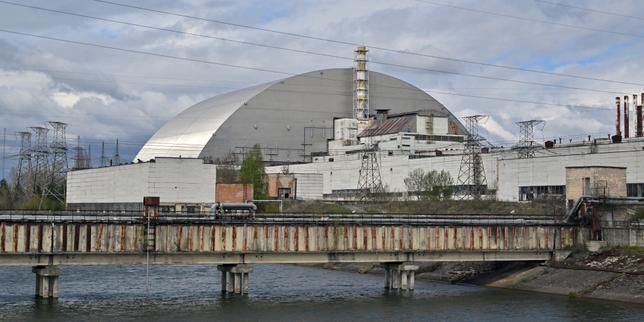
On Monday, diplomats, engineers, and finance ministers will file into a quiet conference room in Paris. They will drink espresso from white porcelain cups. They will adjust their tailored wool suits, open leather portfolios, and debate columns of numbers. On the agenda is a single, sterile line item: funding the emergency repair of the Chernobyl New Safe Confinement—the massive, gleaming steel arch built to entomb the ruined fourth reactor of the Chernobyl Nuclear Power Plant in northern Ukraine.
If you read the standard news dispatches, the story sounds like dry bureaucratic plumbing. A summit in France. A damaged roof. A multilateral trust fund managed by the European Bank for Reconstruction and Development. Routine maintenance in a war zone.
The headlines are lying to you by omission.
What happens in Paris on Monday is not about architectural upkeep. It is about whether a 36,000-ton steel umbrella—the largest movable land-based structure ever built by human hands—continues to hold back two hundred tons of radioactive lava from the European wind.
The Architecture of a Cage
To understand why a meeting in Paris should keep you awake at night, you have to understand what sits beneath that steel curve.
In 1986, when Reactor No. 4 exploded, the Soviet Union threw half a million young men—miners, firefighters, soldiers—into an invisible inferno to build a hasty concrete tomb called the Sarcophagus. They poured concrete into radiation fields so intense that electronic cameras died in seconds and human lungs tasted metal after three breaths. That concrete shell was never meant to last. By the early 2000s, it was leaning, cracking, and leaking water like a rusted bucket.
So the world stepped in. Forty-five donor nations pooled more than 1.5 billion euros to build a miracle of engineering: the New Safe Confinement.
Imagine taking the Statue of Liberty, laying it flat, stacking two more beside it, and covering the entire assembly in a double-layered arch of tubular steel wider than two football fields and taller than Notre-Dame Cathedral. Built on rails to the side of the ruined reactor and slid into place in 2016, this silver hangar was designed to seal the radioactive wreckage for a full century. Inside its sealed skin, giant robotic cranes suspended from the ceiling were supposed to slowly dismantle the crumbling Soviet concrete and extract the melted nuclear fuel—a toxic, glass-like substance engineers grimly call corium.
Think of the New Safe Confinement as a pressurized diving bell dropped over a leaking oil well at the bottom of the ocean. As long as the bell stays sealed and the air pressure inside remains carefully controlled, the poison stays trapped. Puncture the hull, break the seals, or cut the power to the ventilation systems, and the ocean rushes in—or worse, the poison rushes out.
The Night the Sky Fell Again
War does not respect engineering warranties.
When Russian forces invaded Ukraine in February 2022, tanks rolled straight through the Red Forest—the most heavily contaminated woodland on Earth—churning up decades of buried cesium and strontium with their treads. Soldiers dug trenches in soil that glows on a Geiger counter. For five weeks, technicians at the plant were held at gunpoint, forced to work double and triple shifts without relief, surviving on porridge while artillery shells thudded into the surrounding marshes.
Even after the occupation ended, the danger never left. Modern warfare in Eastern Europe is fought with low-flying attack drones, stray cruise missiles, and air-defense interceptors falling like burning shrapnel from the clouds. And in the skies over northern Ukraine, the Chernobyl arch is impossible to miss. Its curved, metallic back gleams like a silver hill rising out of the flat Polesian forest.
When a strike breaches the outer cladding of that arch, the damage is not merely cosmetic.
Consider a hypothetical engineer—let us call him Taras—working the night shift in the monitoring bunker three hundred yards from the shelter. Taras is forty-two. His father drove a dump truck during the 1986 cleanup and died of thyroid cancer before Taras finished high school. Taras knows every sensor, every pressure gauge, and every weld seam on the arch by heart.
When an impact tears a ragged hole through the outer stainless-steel membrane and ignites the waterproof insulation sandwiched between the layers, Taras does not see a geopolitical crisis. He sees red warning lights blooming across his console like blood on snow.
First goes the hermetic seal. The arch relies on a slightly lower air pressure inside its cavernous belly so that air always flows inward through tiny gaps, preventing radioactive dust from drifting outward into the Ukrainian countryside. Tear a hole in the roof, and that pressure balance collapses.
Second comes the water. Rain and melting snow pour through the breached cladding, dripping onto the exposed carbon-steel trusses underneath. Those trusses were kept dry by an intricate dehumidification system precisely because the structure is too radioactive for painters with brushes to climb up and scrape off rust every five years. Once moisture gets trapped inside the double skin of the arch, corrosion begins eating the skeleton from the inside out.
Third comes the fire hazard. The thermal blankets and sealant membranes keeping the arctic Ukrainian winter out of the arch are resilient, yet a high-temperature strike turns polymer insulation into smoldering, toxic smoke that firefighters cannot safely reach without absorbing lethal doses of radiation.
Taras watches the humidity gauges climb. He watches the radiation monitors spike near the breach. And he knows a terrifying truth: the people who built this arch assumed they would have a hundred years of peace to take the monster apart. They never budgeted for someone shooting holes in the cage.
Why the Bill Landed in Paris
This brings us back to Monday’s gathering in the French capital.
France is not hosting this meeting out of mere diplomatic politeness. French engineering giants—specifically the consortium Novarka, led by Vinci and Bouygues—designed and built the New Safe Confinement. When the steel skin of Chernobyl bleeds, the blueprints are sitting in Parisian filing cabinets.
Yet blueprints do not stop rain, and sympathy does not buy specialized radiation-shielded cranes.
Repairing a high-altitude breach over an active nuclear ruin is exponentially harder—and wildly more expensive—than building the structure on clean ground ten years ago. When workers assembled the arch in 2014, they built it a safe distance away from the radiation, where men could work eight-hour shifts in regular hard hats. Today, that arch sits directly over the exposed guts of Reactor No. 4.
Any welder, rigger, or structural engineer sent up onto that damaged roof faces an invisible clock. Radiation exposure is cumulative, like filling a glass with water drop by drop until it overflows. A technician might have only forty-five minutes on the roof before hitting their annual legal radiation limit, forcing them to climb down while a fresh worker takes their place. You need triple the crew, custom robotic scaffolding, specialized fire-retardant cladding, and millions of euros in remote-sensing equipment just to patch a tear the size of a living room.
And who pays for it?
Ukraine’s national budget is entirely consumed by survival—paying soldiers, keeping hospitals lit after missile strikes on power grids, and defending cities from bombardment. Kyiv cannot spare tens of millions of euros for specialized nuclear-grade steel alloys while trenches are being shelled in the east. Meanwhile, international donor fatigue has quietly crept into Western capitals. Voters in Berlin, London, Washington, and Paris are tired of inflation, tired of emergency aid packages, and distracted by crises closer to home.
It is easy for a taxpayer in Lyon or Munich to ask why their government is writing another check for a Soviet nuclear accident that happened forty years ago.
The Invisible Wind
Here is the answer those taxpayers deserve to hear: radiation does not carry a passport, and the wind does not stop at border checkpoints.
In April 1986, when the graphite core of Reactor No. 4 burned for ten days, the radioactive plume did not stay politely inside Soviet Ukraine. Within forty-eight hours, alarms went off at the Forsmark nuclear power plant in Sweden, seven hundred miles away. Radioactive rain fell on Welsh sheep farms, contaminating pastures for a generation. Wild boars in the forests of Bavaria still test positive for Chernobyl cesium today, four decades later.
We like to pretend Chernobyl is history—a grim black-and-white documentary we watch on streaming platforms, safely locked behind a glass screen. We treat the exclusion zone like a museum of human hubris.
It is not a museum. It is an active, breathing containment site holding roughly ninety-five percent of the original nuclear fuel from 1986. Inside that dark steel cavern sit tons of pulverized plutonium, uranium, and radioactive dust fine enough to ride a summer breeze across the Carpathian Mountains and settle onto farmland in Poland, Romania, and central Europe.
I remember standing near the edge of Pripyat years ago, watching a stray dog trot past a rusted playground slide. The air smelled sharply of pine needles and damp earth—clean, crisp, utterly ordinary. You could not see the danger. You could not smell it or feel it on your skin. Only when you looked down at the small yellow dosimeter clipped to your jacket did you see the numbers ticking upward, steady as a heartbeat, reminding you that nature hides its deadliest traps behind total invisibility.
That invisibility is our greatest enemy on Monday. When a bridge collapses or a dam bursts, television cameras broadcast roaring water and twisted concrete, and politicians trip over themselves to sign emergency relief checks within hours. When a steel membrane over a nuclear sarcophagus loses its airtight seal, nothing explodes on camera. There is no mushroom cloud. There is no dramatic footage for the evening news.
There is only water dripping slowly onto bare steel in the dark. Rust blooming quietly along a load-bearing truss. Sealing gaskets hardening and cracking in the freezing Ukrainian wind. Year after year, the cage weakens in silence until one winter storm—or one more stray drone—pushes a weakened section past its breaking point.
The Price of Delay
When officials sit around that table in Paris on Monday, they will hear presentations filled with reassuringly technical words: cladding restoration, moisture ingress mitigation, secondary containment integrity.
Strip away the jargon, and the choice facing those delegates is brutally simple.
They can fund the full, immediate repair of the Chernobyl shelter now—absorbing a steep, uncomfortable bill today while the damage is still localized and manageable. Or they can haggle over cost-sharing formulas, delay procurement by eighteen months, and watch a repairable roof breach metastasize into a structural crisis that threatens the entire 1.5-billion-euro investment Europe already made.
In engineering, as in medicine, early intervention is a bargain; neglect is bankruptcy. You do not argue with a firefighter about the price of water while the roof timbers are still smoldering.
The men and women working inside the Chernobyl exclusion zone have already given more than the world had any right to ask. They stayed at their posts through military occupation, through blackouts, through air-raid sirens wailing across a poisoned forest, keeping the cooling pumps running and the monitoring sensors alive so that the rest of Europe could sleep safely in their beds. They did their duty when the tanks were parked outside their gates.
Now, the responsibility shifts three thousand kilometers west, to a well-lit room in Paris where no shells are falling and the air is clean.
Outside that conference hall, tourists will walk along the Seine, stopping to photograph the iron lattice of the Eiffel Tower rising cleanly into the gray autumn sky. Few of them will spare a thought for another massive steel monument standing fifteen hundred miles to the east—a silver arch holding back an invisible fire, waiting to see if the people who built it still care enough to keep the door locked.



