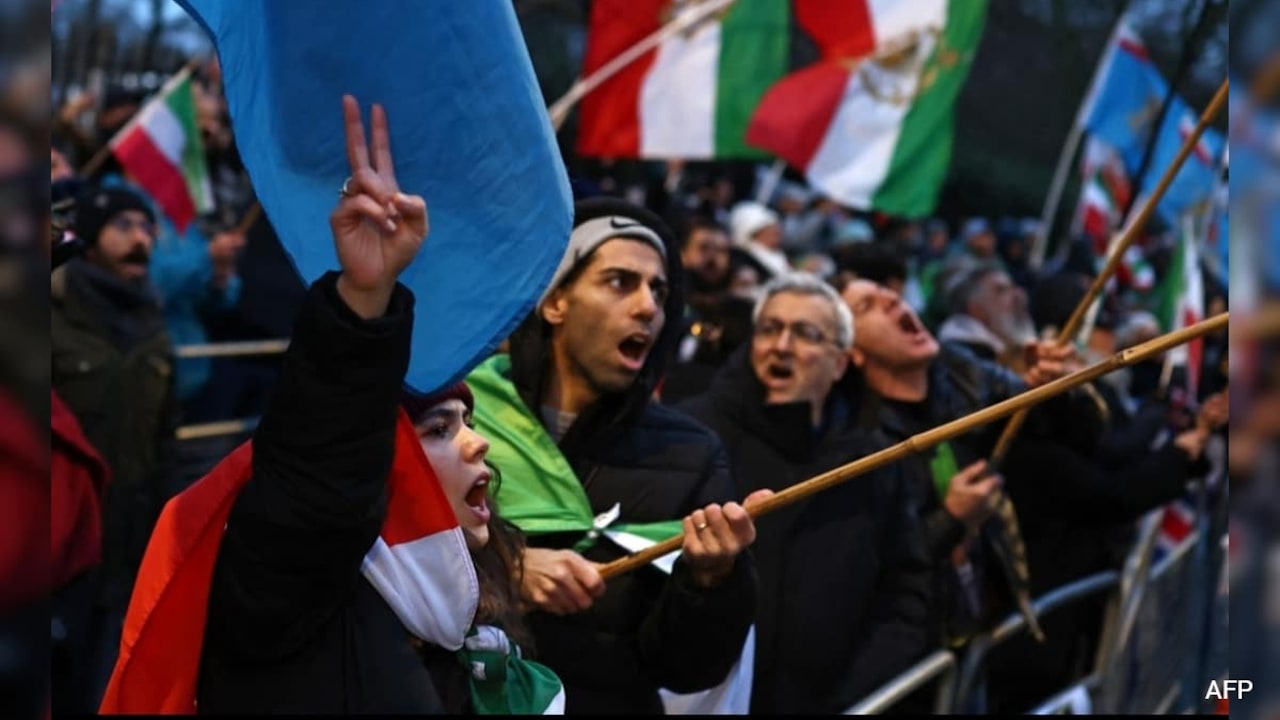
The judicial apparatus of the Islamic Republic operates on a well-documented penal logic where domestic security infractions are systematically re-engineered into capital offenses of geopolitical scope. This structural reality was reinforced by the execution of Shahram Sadeghi, convicted by a Revolutionary Court for driving a vehicle into police personnel during the January civil unrest in Karaj. Rather than treating the incident as a conventional public order violation or a localized criminal offense, the state's judicial machinery framed the act through the prism of national security law, attributing the conduct to foreign orchestration under espionage statutes. Analyzing this event requires looking past the surface narrative of criminal sentencing to examine the structural mechanics of state survival, legal categorization, and deterrence engineering during periods of acute internal crisis.
The Tripartite Judicial Framework of State Control
To understand how individual acts of civil conflict are transformed into capital cases, one must examine the legal architecture employed by the Iranian judiciary. This system relies on three distinct operational categories to process political and social dissent:
- Categorization of Domestic Resistance as External Subversion: Under this mechanism, acts of spontaneous or organized public disobedience are legally redefined. Protesters who engage security forces are rarely prosecuted under standard municipal penal codes for battery or vandalism. Instead, the state invokes provisions concerning enmity against God, corruption on earth, or coordinated espionage with designated hostile states. This elevates the legal stakes and removes standard due process constraints typical of civil courts.
- The Evidentiary Burden and Attribution Models: Revolutionary tribunals operate under procedural rules that heavily favor the prosecution, bypassing independent evidentiary verification. In cases involving property destruction or physical confrontation with law enforcement, state media announcements routinely couple the physical act with unverified claims of foreign direction. The mechanism serves a double purpose: it criminalizes local opposition while delegitimizing domestic grievances by framing them as imported conspiracies.
- Deterrence Calibration via Capital Proportionality: The systematic utilization of capital punishment during and after nationwide uprisings follows a strict economic logic of deterrence. By imposing the maximum cost function on physical resistance against security apparatuses, the state attempts to raise the anticipated price of confrontation for potential dissidents.
The Cost Function of Civil Confrontation
When civil protests escalate past passive demonstration into physical friction with law enforcement, the operational dynamics change for both the populace and the regime. For the state, any tolerance of physical attacks on security personnel threatens the monopoly on violence that underpins authoritarian stability. Consequently, the legal response function is non-linear.
The state absorbs high aggregate economic and political costs during major uprisings—such as the widespread unrest observed in January—and responds with compressed, high-visibility retributive actions. The execution of individuals accused of specific operational harms, such as vehicular ramming that injures multiple officers, functions as a structural signal. It establishes an absolute ceiling on allowable tactical resistance. The speed with which sentences are upheld by the Supreme Court and executed indicates an institutional urgency to close the feedback loop between dissent and state reprisal before public momentum can regenerate.
Structural Divergence in State Reporting Versus Independent Verification
A rigorous analytical breakdown requires contrasting the institutional narratives provided by state-affiliated outlets with documentation compiled by human rights monitors. This divergence highlights the operational friction inherent in closed authoritarian legal systems:
- The State Narrative: Emphasizes specific tactical details—such as the exact location of the confrontation near intersections, the precise number of injured personnel, extended medical incapacitation periods for officers, and immediate asset confiscation. These details are deployed to establish legal culpability under criminal statutes while embedding a broader geopolitical narrative of external interference.
- The Human Rights Documentation: Focuses on systemic patterns, noting the broad application of vague statutory definitions, the absence of transparent legal representation, and the statistical correlation between broader geopolitical conflicts—such as active military engagements abroad—and an upward trajectory in capital punishments.
This friction reveals that the primary function of these trials is not merely retributive justice for specific infractions, but the maintenance of political order through institutionalized signaling. The legal framework converts volatile street-level dynamics into predictable, state-managed judicial outcomes, reinforcing state control when the broader political equilibrium is under strain.


