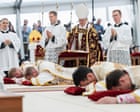
The Catholic Church is staring directly into a formal schism, and it isn't over a progressive rebellion. On July 1, 2026, a defiant, ultra-traditionalist splinter group known as the Society of Saint Pius X (SSPX) openly broke canon law by ordaining four new bishops without Vatican approval. The ceremony, held at the group's international seminary in the mountain village of Écône, Switzerland, took place despite explicit warnings from Pope Leo XIV, who begged the group's leadership to turn back from a "sin of extreme gravity."
This isn't just an internal HR dispute for the Vatican. The rogue consecrations trigger automatic excommunication for all six bishops involved under Catholic law. For a Church already fractured by culture wars, the event marks a historic, intentional rupture. It’s a direct challenge to papal authority that could split the world's largest Christian body, creating a parallel Church structure that rejects decades of modern reforms.
Inside the Defiant Écône Ceremony
The mood in Écône wasn't somber; it was triumphant. Thousands of faithful arrived hours early, bringing folding chairs into a Swiss meadow. Organizers claimed 17,000 people attended, representing nearly 70 countries. The air felt part solemn Latin liturgy, part ideological rally. Attendees could even buy a 75 Swiss franc box of souvenir wine dubbed "Cuvée des Sacres," featuring bottles adorned with the faces of the newly minted rebel bishops.
The ritual itself was loaded with provocative historical messaging. Spanish Bishop Alfonso de Galarreta presided as the principal consecrator. He used the exact throne once occupied by Archbishop Marcel Lefebvre, the SSPX founder who caused the last major rupture with Rome in 1988. The new bishops wore the exact vestments used during that original illicit ceremony 38 years ago.
During the Mass, a priest read aloud a statement defending the move. They called the consecrations a "sacred duty toward holy church and toward souls," flatly dismissing the Vatican's legal punishments as having "no validity." To the SSPX, Rome is the entity that has drifted; they see themselves as the true keepers of the flame.
The Broken Lineage and the State of Necessity
Why did the SSPX risk total isolation now? It comes down to basic survival and math.
Before July 1, only two of the four bishops ordained by Lefebvre in 1988 were still alive and active. Without bishops, the society cannot ordain new priests or administer the sacrament of confirmation. The SSPX claims a "state of necessity," arguing they need new leadership to tend to an expanding global network. The group now boasts nearly 1,500 priests, seminarians, and vocational members, operating across 77 countries with major strongholds in France and the United States, particularly out of a massive operations base in Kansas.
The newly ordained bishops include:
- Father Pascal Schreiber (Switzerland)
- Father Michael Goldade (United States)
- Father Michel Poinsinet de Sivry (France)
- Father Marc Hanappier (France)
While the SSPX publicly maintains that these men are merely auxiliary bishops meant to supply sacraments—not to claim territorial jurisdiction or set up a rival government—Rome views the defense as a legal fiction. You don't ordain bishops against the Pope's direct orders and call it communion.
What the Radicals Actually Reject
To understand this fight, you have to look back to the Second Vatican Council (1962–1965). Vatican II fundamentally altered how the Catholic Church interacts with the modern world. The SSPX rejects these central changes, viewing them as heretical deviations from true Catholicism.
The Latin Mass Versus the Vernacular
Before Vatican II, Catholic Mass worldwide was celebrated exclusively in Latin, with the priest facing away from the congregation toward the altar. Vatican II introduced the Novus Ordo (the New Order of the Mass), allowing liturgies in local, vernacular languages with the priest facing the people. The SSPX exclusively practices the ancient Tridentine Latin Mass. Ironically, while the Écône ceremony used strict Latin formulas, the live online stream featured translations in English, German, French, Italian, and Polish, complete with an on-screen QR code for digital donations.
Strict Social and Cultural Mandates
The SSPX doesn't just look backward liturgically; it enforces a rigid social framework. The order advocates strict traditional gender roles. Women are openly discouraged from wearing trousers and typically wear traditional head coverings to church.
Religious Liberty and Ecumenism
Vatican II opened doors to dialogue with other Christian denominations and non-Christian religions, emphasizing religious liberty. The SSPX views this ecumenism as a watering down of Catholic dogma. They hold the uncompromising stance that the Catholic Church is the sole vehicle for salvation, viewing modern Vatican diplomacy as a compromise with error.
A Decades-Long Game of Brinkmanship
This crisis didn't happen overnight. It is the climax of a toxic, decades-long cycle of negotiations, olive branches, and sudden retreats.
1970: SSPX founded by Archbishop Marcel Lefebvre in Écône, Switzerland.
1988: Lefebvre ordains 4 bishops without papal mandate; John Paul II declares automatic excommunications.
2009: Pope Benedict XVI lifts the excommunications as a gesture of goodwill to heal the rift.
2026: SSPX ordains 4 new bishops; Pope Leo XIV warns of a new, severe schism.
Pope Benedict XVI tried to bring the traditionalists back into the fold by widening permission for the Latin Mass. His successor, Pope Francis, took a harder line on the group's canonical status but made a surprise concession by recognizing their sacraments as valid for marriages and confessions.
But Pope Leo XIV, elected in May 2025 as the first North American pontiff, made church unity his absolute signature priority. He spent his first year attempting to soothe traditionalist anxieties. That makes this open defiance a massive, deeply personal blow to his young papacy. Leo tried a last-minute public intervention on June 30, writing a letter directly to SSPX Superior Father Davide Pagliarani, pleading with him to stop. The society swatted the olive branch away, stating that full communion was "impracticable due to doctrinal divergences."
The Political Undercurrents of the Split
This rupture isn't happening in a vacuum. It mirrors the broader rise of right-wing populism across Western democracies. The crowd at Écône didn't just consist of pious traditionalists; journalists noted the presence of figures from European far-right political parties, including Italy's Forza Nuova and Futuro Nazionale.
The SSPX enjoys massive financial and ideological support from wealthy, conservative lay Catholics, particularly in the United States. Many of these influential donors have shown a growing willingness to attack the Vatican over political issues like immigration, climate change, and economic justice. By backing a breakaway traditionalist structure, these factions are effectively funding a parallel conservative ecosystem that operates completely outside the control of local diocesan bishops.
What Happens Next
The immediate legal consequence is clear under canon law: automatic excommunication (latae sententiae) for the consecrating bishop, De Galarreta, his co-consecrator Bernard Fellay, and the four newly ordained men.
The bigger question is how mainstream conservative Catholics—those who love the Latin Mass but have remained loyal to Rome—will react to this formal break. If you are tracking this developing situation, keep an eye on these specific indicators over the coming weeks:
- Vatican Decrees: Watch for an official apostolic letter from Pope Leo XIV outlining the precise canonical boundaries of the schism.
- The Reaction of Sanctioned Groups: Observe whether legal traditionalist groups, like the Priestly Fraternity of St. Peter (FSSP), issue statements distancing themselves from the SSPX to protect their own standing with Rome.
- Diocesan Crackdowns: Look to see if local bishops across the US and Europe tighten restrictions on the Latin Mass within their own dioceses to prevent their flocks from drifting toward rogue SSPX chapels.