When people hear the phrase mass shooting, they usually picture a lone, deeply troubled individual opening fire in a school, a shopping mall, or a suburban office building. That is the American blueprint. It is a terrifying, solitary act of nihilism.
In South Africa, the reality is entirely different.
Mass shootings here are rarely the work of a lone gunman seeking abstract notoriety. Instead, they are calculated, multi-person military-style hits executed by organized criminal syndicates. They target crowded townships, informal settlements, and local taverns. When multiple attackers storm a venue with AK-47s and pistols, they aren't lashing out at random. They're settling turf wars, enforcing extortion rackets, or punishing rivals in bloody economic disputes.
If you want to understand why these tragedies keep happening, you have to throw out everything you think you know about mass violence.
The Organized Crime Engine Behind the Bloodshed
South African law enforcement defines a mass shooting as an incident where three or more people are shot. By that metric, the country faces a relentless wave of coordinated violence that claims dozens of lives in single weekend clusters.
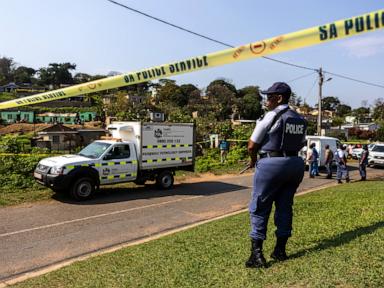
Take the devastating attacks that hit townships like Wedela and Lwandle. Multiple heavily armed men arrived in vehicles, systematically targeted patrons at local social spots, and fled before police could mobilize. This bears zero resemblance to a lone wolf acting on psychological breakdown. It looks like a cartel hit.
Criminal networks use these mass casualties to send stark messages. Extortion is a massive driver. Local business owners—especially tavern and shebeen operators—are frequently shaken down for protection money. Refuse to pay, or try to undercut a rival's pricing, and an armed squad arrives to make an example of your establishment.
Illegal mining operations, known locally as zama zamas, also fuel these bloody territorial disputes. When underground syndicates clash over shafts and mineral smuggling routes, the violence spills directly into nearby residential communities.
The Flood of Illicit Firearms
You cannot talk about South Africa's mass shooting crisis without addressing the sheer volume of illegal weaponry in circulation.
While Western mass shooters often legally purchase arsenals before their attacks, South Africa's syndicates rely on deep pipelines of contraband hardware. Stolen police weapons, smuggled military-grade assault rifles left over from regional historical conflicts, and corrupt elements within state armories feed a thriving black market.
When a squad of eight men can easily secure multiple AK-47s and handguns for a weekend raid, gun control laws targeting legal, licensed owners miss the mark entirely. The state is fighting an underground corporate war using 20th-century policing strategies against syndicates equipped with military hardware.
Townships, Inequality, and State Absence
Geography tells a brutal story here. These mass shootings almost exclusively plague under-resourced townships and informal settlements—places like Khayelitsha, Gugulethu, and Cleveland.
These areas share common traits: chronic under-policing, high unemployment, and deep economic vulnerability. They often sit within sight of affluent, heavily guarded suburbs protected by private security firms.
When police response times stretch into hours and investigative intelligence fails to map criminal networks, communities are left entirely unprotected. Criminals know this. They operate with a brazen sense of impunity because the risk of getting caught by local law enforcement remains staggeringly low.
Presidential condemnations and temporary troop deployments grab headlines after a massive death toll, but they rarely dismantle the underlying syndicates. Once the national spotlight shifts, the extortion rackets and turf wars quietly resume.
Stopping this violence requires dismantling the financial incentives of organized crime, cutting off illegal gun pipelines, and rebuilding trust between marginalized communities and competent, accountable local police forces. Until the state addresses the economic roots of these syndicates, the body count will keep rising.