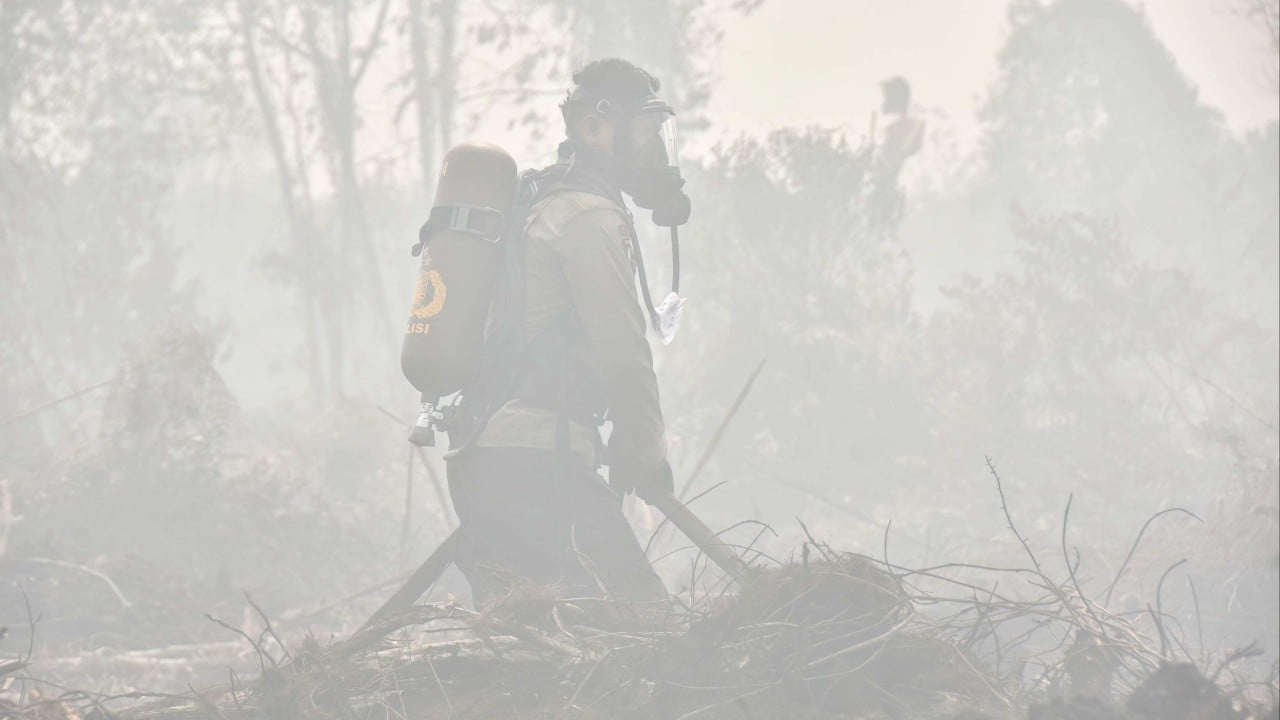
The dry season arrived on schedule, bringing with it the familiar, acrid bite of burning peat and cleared forest floor. Across Sumatra and Kalimantan, the fires are burning again. For decades, the Southeast Asian haze crisis has followed a predictable arc of seasonal panic, diplomatic finger-pointing, and temporary emergency measures that vanish the moment the monsoon winds shift.
Indonesia recently turned to an unusual ally to buy time before the smoke chokes the region completely, welcoming Malaysian rainmakers into its airspace to seed clouds and force precipitation over stubborn hotspots. This emergency aviation maneuver marks a quiet shift in regional cooperation. Yet cloud seeding is not a fix. It is an expensive band-aid applied to a gaping arterial wound.
To understand why Kuala Lumpur is sending aircraft across the Malacca Strait to make rain over Indonesian scrubland, you have to look past the atmospheric chemistry and examine the political economy of agricultural expansion. The skies are crowded with desperate measures because the underlying systems governing land clearance remain fundamentally broken.
The Mechanics of Manufactured Rain
Cloud seeding sounds like modern wizardry, but the physics are simple and entirely dependent on atmospheric luck. Silver iodide or salt particles are dispersed into the air via aircraft or ground generators to act as condensation nuclei, encouraging supercooled water droplets in cumulus clouds to coalesce and fall as rain.
Physics imposes strict limits on this technology. You cannot create rain out of a blue sky. The humidity must be high, cloud cover must be present, and the updrafts must be strong enough to support precipitation growth. During severe droughts, when the atmosphere is starved of moisture, cloud seeding planes burn thousands of gallons of jet fuel to chase wisps of vapor that yield nothing more than evaporating streaks.
Malaysian aircraft operating over Indonesian territory face an uphill battle against dry air masses pushed by regional wind patterns. When the technique works, it buys a few days of damp relief for parched topsoil. When it fails, it leaves environmental ministries scrambling for alternative ways to justify heavy public expenditures to citizens coughing through yellow air.
Capital, Concessions, and Corporate Shielding
The fire engine lights of crisis response obscure a darker truth about who profits from the smoke. Peatland conversion is cheap. It yields massive margins for palm oil and pulpwood conglomerates that dominate the rural economies of both Indonesia and Malaysia. Many of the corporate entities financing the burning operations maintain headquarters in shiny skyscrapers far away from the choking smoke, protected by corporate structures that make ultimate ownership difficult to trace.
Local smallholders often take the blame for the blazes through sweeping narratives about traditional slash-and-burn agriculture. Investigative findings tell a different story. Systematic industrial drainage of deep peat domes—undertaken to plant monoculture crops—turns subterranean carbon sinks into powder-dry tinderboxes. Once a peat dome catches fire underground, surface rain does almost nothing to extinguish the smoldering fuel source beneath.
Cross-border cloud seeding treats the symptom while the corporate structures driving the land conversion remain untouched. Indonesian authorities face immense pressure from local employment needs, creating a perverse incentive to look the other way when land preparation gets out of hand. Meanwhile, neighboring countries bear the economic cost of grounded flights, closed schools, and surging respiratory clinic admissions.
The Limits of Transnational Diplomacy
Asean diplomacy relies heavily on consensus, politeness, and non-interference. For decades, this framework allowed environmental disaster to cross international borders without triggering meaningful legal penalties. When regional partners offer technical assistance like aircraft, fire-fighting personnel, or financial grants, it serves as a diplomatic pressure valve. It allows governments to look proactive while avoiding the messy diplomatic fallout of demanding structural reform from sovereign neighbors.
Malaysia stepping in to help seed clouds over Indonesian forest fires is a pragmatic necessity. Citizens in Kuala Lumpur and Singapore cannot breathe when the wind blows east. But reliance on bilateral goodwill creates an asymmetrical burden. Malaysia spends resources mitigating a crisis born of domestic policy choices made in Jakarta, while the underlying financial incentives for deforestation remain unaddressed by regional trade agreements.
Real accountability requires tying market access to environmental standards. If major consumer markets in Europe, North America, and domestic capitals refuse to buy commodities tainted by illegal land clearing, the financial model collapses overnight. Until then, bilateral firefighting assistance remains a polite substitute for actual enforcement.
The Cost of Inaction
Children walking to school in Riau wear fabric masks that block particulate matter but do little to filter toxic VOCs. Tourism numbers dip across the Malacca Straits as luxury resorts disappear behind a thick, sulfurous veil. Economic productivity slows down across multiple sectors as workers fall ill with acute bronchitis and eye irritations.
The financial toll of these seasonal disruptions runs into billions of dollars every year. Yet the capital spent on emergency cloud seeding, water bombing fleets, and emergency medical responses is a fraction of what it would cost to properly restore millions of hectares of degraded peatlands. Re-wetting drained peat requires building dams, blocking drainage canals, and halting agricultural expansion in vulnerable zones. These steps require political courage that short-term electoral cycles rarely accommodate.
Rainmaking planes will continue to fly as long as the political cost of stopping the fires is higher than the cost of putting them out from above. The smoke will clear eventually, swept away by the changing monsoon winds, leaving behind a brief window of clean air before the cycle repeats.