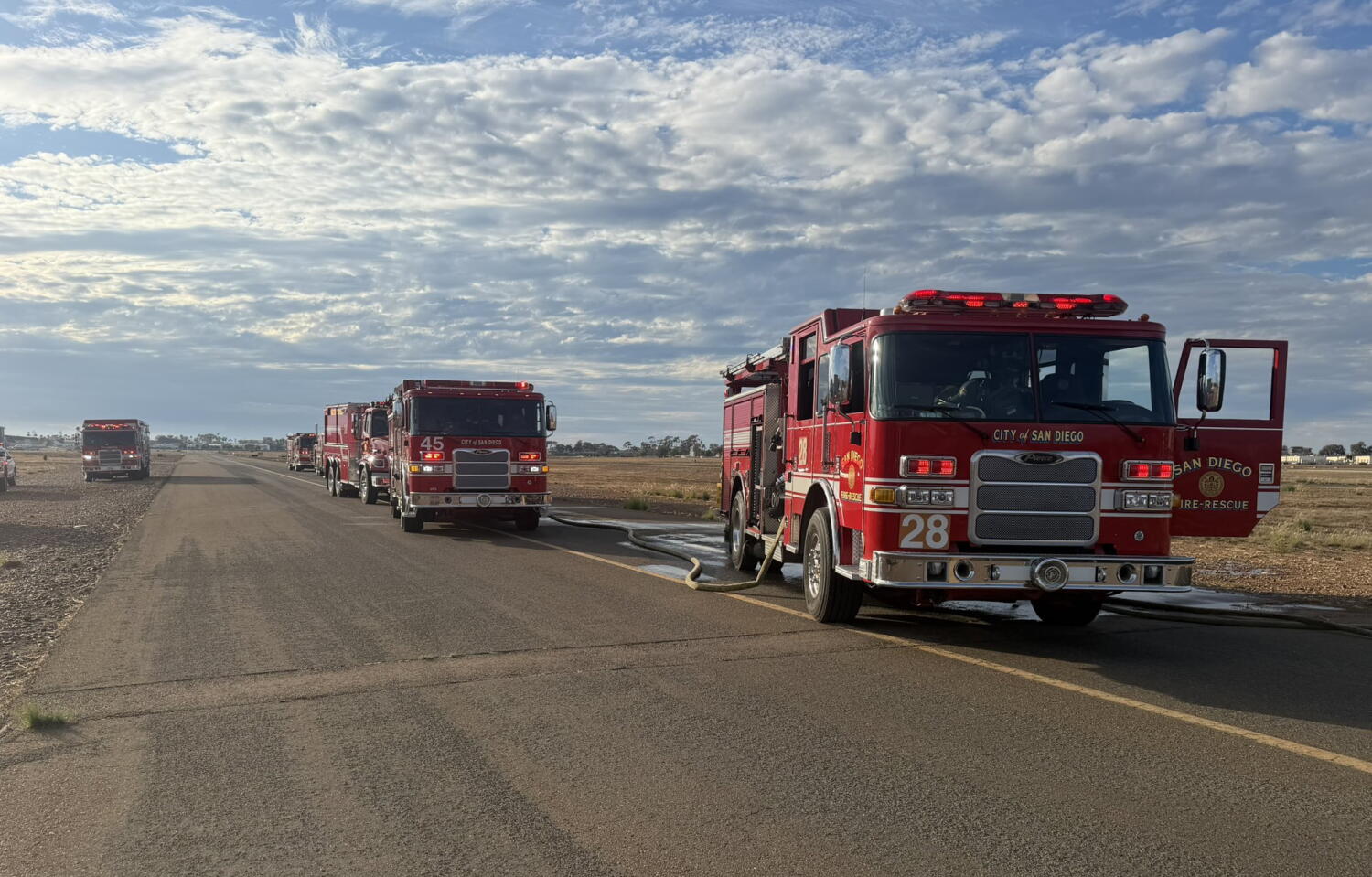
Two lives ended abruptly on a Monday evening when a small aircraft went down at Montgomery-Gibbs Executive Airport in San Diego. The crash, which happened around 5:20 p.m., quickly turned the corporate airfield into a chaotic scene of thick smoke and roaring sirens. Approximately 30 personnel from the San Diego Fire-Rescue Department rushed to the Kearny Mesa facility, but the aircraft was already completely engulfed in flames. Both occupants didn't survive.
If you track aviation safety, these local airfield incidents hit differently. They bring the raw, unfiltered danger of general aviation right into our backyards. Let's look at what actually happened, why general aviation hubs face unique risks, and what authorities do next.
Inside the Montgomery-Gibbs Executive Airport Tragedy
The Federal Aviation Administration and local emergency responders locked down the airport immediately. Other inbound aircraft had to divert while crews fought the active fire on the runway. Initial reports indicate a small Cessna went down under unclear circumstances.
When accidents happen this close to urban centers, people panic. They worry about structural damage on the ground or homes getting hit. Thankfully, no secondary ground injuries were reported. Still, the loss of two individuals on board leaves a massive void for their families and the local aviation community.
The Reality of General Aviation Safety
Flying small planes carries real risk. People often compare commercial airlines to general aviation, which is a massive mistake. Commercial flight is remarkably safe. Private flying, training flights, and small corporate hops operate under entirely different margins.
- Training flights and local hops involve frequent takeoffs and landings—the two most critical phases of flight.
- General aviation fleets often consist of older aircraft models with varying maintenance histories.
- Busy municipal airfields handle a mix of high-speed corporate jets and slow-moving student pilots, creating congestion.
What Happens During the Investigation Phase
You won't get immediate answers about why a plane crashes. The National Transportation Safety Board (NTSB) and the FAA handle these probes. They pull maintenance logs, check air traffic control audio recordings, and examine weather patterns from that Monday evening.
Investigators look closely at human factors, mechanical failure, and environmental conditions. Did an engine stall on short final approach? Did spatial disorientation play a role? These questions take months to answer properly. Rraining accidents or sudden mechanical faults require tearing down engines piece by piece.
Navigating Airport Closures and Community Impact
When an executive airport shuts down unexpectedly, the economic and logistical ripples are immediate. Flight schools pause operations. Local businesses tied to aviation feel the pinch. More importantly, it forces local residents to confront the reality of having active runways in densely populated zones.
Airfields like Montgomery-Gibbs are vital economic engines for Southern California. They train the next generation of commercial pilots and handle regional corporate transit. Yet, accidents remind everyone that freedom of flight demands constant vigilance.
Check your local aviation safety boards or community advisory panels if you want to understand how your neighborhood airfield manages safety protocols. Pay attention to local flight paths, and support rigorous training standards. Safe skies start with strict accountability on the ground.