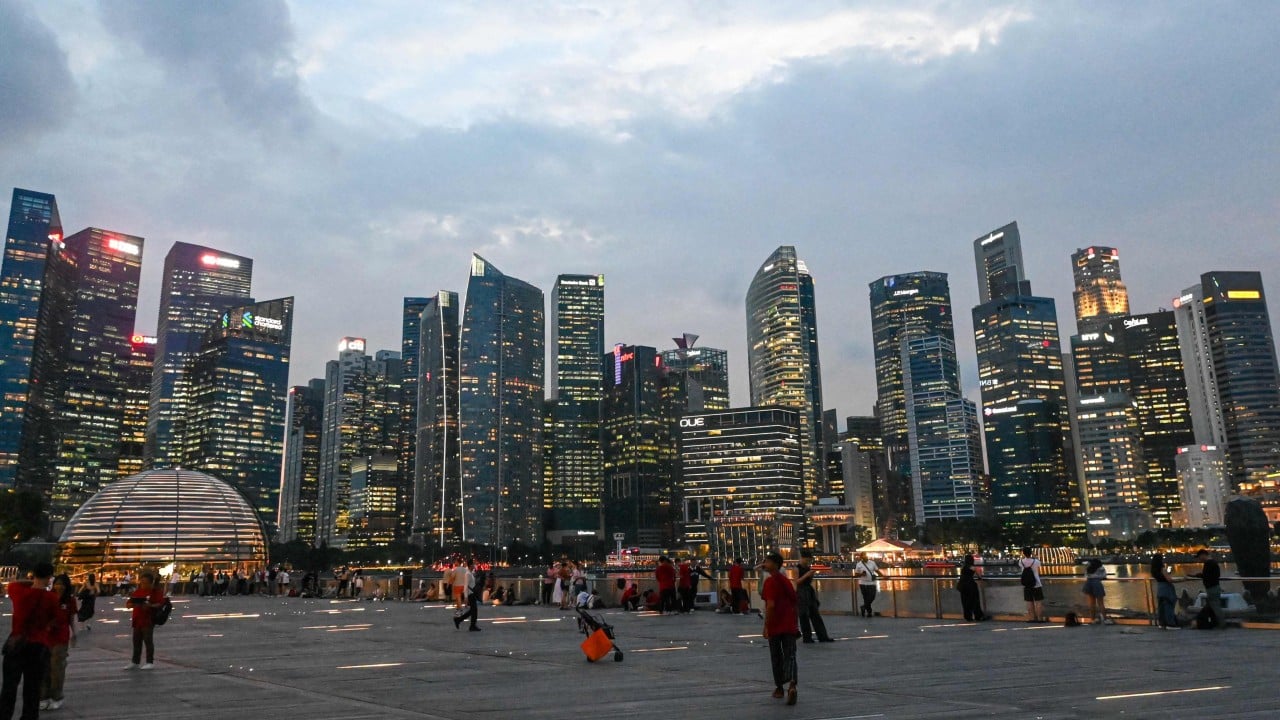
The era of the "Singapore Arctic"—that bone-chilling indoor climate that defines the city-state’s malls and offices—is officially coming to an end. Faced with a volatile global fuel market and an urgent need to slash carbon emissions, the Singapore government has issued a directive to raise thermostat settings in public sector buildings to 25 degrees Celsius. This is not a suggestion. It is a strategic pivot designed to insulate the nation from an energy landscape that has become increasingly unpredictable and expensive.
For decades, Singapore’s identity was intertwined with the air conditioner. Lee Kuan Yew, the nation's founding father, famously called it the greatest invention of the 20th century. He argued that it changed the nature of civilization by making development possible in the tropics. But the cost of that comfort has reached a breaking point. With over 95% of Singapore’s electricity generated from imported natural gas, the country is uniquely vulnerable to the price shocks triggered by geopolitical instability and supply chain disruptions. By raising the temperature, the government is making a calculated bet: that a few degrees of perspiration is a fair price to pay for national energy security.
The Cold Reality of Natural Gas Dependency
Singapore’s power grid is almost entirely reliant on natural gas. While this is cleaner than coal or oil, it leaves the domestic economy at the mercy of global commodity traders and regional pipeline politics. When global prices spike, the impact is immediate. Households see their utility bills climb, and businesses face thinning margins. The decision to set public sector thermostats to 25 degrees Celsius is the first line of defense against this volatility.
Cooling accounts for up to 40% of a typical building's energy consumption in Singapore. By shifting the baseline up from the traditional 22 or 23 degrees, the state can achieve double-digit reductions in power demand almost overnight. This isn't just about saving money in the short term; it’s about reducing the total load on a grid that must eventually transition to greener, more intermittent power sources like solar and imported renewable energy.
The Thermal Comfort Myth
There is a psychological barrier to this change. For years, "cold" was synonymous with "luxury" and "efficiency" in Singapore. Stepping out of the humid 32-degree heat into a 19-degree lobby was a status symbol. Breaking this habit requires more than just a memo from the Building and Construction Authority. It requires a fundamental shift in how Singaporeans perceive comfort.
Research into thermal comfort suggests that the human body adapts. When a space is maintained at a constant, shivering cold, occupants often wear jackets indoors—a bizarre sight in an equatorial nation. Raising the temperature to 25 degrees aligns more closely with international standards for energy-efficient buildings and, ironically, reduces the physiological shock of moving between indoor and outdoor environments.
Engineering the New Normal
You cannot simply walk to a thermostat and flip a switch to solve a national energy crisis. The infrastructure of Singapore’s high-rises is complex. Many older buildings utilize centralized chiller plants designed for maximum output, not variable efficiency. Running these systems at a higher set point can sometimes lead to humidity issues if the airflow isn't managed correctly.
Sensors and Automation
The push for 25 degrees is being supported by a massive rollout of smart building technologies. Modern systems now use occupancy sensors and carbon dioxide monitors to adjust cooling in real-time. If a conference room is empty, the air conditioning scales back. If a mall is crowded on a Saturday afternoon, the system ramps up. This granular control allows the government to maintain its energy targets without letting buildings turn into saunas.
District Cooling Systems
In areas like Marina Bay, Singapore is utilizing District Cooling Systems (DCS). Instead of every building having its own noisy, inefficient compressor on the roof, a central plant produces chilled water and pipes it through a network to multiple towers. This method is roughly 40% more efficient than conventional air conditioning. By raising the temperature across a DCS network, the energy savings are magnified across an entire district, providing a blueprint for how urban centers can scale their conservation efforts.
Economic Pressure on the Private Sector
While the current mandate focuses on public buildings—ministries, statutory boards, and government-linked facilities—the private sector is feeling the squeeze. The government is using the "Green Mark" certification scheme to incentivize developers to follow suit. High energy costs are doing the rest of the work.
Major commercial landlords are beginning to realize that "super-cooling" is a liability. It drives up operational expenditures and hurts their Environmental, Social, and Governance (ESG) ratings. International tenants, particularly those from Europe and North America, are increasingly demanding that their office spaces meet high sustainability standards. A building that insists on keeping its lobby at 20 degrees is now seen as an antiquated, expensive relic.
The Risk of the Middle Ground
There is a danger in half-measures. If a building raises its temperature but fails to manage humidity, the air becomes "heavy" and uncomfortable. This leads to tenant complaints and, eventually, a quiet revolt where individual offices bring in their own portable (and highly inefficient) cooling units. To succeed, the shift to 25 degrees must be paired with better ventilation, dehumidification, and perhaps even a change in corporate dress codes. The "suit and tie" culture is a poor fit for a nation trying to save energy in the tropics.
Why 25 Degrees is Only the Beginning
Singapore’s fuel crisis is a symptom of a larger, global realignment. The transition to net-zero emissions by 2050 means that the days of cheap, abundant fossil fuels are over. Solar power, while growing, cannot yet meet the baseload needs of a dense, industrial city-state. Hydrogen and regional power grids are years away from full maturity.
In this gap, demand-side management is the only immediate lever available.
The move to raise temperatures is a signal to the market. It tells energy providers that the government is serious about curbing consumption. It tells technology companies that there is a massive market for high-efficiency cooling solutions. And it tells the public that the climate crisis is no longer a distant threat, but a daily reality that affects how they live and work.
The Impact on Productivity
Critics argue that higher temperatures will lead to lethargy and a drop in workplace productivity. However, modern ergonomic studies often show the opposite. Overly cold offices lead to "cold stress," which causes typing errors and physical discomfort. A steady 25-degree environment, supported by adequate air movement from ceiling fans or optimized vents, often results in a more focused workforce.
National Security in Every Thermostat
Every degree saved reduces the number of liquefied natural gas (LNG) tankers that must dock at the Jurong Island terminal. In a world where maritime routes can be disrupted by conflict or trade wars, reducing energy demand is a form of defense. Singapore has always treated its lack of natural resources as a strategic challenge to be solved through engineering and discipline. Water was the first frontier; energy is the second.
The "Smart Nation" initiative is being repurposed to fight this battle. Data centers, which are notorious energy gluttons, are being pushed to operate at higher temperatures. If a server can run safely at 26 or 27 degrees, why waste millions of dollars cooling the room to 18? The logic being applied to public offices is being scaled up to the most power-hungry sectors of the economy.
Lessons for the Region
Singapore’s neighbors are watching closely. Cities like Bangkok, Jakarta, and Kuala Lumpur face similar tropical climates and rising energy costs. If Singapore can prove that a high-functioning, first-world economy can thrive at 25 degrees, it sets a new standard for the entire region. The "Singapore model" has always been about doing more with less, and this latest pivot is a masterclass in pragmatic survival.
The Social Contract of Sustainability
For this policy to stick, there must be a sense of shared sacrifice. If government offices are at 25 degrees while high-end luxury boutiques remain at 19, the public will feel the brunt of a "green divide." The challenge for policymakers is to ensure that energy conservation doesn't become a burden borne only by the middle class and the public sector.
Regulation may eventually need to move beyond the public sector. We are already seeing requirements for large commercial buildings to report their energy use publicly. The next step could be mandatory temperature ranges during peak demand hours. It is a bold move that risks temporary unpopularity, but the alternative—a recurring cycle of energy shortages and spiraling costs—is far worse.
The air conditioner was the tool that built Singapore. Now, the disciplined use of that same tool will be what preserves it. The chill is gone, replaced by a necessary, pragmatic warmth. This is the sound of a nation adjusting its expectations to match a harsher global reality. It is a quiet, mechanical shift that marks the end of an era of excess.
Invest in a lighter shirt. The 25-degree future is here.