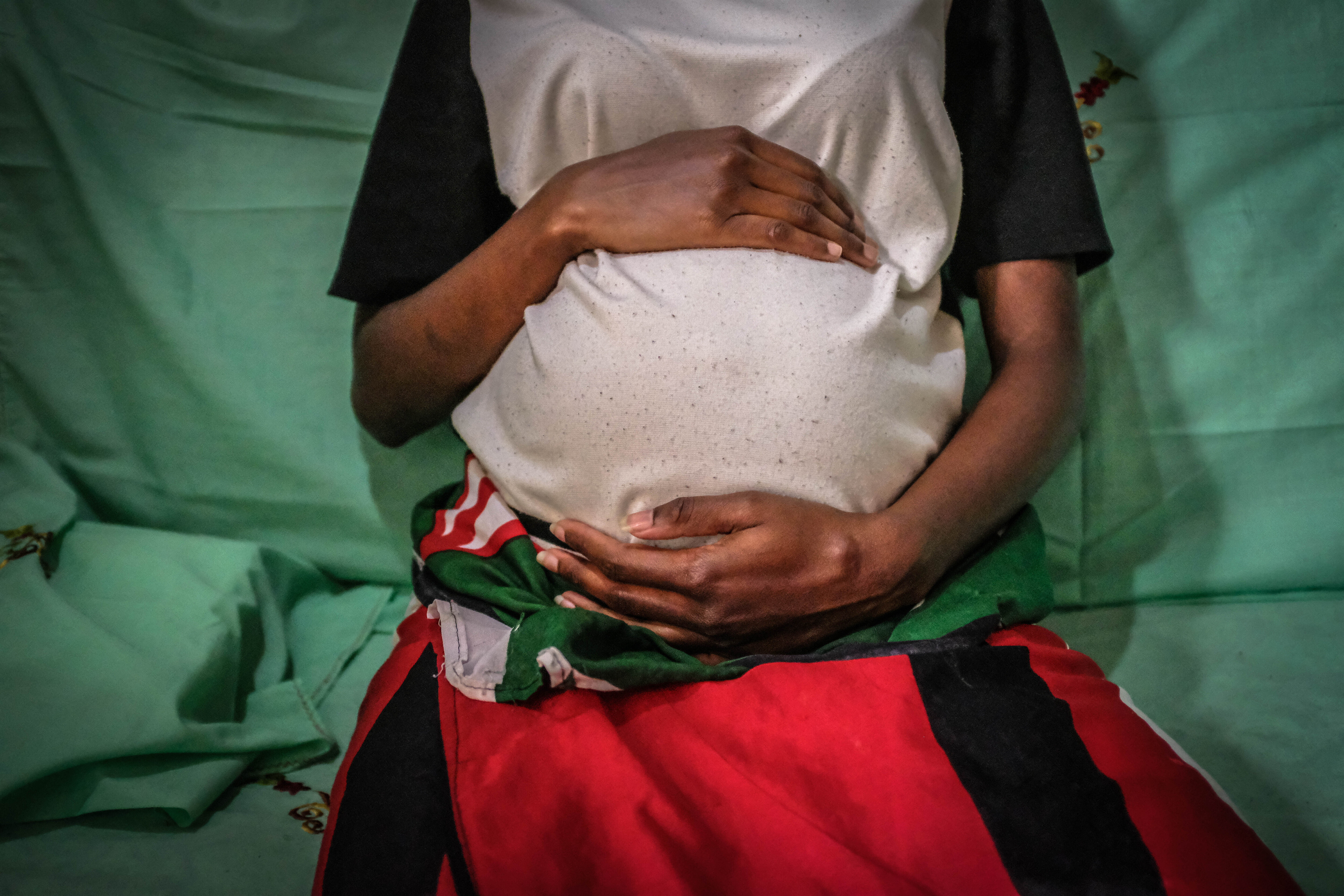
The forest does not announce its secrets. It simply breathes, heavy with moisture and ancient green, pressing against the red dirt roads of the eastern Democratic Republic of Congo. In villages where electricity is a memory and news travels by foot or the stuttering pulse of a solar-powered radio, danger rarely wears a uniform. It arrives quietly. A fever that will not break. A sudden, terrifying weakness in the limbs. A whisper in the market that someone’s mother, or brother, or child has taken to the bed and will not rise again.
For generations, this was the prelude to an invisible war.
When Ebola strikes a community, it does not merely attack the body; it unravels the very fabric of human connection. The disease targets what makes us human. It turns touch into a hazard. It turns grief into a logistical crisis. In a culture where community is breath, where mourning is communal, and where the sick are swarmed by loving relatives, an outbreak exploits our deepest virtues. To survive, people were once asked to abandon their most sacred traditions. They were asked to lock their doors, to let their loved ones die behind plastic sheeting, to bury the dead in silence, guarded by men in yellow hazmat suits who looked less like healers and more like visitors from another planet.
Fear is a terrible architect. It builds walls faster than medicine can lay foundations.
Consider a hypothetical mother named Amina, living on the edge of a mist-shrouded valley in North Kivu. When her youngest son begins vomiting, her first instinct is the oldest instinct on Earth: to pull him close, to press her palm against his burning forehead, to wipe his brow with a cool cloth soaked in well water. Every fiber of her maternal soul screams against isolation. Yet, the radio warnings are clear. The red zones are real.
Years ago, Amina would have hidden her son. She would have listened to the village herbalist or trusted the quiet whispers of neighbors telling her it was just malaria, just bad water, just a curse that medicine cannot touch. In past decades, that concealment was the spark that turned a single case into a roaring wildfire across provincial lines. Suspicion of outsiders ran deep. The central government in Kinshasa felt distant, foreign, and indifferent. International aid workers arrived with strange languages and stranger rules, speaking of viruses that sounded like science fiction.
Why should a mother trust strangers who tell her she cannot bury her own child?
Trust cannot be injected with a syringe. It cannot be mandated by a decree from an air-conditioned office in Geneva or Kinshasa. It has to be walked. It has to be earned in the dust, one cautious conversation at a time.
This is where the story shifts. This is where the statistics found in dry epidemiological reports transform into a living, breathing testament of human adaptation.
Look closely at the recent data emerging from the health zones of the Congo basin. The numbers tell a story not of miraculous overnight cures, but of a profound, agonizingly earned cultural pivot. Infection curves are bending downward. Fatality rates are dropping. Time from symptom onset to isolation is shrinking. These are not merely administrative achievements. They are monuments to human endurance.
How did this transformation happen? It did not happen because outsiders finally figured out how to dictate terms. It happened because the strategy was inverted.
Instead of imposing solutions from above, the architects of the response handed the megaphone to the people who already owned the land. They turned to local elders, traditional healers, women's market cooperatives, and youth leaders. They listened before they spoke. They asked a simple, radical question: How do we keep your families safe while honoring who you are?
In Beni and Butembo, motorcycles began to arrive carrying not enforcement officers, but trusted community mobilizers—neighbors, teachers, and religious figures who knew every family by name. They did not lecture. They conversed. When rumors spread that the treatment centers were places where people went to die, survivors walked out of those very centers to testify. They rolled up their sleeves. They showed their scars. They said, I went into the tent, and I walked out. Your son can too.
That is the power of lived experience. No textbook can replicate it. No vaccine can replace it.
Science provided the shield, but human courage provided the will to hold it.
The medical toolkit has evolved dramatically since the devastating outbreaks of the past. Monoclonal antibodies—treatments like REGN-EB3 and mAb114—now neutralize the virus in the bloodstream with astonishing precision, turning what was once a near-certain death sentence into a condition from which recovery is an expectation rather than a miracle. The ring vaccination strategy, deploying highly effective vaccines outward from every confirmed case like ripples in a pond, builds an invisible wall of immunity around the virus before it can leap across neighborhoods.
Yet, science alone is a locked treasure chest without the key of community acceptance.
Imagine the logistical nightmare of transporting ultra-cold chain vaccines through tropical downpours, across broken bridges, through territories where armed conflict and rebel movements create active security zones. The cold boxes must remain frozen. The staff must remain safe. The vehicles must keep moving. Every single dose delivered is an act of defiance against entropy and despair.
And yet, it works.
The recent stabilization in DR Congo is a masterclass in what happens when global scientific innovation shakes hands with grassroots wisdom. It proves that public health is not merely a biological challenge; it is an anthropological one.
When a community understands that the treatment center is not a quarantine prison, but a place where healing actually happens, the dynamic flips. People start coming forward early. They do not wait until the disease has ravaged their organs. They report symptoms on day one. And when they report early, survival rates skyrocket.
The invisible stakes of this battle extend far beyond the borders of Central Africa. Every time health workers successfully contain an outbreak in the dense forests of the Congo, they are extinguishing a spark that could easily catch wind and travel across oceans in a matter of hours. The world is too small for isolationism. What happens in a remote valley in Kivu resonates in airport terminals in London, New York, and Tokyo.
We owe an unspoken debt to the nurses who walk miles through mud carrying treatment kits, to the burial teams who learned how to perform safe and dignified rites that respect cultural traditions instead of violating them, and to the mothers who swallow their fear and bring their sick children to the clinic.
There is a quiet dignity in resilience. It does not make headlines the way catastrophe does. A fire burning down a forest captures the cameras; a forest quietly regenerating leaf by leaf goes unnoticed.
The fight against Ebola in the Congo is currently in that quiet phase of regeneration.
It is fragile. The virus hides in animal reservoirs, waiting in the shadows of the ecosystem, patient and timeless. Conflict can flare up at any moment, cutting off access roads and throwing healthcare workers back into danger. Complacency is an ever-present hazard. When the numbers drop, the funding dries up, the international spotlight shifts elsewhere, and the infrastructure grows threadbare.
We must resist the urge to look away just because the immediate panic has subsided.
The true test of a global health system is not how loudly it screams when the house is on fire, but how carefully it rebuilds the hearth after the flames are put out. It invests in clean water systems, trains local epidemiologists, equips rural clinics with basic diagnostics, and builds enduring bridges of trust that outlast any single epidemic.
Amina sits on her porch as the evening mist rolls down the green slopes of the valley. Her son is inside, laughing with his sister over a game of carved wooden stones. He is strong. He is whole. His blood carries the invisible memory of a fight he barely remembers, and his mother carries the quiet, unshakeable knowledge that her community stood together against the dark and refused to let go.
The road ahead is long. The forest remains deep and full of mysteries. But for today, the red dirt paths are quiet, the air is clear, and the future belongs to those who refused to surrender to despair.