The neon sign of the diner in Council Bluffs, Iowa, hums with a low, irritating buzz. Inside, a television bolted to the corner wall plays footage of anti-aircraft fire over Isfahan. The sky in the broadcast is a bruised purple, torn apart by tracer rounds. Beneath the screen, a farmer named Marcus stares into a half-empty cup of black coffee. He does not look at the screen. He has stopped looking.
One hundred days ago, the first cruise missiles struck Iranian command centers. The administration promised a swift, surgical campaign to neutralize the nuclear threat and bring a rogue regime to its knees. One hundred days later, the conflict has settled into a grinding, unpredictable rhythm.
Yet, the most striking feature of this war is not the violence abroad. It is the eerie, unprecedented quiet at home.
During the buildup to the 2003 invasion of Iraq, American streets erupted. Yellow ribbons blanketed suburban neighborhoods, while massive anti-war protests choked city centers. Flags flew from every tailgate. Love it or leave it. The air was thick with fierce, blinding passion. Today, the national mood is not angry. It is not even fearful. It is exhausted.
Washington is discovering a terrifying political reality: you cannot rally a nation that has checked out.
The Cost of the Invisible Conflict
The administration expected the shock-and-awe of modern air power to ignite a wave of patriotic fervor, or at least a sense of shared purpose. Instead, the conflict feels distant, almost abstract, to an electorate consumed by grocery bills and domestic political tribalism. The White House has deployed its entire communication apparatus. Press briefings are filled with stark warnings about global security. Prime-time addresses attempt to paint the conflict in the grand, moral strokes of the mid-twentieth century.
The rhetoric falls flat.
Public opinion data reveals a profound disconnect. Recent polling indicates that fewer than thirty percent of Americans actively support the sustained bombing campaign, while a staggering majority express deep skepticism about any long-term commitment. The numbers are not dropping because of a highly organized anti-war movement. They are dropping because of apathy.
Consider the arithmetic of the modern household. When the conflict began, global oil markets shuddered. In a hypothetical but highly realistic calculation based on current energy trends, the average American family is paying an extra ninety dollars a month at the pump due to the premium placed on crude oil flowing through the unstable Strait of Hormuz. For a family living paycheck to paycheck, ninety dollars is not an abstract geopolitical sacrifice. It is a week of groceries. It is a skipped dentist appointment.
The administration asks for patience. The American public counts its change.
The Mirage of the Quick Victory
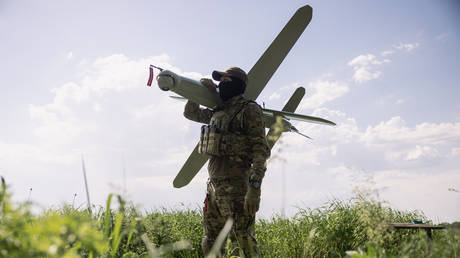
To understand how the White House miscalculated so gravely, one must look at the strategy itself. The initial campaign relied heavily on standoff weapons—drones, cyber warfare, and long-range bombers. By design, this approach kept American casualties near zero. It was supposed to be a bloodless war for the American public, a conflict that could be managed on digital displays in Virginia without disrupting the Sunday football schedule.
But this sterile approach removed the skin from the game.
When a nation does not bury its dead, it does not engage with the reality of its actions. The war became just another content stream, competing for eyeballs alongside celebrity gossip and algorithmic drama. Without the visceral tragedy of American soldiers returning in flag-draped coffins, the conflict lacks the stakes required to force a domestic consensus. The public treats the war not as a national emergency, but as a background noise they cannot turn off.
Meanwhile, the economic sanctions intended to cripple Tehran have rippled outward in unexpected ways. Global supply chains, already fragile from years of trade disputes and pandemic aftershocks, have twisted further. Microchip manufacturing components, specific chemical exports, and agricultural fertilizers have spiked in price.
Marcus, the Iowa farmer, feels the geopolitical tremors in his soil. The cost of nitrogen-based fertilizer has climbed twenty-two percent since the first bombs dropped on Iran. He is not thinking about the balance of power in the Middle East. He is thinking about his bank loan.
"They tell us we're defending freedom," Marcus says, his thumb tracing the rim of his ceramic mug. "But freedom feels a lot like paying twice as much to plant a field that might not make a profit."
The Echo Chamber of Power
In the halls of power, the strategy remains stubborn. Speechwriters still reach for the vocabulary of the Cold War, invoking terms like "axis of instability" and "the defense of the rules-based order." They are speaking a language that the public no longer translates.
The problem is a deficit of trust built over decades. The collective memory of the American electorate is scarred by the phantoms of past interventions. The promises of weapons of mass destruction in Iraq and the twenty-year nation-building illusion in Afghanistan have created a profound cynicism. When the government says a strike is necessary, the default reaction across both sides of the political aisle is no longer belief. It is suspicion.
The President's traditional allies are lukewarm; his opponents are transactional. Attempts to build a grand coalition in Congress have devolved into partisan bickering, where support for the war is traded for domestic pork or immigration concessions. There is no unified front. There is only a fragmented capital trying to lead a distracted country.
The administration underestimated the sheer weight of American weariness. You cannot run a war on autopilot when the domestic engine is sputtering.
The Silent Threshold
A nation cannot remain suspended in this vacuum indefinitely. Wars have a habit of refusing to stay contained within the boundaries set by planners in the Pentagon.
If an Iranian drone eludes a missile defense system and strikes a U.S. naval vessel in the Persian Gulf, the illusion of the detached war will shatter instantly. If the domestic economy takes another sharp downturn, the apathy will curdle into active resentment. The administration is walking a tightrope over a canyon of public indifference, praying that the wind does not blow.
Back in the Iowa diner, the news segment ends. The screen cuts to a brightly colored commercial for a new pickup truck, the upbeat music jarring against the images of smoke over Isfahan that lingered just moments before. Marcus slides a five-dollar bill under his saucer, grabs his cap, and walks out into the cold afternoon air.
The sky above the cornfields is vast and gray. It is entirely quiet. For now.