Shutting down a major hospital’s pathology laboratory is not a victory for workplace health and safety. It is an institutional panic attack that trades a controllable, microscopic occupational hazard for an immediate, catastrophic threat to patient survival.
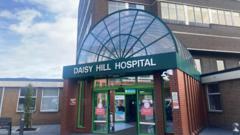
When headlines trumpet that a major Queensland hospital is closing its pathology labs amid a potential formaldehyde exposure investigation, the lazy consensus kicks in automatically. The press applauds the caution. Union reps claim a moral victory. Hospital administrators pat themselves on the back for putting staff safety first. For an alternative look, read: this related article.
Everyone claps. Meanwhile, surgical oncology specimens sit unfixed, turnaround times for critical biopsies balloon, and diagnostic bottlenecks quietly kill the very people the hospital exists to save.
I have spent two decades auditing clinical laboratory infrastructure, ventilation engineering, and chemical hygiene plans across major healthcare networks. I have watched hospital executives blow millions of dollars on reactive shutdowns that solve nothing, while ignoring the actual mechanical failures that caused the exposure in the first place. The decision to shutter an operational anatomic pathology unit over suspected formaldehyde exceedance is rarely about science. It is almost always about legal liability, administrative cowardice, and a fundamental misunderstanding of industrial hygiene. Similar coverage on this matter has been provided by National Institutes of Health.
The Theatre of Compliance Versus Actual Risk
Let us define our terms precisely, because public health reporting routinely confuses chemical presence with toxic dose.
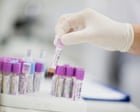
Formaldehyde—specifically used in pathology as 10% neutral buffered formalin (a 3.7% to 4% aqueous solution of formaldehyde gas in water)—is the gold standard tissue fixative in modern medicine. It cross-links proteins, halting cellular degradation (autolysis) so a pathologist can look at a slice of breast tissue or a colon polyp under a microscope and tell a patient whether they have cancer.
Is formaldehyde hazardous? Yes. The International Agency for Research on Cancer (IARC) classifies it as a Group 1 carcinogen, primarily linked to nasopharyngeal cancer and myeloid leukemia in workers subjected to high, chronic inhalation over years. It is also a potent acute respiratory and ocular irritant.
In Australia, Safe Work Australia enforces strict Workplace Exposure Standards (WES). The Time-Weighted Average (TWA) over an eight-hour shift is 1 part per million (ppm), and the Short-Term Exposure Limit (STEL) over 15 minutes is 2 ppm.
Here is what the hysterical press coverage misses: an investigation into potential exposure does not mean workers are dropping dead on the linoleum.
In modern Australian public hospitals, fume hoods, downdraft grossing stations, and automated tissue processors are engineered to capture vapors at the source. When an exceedance occurs—say, an air monitor spikes to 1.4 ppm during a tissue transfer or a seal degrades on a processor—you do not evacuate the building and padlock the diagnostic engine of a tertiary hospital. You put technicians in P100/organic vapor respirators (specifically cartridges rated for formaldehyde), isolate the specific malfunctioning extraction hood, bring in an occupational hygienist with a photoionization detector or calibrated electrochemical sensor, and fix the airflow damper.
Closing the entire lab is regulatory theatre. It allows executives to tell the media, "Look how decisive we are," while outsourcing their diagnostic workload to external laboratories that are already stretched thin.
What Happens When a Pathology Lab Goes Dark
To understand why a shutdown is reckless, you have to understand the clock ticking inside every piece of human tissue removed in an operating theatre.
The moment a surgeon clamps an artery and excises a tumor, that tissue begins to rot. Enzymatic self-digestion starts immediately. Within hours, cellular architecture blurs. Within a day, critical biomarkers degrade.
Consider cold ischemia time—the window between tissue removal and immersion in formalin. According to guidelines from the American Society of Clinical Oncology (ASCO) and the College of American Pathologists (CAP), breast cancer specimens must be placed in formalin within one hour of excision. If they sit unfixed because a local lab is closed and couriers are batch-shipping specimens to another facility across town or across the state, HER2, estrogen receptor (ER), and progesterone receptor (PR) proteins degrade.
What does that mean in plain English? A woman with aggressive HER2-positive breast cancer gets a false-negative result. She is denied targeted immunotherapy like trastuzumab. Her cancer recurs. Nobody ever links her death to the "proactive" formaldehyde shutdown six months earlier, because the statistical body count of delayed pathology is invisible to news cameras.
Imagine a scenario where a regional trauma and oncology hub shutters its histopathology cut-up room for three weeks during an air-quality audit. Intraoperative frozen sections—where a surgeon pauses an operation with a patient open on the table, waiting 20 minutes for a pathologist to confirm if tumor margins are clear—become impossible or dangerously delayed. Surgeons are forced to either close the patient and schedule a second surgery weeks later, or cut wider margins blindly, sacrificing healthy organ tissue.
You did not eliminate risk by closing the lab. You simply transferred 100% of the risk from trained laboratory technicians—who have access to personal protective equipment and engineering controls—onto anesthetized patients who have zero defenses.
The Real Culprit Behind Hospital Formaldehyde Spikes
If you want to know why a major Queensland hospital suddenly faces a formaldehyde exposure crisis, stop looking at the chemical and start looking at hospital facilities management.
Formaldehyde does not magically escape closed systems. In thirty years of clinical pathology, almost every single exposure event I have investigated traces back to one of three mundane, preventable maintenance failures:
- Neglected HVAC Balancing and Damper Failures: Pathology labs operate under negative air pressure relative to surrounding corridors, with high air-change-per-hour (ACH) rates. When hospital facilities teams upgrade an adjacent wing or tweak building management systems to save on electricity costs, they routinely throw off the exhaust static pressure in the grossing room. The fume hood looks like it is running, the light is on, and the fan is humming, yet the face velocity has dropped below the safe threshold of 0.5 meters per second, allowing vapor to spill into the technician’s breathing zone.
- Deferred Carbon Filter Replacement: Many standalone ventilation units rely on potassium permanganate-impregnated alumina or activated carbon filters to scrub formaldehyde vapors. When budgets get tight, filter replacement schedules slip from quarterly to "whenever someone smells something." By the time you smell formaldehyde—which happens around 0.5 to 1.0 ppm for most people—the filter bed is already saturated and experiencing breakthrough.
- Sloppy Specimen Transport from Operating Theatres: The highest vapor concentrations rarely happen at the pathology bench; they happen when scrub nurses in surgery hastily snap lids onto pre-filled formalin buckets without checking the gasket, sending leaking containers through pneumatic tube systems or courier totes.
Notice a pattern? None of these are solved by closing the pathology lab. Locking the doors for a month does not recalibrate a variable air volume (VAV) box or retrain operating theatre staff on how to seal a specimen jar. It just creates a massive backlog of unexamined biopsies while consultants write reports recommending the exact ventilation repairs that should have been done during routine quarterly maintenance.
Dismantling the "Formalin-Free Pathology" Myth
Whenever a formaldehyde scare hits the news, well-meaning commentators immediately ask: Why are we still using a toxic chemical from the 19th century? Why doesn't the hospital just switch to a safe alternative?
Because chemistry does not care about wishful thinking.
Over the past twenty years, dozens of commercial formalin substitutes—mostly alcohol-based fixatives like FineFIX, RCL2, or UMFIX, and glyoxal-based solutions like Prefer—have been marketed as the non-toxic salvation of anatomic pathology. I have personally overseen validation trials for three of them. Every single one hits a hard clinical wall.
Here is the brutal truth about formalin alternatives:
- Diagnostic Distortion: Alcohol-based fixatives shrink tissue drastically and lyse red blood cells. Pathologists spend a decade training their eyes to recognize the exact nuclear chromatin patterns and cytoplasmic textures produced by formalin fixation. Changing the fixative changes how cancer looks under the lens, increasing diagnostic error rates.
- Molecular and Immunohistochemical Failure: Almost every global clinical trial, FDA-approved companion diagnostic assay, and antibody staining protocol on earth is validated on formalin-fixed, paraffin-embedded (FFPE) tissue. Switch to glyoxal or ethanol, and your automated immunohistochemistry stainers start producing false negatives and patchy background noise. You have to re-validate hundreds of individual antibodies from scratch—a process costing millions of dollars and years of work.
- Flammability: Most non-formalin alternatives rely on high concentrations of ethanol or methanol. Congratulations—you just traded a controlled inhalation hazard for a massive fire and explosion hazard inside a hospital basement.
Formalin remains ubiquitous not because pathologists love toxic fumes, but because nothing else preserves human tissue with the same structural fidelity and molecular compatibility. Until a true chemical equivalent exists, managing formaldehyde is a non-negotiable core competency of running a hospital.
The Honest Downside of Keeping Labs Open
Let me be completely candid about the flip side of my argument, because pretending there is no trade-off is just as dishonest as the administrative panic I am criticizing.
Keeping a pathology lab operational during a suspected exposure investigation requires rigorous, zero-tolerance operational discipline—and most public hospital bureaucracies are terrible at rapid, granular risk management.
If a lab stays open while airflow is compromised, and management relies on "administrative controls" (telling staff to just work faster or step back from the bench) instead of hard engineering fixes and mandatory respiratory fit-testing, workers will get hurt. Chronic low-level exposure causes occupational asthma, sensitization, and mucosal damage. Furthermore, wearing half-face elastomeric respirators for an eight-hour shift while performing delicate macroscopic dissection of millimeter-sized lymph nodes is exhausting, hot, and impairs communication. It degrades technician morale and increases the risk of ergonomic injury or specimen mix-ups.
If a ventilation system has completely failed—zero negative pressure, dead exhaust fans, indoor levels spiking above 2 ppm—immediate evacuation is mandatory. Nobody should sacrifice their lungs for hospital throughput.
The failure is not evacuating during an acute mechanical failure. The failure is treating a localized ventilation fault as an excuse for an indefinite, system-wide closure because executives lack the technical competence to isolate the hazard and keep critical diagnostics running safely.
What Competent Clinical Leadership Actually Looks Like
If I were walking into that Queensland hospital tomorrow morning to fix this mess, I would not hold a press conference announcing a closure. I would execute a four-step containment protocol that protects every technician in the room without dropping a single patient biopsy:
- Immediate Real-Time Air Mapping: Bring in an independent certified occupational hygienist (COH) with continuous logging electrochemical monitors—not passive badge dosimeters that take two weeks to return results from a lab. Map the exact ppm levels at the cut-up bench, tissue processor exhaust, and specimen reception window during peak workload.
- Deploy Engineering Controls Within 24 Hours: If the built-in exhaust is failing, wheel in portable HEPA/activated-carbon recirculating air scrubbers directly adjacent to the grossing stations and fit temporary negative-pressure ducting out a service window. Capture the vapor at the source before it enters the room envelope.
- Enforce Mandatory PAPRs for High-Risk Tasks: Put every technician working at the open formalin bench into a Powered Air-Purifying Respirator (PAPR) with formaldehyde-rated cartridges. Unlike tight-fitting negative-pressure masks, PAPRs blow cool, filtered air over the worker's face, require no fit-testing for facial hair, and eliminate breathing resistance during long shifts.
- Audit the Upstream Supply Chain: Walk straight up to the operating theatres and endoscopy suites. Inspect every single pre-filled formalin container brand in use. Switch immediately to closed-system, leak-proof biopsy containers where formalin is only released once the lid is mechanically sealed.
None of this makes for a dramatic headline. It does not let administrators pose as cautious heroes on the evening news. All it does is keep the staff healthy, keep the microscopes running, and ensure that a patient waiting on a cancer diagnosis does not become collateral damage in a bureaucratic PR exercise.
Stop padlocking hospital laboratories every time a sensor trips. Fix the damn ventilation, hand the techs proper respirators, and get back to diagnosing patients.