Indian cities are choking on broken drainage, uncollected garbage, and endless traffic jams. Yet when something goes wrong on your street, you probably don't even know your mayor's name.
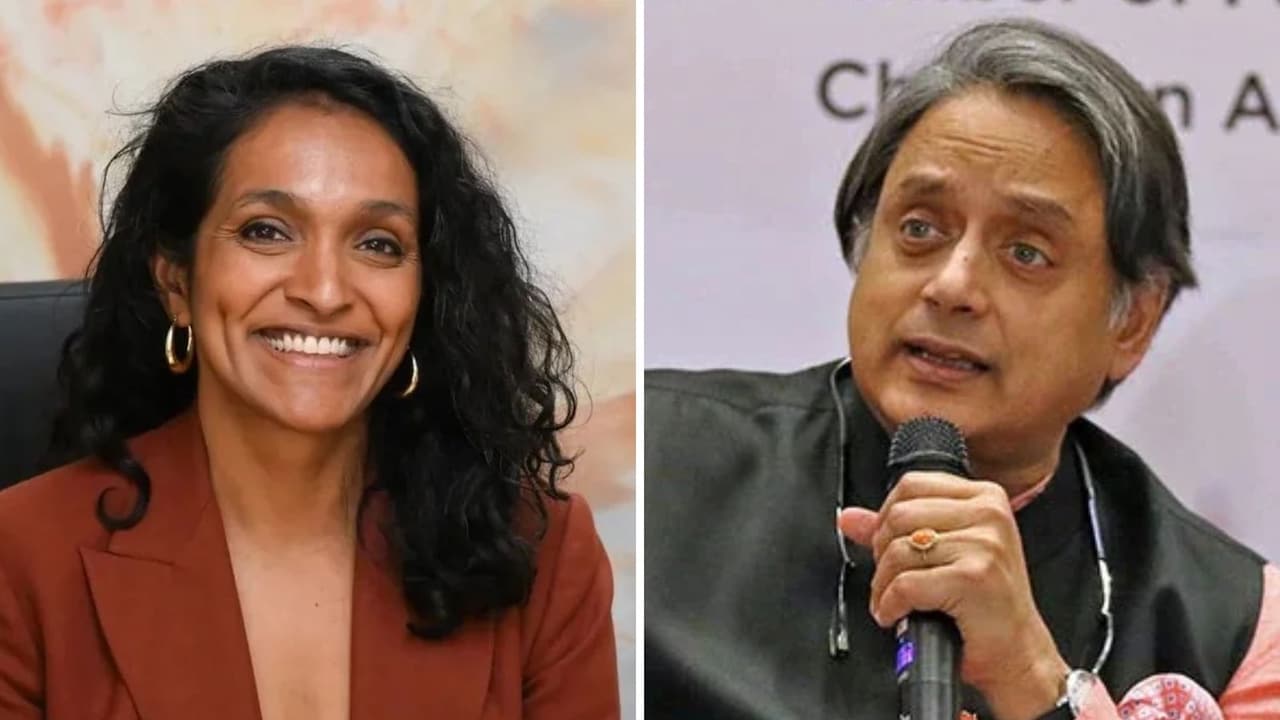
That disconnect sits right at the heart of Shashi Tharoor's viral reaction to Nithya Raman's political rise in Los Angeles. While congratulating Raman—an Indian-origin urban planner and progressive politician—on her electoral success in the US, the Thiruvananthapuram MP took a pointed jab at how Indian municipalities actually operate. His argument was simple. In American cities, mayors hold real executive authority, control massive budgets, and answer directly to voters. In India, most mayors are ceremonial figureheads cutting ribbons while state-appointed bureaucrats run the show.
Tharoor isn't wrong. And honestly, his comment exposes one of the biggest structural flaws holding back India's urban economy.
Why Shashi Tharoor Praised Nithya Raman
Nithya Raman isn't your typical career politician. Born in Kerala and raised in Chennai before moving to the United States, she trained as an urban planner at MIT and spent years working directly on homelessness and housing issues in Los Angeles. Before entering the LA City Council, she co-founded Transparent Chennai, a research initiative focused on improving civic data and sanitation access for underserved neighborhoods in India.
When Raman stepped into Los Angeles politics, she didn't rely on party machinery or dynastic backing. She built a grassroots coalition around housing affordability, tenant protections, and humane responses to homelessness. Voters rewarded that direct accountability.
Tharoor highlighted her trajectory because it represents everything Indian urban governance currently lacks. A qualified urban planner with deep roots in civic activism ran on concrete policy ideas, won over a massive urban electorate, and stepped into a system where local officials actually wield legislative and budgetary power.
In Los Angeles, council members and the mayor shape zoning laws, approve multi-billion-dollar municipal budgets, oversee police and transit boards, and face direct backlash if basic services fail. There's nowhere to hide. If potholes stay unfilled or housing costs spiral, voters know exactly who holds the pen.
Compare that to Mumbai, Bengaluru, or Delhi. If your neighborhood floods during the monsoon, who takes the blame? The mayor points at the municipal commissioner. The commissioner points at the state urban development ministry. The state government blames the previous administration. Everybody passes the buck, and nothing gets fixed.
The Structural Trap Behind Indian Mayors
To understand why Tharoor's swipe landed so hard, you have to look at how Indian cities are legally wired.
Back in 1992, Parliament passed the 74th Constitutional Amendment Act. On paper, it was supposed to usher in a golden era of local self-government by recognizing municipalities as the third tier of democracy alongside the Union and state governments. It even listed 18 specific functions—including urban planning, water supply, roads, and public health—that states were meant to transfer to city governments.
Three decades later, most state governments still refuse to let go of that power.
Here's what actually happens in almost every major Indian city today:
- Indirect elections kill accountability. In most states, citizens don't vote for their mayor. Corporators elect the mayor behind closed doors, often turning the post into a musical chairs arrangement dictated by state party bosses.
- Short tenures prevent real planning. Cities like Mumbai and Bengaluru have historically rotated mayors every one to two-and-a-half years, often using caste or gender rotation quotas. You can't fix a decade-long transit or sewage crisis in twelve months.
- Bureaucrats hold the purse strings. The Municipal Commissioner—an IAS officer appointed by the Chief Minister—controls the administration, signs off on major contracts, and answers to the state capital rather than the city council.
- Parastatal agencies bypass city hall. Critical infrastructure like metro rail, water boards, and urban development authorities report directly to state ministers, leaving elected local representatives completely out of the loop.
Think about the absurdity of that setup. Bengaluru generates a massive share of Karnataka's tax revenue and drives India's tech exports, yet its elected municipal council spent years dissolved while state-appointed administrators ran the city. Mumbai's Brihanmumbai Municipal Corporation (BMC) commands an annual budget larger than several small Indian states, yet without an active elected body or an empowered mayor, citizens have zero direct democratic leverage over how those tens of thousands of crores get spent.
Tharoor has campaigned on this exact issue for years. He has repeatedly argued for directly elected mayors with fixed five-year terms and genuine executive authority, even introducing private member bills and pushing the idea in his books and columns. Praising Nithya Raman gave him a real-world contrast that voters could immediately grasp.
Why State Politicians Refuse to Empower Cities
If empowered mayors make so much sense, why hasn't India made the switch?
Simple. Power and money.
Indian states rely heavily on major cities for revenue, real estate development, and political fundraising. A directly elected mayor of Mumbai, Delhi, Chennai, or Hyderabad would instantly become one of the most powerful politicians in the country. They would command a massive electorate, media spotlight, and independent financial clout.
Chief Ministers across party lines hate that idea.
Whether it's Maharashtra, Karnataka, Tamil Nadu, or West Bengal, state leaders prefer keeping mayors weak so that power stays concentrated in the Chief Minister's office. If a Chief Minister controls the Municipal Commissioner, the urban development authority, and the police commissioner, the Chief Minister effectively runs the city without ever having to face local municipal elections on neighborhood issues.
This creates a toxic incentive structure. State politicians treat cities as cash cows while focusing their political energy on rural vote banks, where legislative assembly seats are more densely clustered. Meanwhile, urban residents pay steep property taxes, GST, and fuel duties while getting third-rate footpaths and toxic air in return.
What Nithya Raman's Background Teaches Us About Urban Leadership
There's another layer to Tharoor's praise that deserves closer attention. It isn't just about institutional power—it's about expertise.
Nithya Raman spent years studying how Indian cities actually work on the ground before she ever ran for office in California. Through her research in Chennai, she documented how municipal budgets often ignored basic sanitation in low-income settlements and how fragmented data prevented officials from solving straightforward service gaps.
She understood something that gets lost in Indian political debates. Urban governance isn't just about ribbon-cutting or grand infrastructure announcements. It's technical, unglamorous work. It requires reading zoning codes, auditing waste collection routes, tracking shelter beds, and fixing procurement bottlenecks.
In India, municipal politics is frequently treated as a stepping stone to an MLA or MP ticket, or worse, a vehicle for local real estate and contracting interests. Because the mayor lacks formal power, ambitious policy thinkers rarely bother running for city council. Why spend years fighting for a corporator seat when a state-appointed bureaucrat can overrule your decisions with a single signature?
When cities empower local offices, they attract serious problem-solvers. When they keep local offices weak, they get placeholders.
The Counterargument Critics Often Raise
Not everyone agrees that switching to a US-style strong-mayor system would magically save Indian cities. Critics bring up real concerns that shouldn't be brushed aside.
First, there's the gridlock risk. In American cities, a directly elected mayor frequently clashes with a hostile city council, stalling budgets and housing approvals for months. Given how fractious Indian party politics already is, a mayor from one party fighting a council controlled by another could paralyze basic civic maintenance.
Second, critics worry about corruption and capture. Transferring massive contracting and land-use powers to a single directly elected individual without airtight audit mechanisms could invite unprecedented cronyism. India's IAS-led municipal model, for all its elitism and sluggishness, was originally designed to provide administrative continuity and check local political interference.
Third, Indian metros spill far beyond single municipal boundaries. Traffic, air pollution, and water supply in Delhi NCR or the Mumbai Metropolitan Region cut across multiple municipalities and even state lines. A single city mayor can't solve regional watershed or transit problems alone.
Those are fair points. Blindly copying Los Angeles or New York wouldn't work without strong guardrails. You need independent municipal ombudsmen, strict transparency laws on urban tenders, and metropolitan planning committees that coordinate across neighboring towns.
Still, fearing potential gridlock is a terrible excuse for keeping a system that is already broken. Right now, Indian cities don't have healthy checks and balances—they have organized irresponsibility.
What Needs to Change for Indian Cities to Work
You don't need a constitutional overhaul to start fixing this. The framework already exists inside the 74th Amendment. What's missing is political nerve from state governments and sustained pressure from urban voters.
If India wants cities that function like global economic hubs instead of obstacle courses, four concrete shifts have to happen:
- Direct mayoral elections with a five-year term. Voters in every city with over a million people should directly elect their mayor on a clear manifesto, with enough time in office to actually execute infrastructure projects.
- Executive authority over city agencies. Water supply, local transit, waste management, and urban planning must report to the elected mayor and council, not parallel state departments.
- Transparent municipal budgets and ward committees. Citizens should be able to track street-level spending online and participate in legally empowered ward committees that prioritize neighborhood repairs.
- Dedicated urban revenue streams. Cities need predictable shares of state and central tax collections rather than begging state finance departments for basic operational grants every year.
Urban Indians also have to stop treating municipal elections like an afterthought. Voter turnout in Mumbai, Bengaluru, and Delhi civic polls routinely lags far behind state and national elections. Middle-class residents complain endlessly on social media about broken roads and waterlogging, then skip voting day because they assume local corporators don't matter.
Shashi Tharoor's praise for Nithya Raman hit a nerve because it forced a mirror in front of Indian urban politics. Watching an Indian-origin planner thrive in an accountable American city system makes the dysfunction back home impossible to ignore. Until Indian voters demand real power for the people they elect to run their cities, nothing on your street is going to change.