A shiny new building does not fix a broken youth sports pipeline. Pouring $24 million into concrete, hardwood, and LED scoreboards in Las Vegas makes for a great ribbon-cutting photo. It makes for a terrible guarantee of long-term community impact.
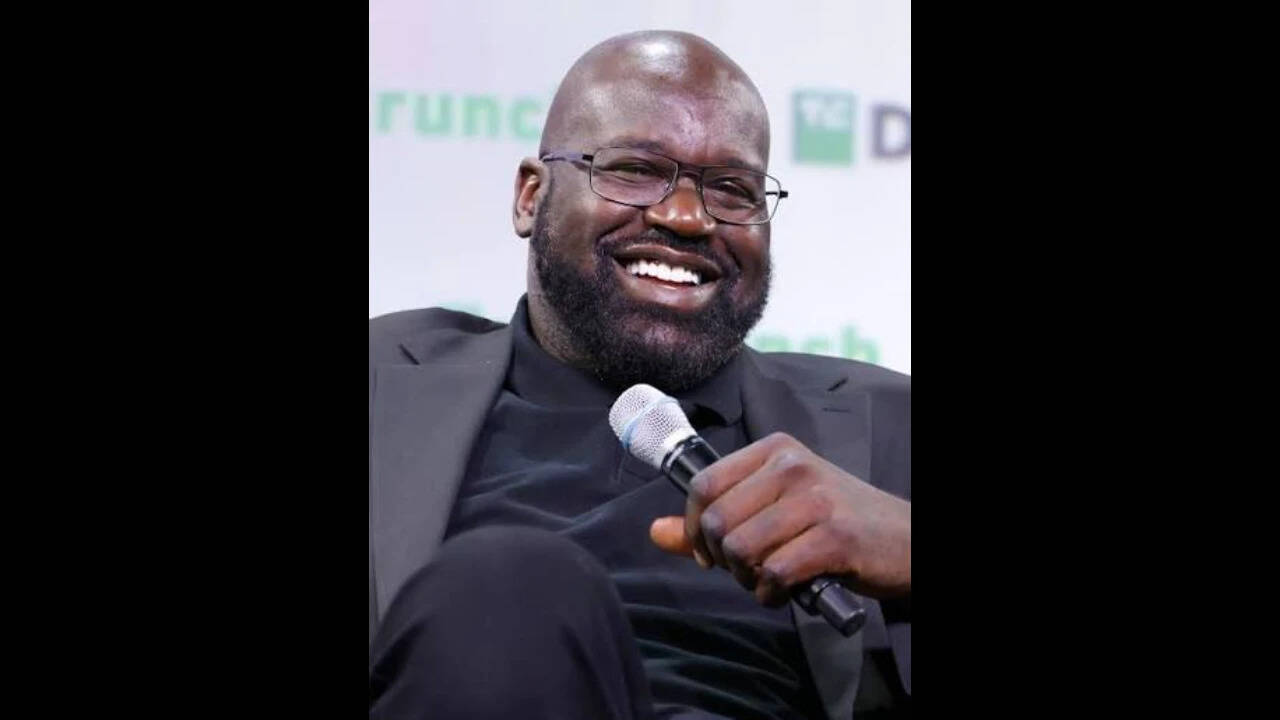
Every time a celebrity athlete or municipal authority announces a multi-million-dollar youth sports complex, the press coverage writes itself. Headlines trumpet "safe spaces," "opportunities for underserved kids," and "transformative investments." When news breaks that Shaquille O’Neal’s $24 million Las Vegas youth complex is nearing completion, the lazy consensus is immediate: big money equals big good.
That consensus is lazy because it confuses capital expenditure with operational survival. A facility is a shell. Without sustained operating capital, qualified coaching, accessible scheduling, and a realistic path off the court, expensive buildings routinely turn into expensive headaches—or worse, pay-to-play playgrounds that price out the exact kids the ribbon-cutting promised to serve.
The Myth of "Build It and They Will Come"
In sports facility development, capital expenditure (CapEx) is the upfront cost of land, construction, equipment, and outfitting. Operating expenditure (OpEx) is the recurring cost required to keep the doors unlocked, the lights on, the HVAC running in 110-degree Nevada heat, the floors resurfaced, and the staff paid.
Most puff-piece coverage stops at the CapEx number because $24 million sounds heroic. Nobody wants to read about the quiet, unglamorous reality of year three, year five, or year ten, when utility bills spike, roof repairs hit, insurance premiums climb, and the initial philanthropic shine wears off.
I have watched municipalities and nonprofits blow millions on gleaming athletic centers that looked like temples on opening day and felt like half-empty warehouses by winter. The pattern is remarkably consistent. First comes the grand unveiling with speeches about community uplift. Next comes the slow realization that running a high-throughput indoor-outdoor complex costs millions every single year. Then comes the squeeze: either maintenance gets deferred until the facility degrades, or the operator leans harder on weekend tournaments, travel-team rentals, and gate fees to balance the ledger.
Once a facility leans on tournament revenue to survive, its center of gravity shifts. Local kids who need open gym time, mentorship, and affordable leagues get pushed to off-peak hours or priced out entirely by club dues and entry fees. A neighborhood asset quietly becomes a regional travel-sports vending machine.
What People Also Ask About Youth Complexes Like Shaq’s in Las Vegas
When a high-profile project like the Shaquille O’Neal Las Vegas youth complex approaches completion, searchers naturally ask a few standard questions. Most of those questions start from shaky assumptions.
Does a $24 million youth sports complex automatically lower youth crime or keep kids out of trouble?
That premise is too simplistic. Sports participation correlates with positive youth outcomes in many studies, particularly when paired with adult mentorship, academic support, and consistent structure. Yet brick-and-mortar infrastructure by itself is not a social intervention.
A basketball court or multipurpose gym does not magically resolve housing instability, school truancy, transportation gaps, or lack of family support. If a facility has limited hours, steep membership fees, or poorly trained supervisors, a kid living three miles away with no bus route or no entry fee might never step inside. Infrastructure creates capacity; programming and access create outcomes.
Will a major youth complex help local kids reach college scholarships or the pros?
Ask that question honestly and you are already looking at the wrong scoreboard. Fewer than two percent of high school basketball players earn an NCAA scholarship of any division, and the odds of reaching the NBA are a tiny fraction of a fraction of a percent.
Selling youth sports complexes primarily as talent factories is a bait-and-switch. If a $24 million Las Vegas youth complex measures its worth by how many division-one players or pros it produces, it is grading itself on a lottery ticket. Real return on investment in youth sports looks like higher high school graduation rates, physical literacy, leadership skills, lifelong health habits, and local jobs—not highlight reels.
Why build in Las Vegas specifically?
Las Vegas has a glaring contradiction at the heart of its youth sports ecosystem. On one hand, it is a booming metro area with a massive tourism and hospitality engine, plenty of sunshine, and growing youth populations. On the other hand, desert summers make outdoor play brutal for months at a time, and rapid growth often outpaces neighborhood recreational infrastructure.
At the same time, Las Vegas is a hyper-competitive entertainment and event market. Any large athletic venue there has to compete for attention, staffing, and dollars in a city built around spectacles and hospitality labor markets. Building in Vegas offers visibility and scale, but operating there demands disciplined cost control and year-round indoor utility.
Imagine a scenario where a city opens a brand-new $24 million multi-court complex with zero endowment for operations and a mandate to "break even" within twenty-four months. In month one, local youth leagues get prime evening slots. By month fourteen, maintenance and utility costs exceed neighborhood fee revenue. To cover the gap, the operator books out prime weekend blocks to out-of-state AAU and club tournaments that pay top dollar for court time, concessions, and parking. Nothing illegal happened. No villain twirled a mustache. Yet the facility's everyday mission quietly mutated from community uplift to revenue extraction.
The Real Mechanics Behind Sustainable Youth Facilities
To judge whether a project like Shaquille O’Neal’s Las Vegas youth complex will actually deliver, ignore the press release and look at four operational levers.
| Operational Lever | What Hype Focuses On | What Actually Determines Success |
|---|---|---|
| Funding Model | Initial $24M construction price tag | Dedicated OpEx reserve, endowment, or multi-year operating partner |
| Access & Pricing | Free or low-cost entry for local youth | Guaranteed prime-hour slots and scholarship/fee-waiver structure |
| Coaching & Staff | Celebrity name recognition and star visits | Certified coaches, background checks, mentors, and low turnover |
| Success Metrics | Facility tour photos and opening attendance | Retention rates, academic/life benchmarks, and 10-year upkeep |
1. CapEx vs. OpEx Discipline
Economists and facility operators have long warned about the "white elephant" trap in public and philanthropic capital projects: funding the build while starving the upkeep. Research from urban policy scholars and sports economists—including work by figures like Roger Noll and Andrew Zimbalist on sports facility economics, alongside decades of municipal recreation audits—shows that facilities thrive when capital budgets and operating budgets are planned together from day one.
If an operator relies solely on ad-hoc donations or unpredictable event bookings to pay electric bills, janitorial crews, and court resurfacing, standards slip fast. A scuffed floor, broken backboard, or unconditioned gym signals neglect, and families stop coming.
2. Coaching Quality Beats Court Count
Six gleaming courts supervised by underpaid part-timers who just roll out basketballs teach bad habits and breed chaos. Two well-run courts led by mentors who teach fundamentals, emotional regulation, accountability, and teamwork change lives.
Youth sports development experts—including researchers studying positive youth development through sport—consistently emphasize the coach-athlete relationship as the primary driver of character and skill growth. Facilities do not mentor kids. People do.
3. Schedule Sovereignty for Locals
In almost every fast-growing youth sports hub, commercial travel teams are the biggest threat to everyday community access. Travel ball runs on weekends, charges steep tournament fees, and favors families with flexible time and money.
A truly community-first youth complex has to protect prime weekday afternoons and evenings for local kids, rec leagues, and neighborhood programs—even when a paid tournament is knocking on the door offering a bigger check.
4. Multi-Use Versatility Beyond One Sport
Single-sport shrines are fragile. If a complex is built strictly around one narrow format or one demographic, utilization dips during off-seasons or shifting trends.
Flexible indoor space—courts that can convert cleanly for volleyball, futsal, youth fitness, community workshops, tutoring, or summer camps—spreads fixed overhead across more hours of the day and more segments of the community.
Where My Contrarian Stance Has Real Risks
Being skeptical of big-ticket sports facilities does not mean sitting on your hands. There is a real downside to over-indexing on skepticism.
If every city and philanthropist waited for a 100-year bulletproof operating endowment before breaking ground, many under-resourced neighborhoods would wait forever while existing gyms crumble. Sometimes a high-profile anchor project—especially one backed by a recognizable figure like Shaquille O’Neal—can rally corporate sponsors, civic attention, and momentum that small grassroots groups simply cannot muster alone.
Contrarians can easily sound like armchair critics who demand perfection while doing nothing. A well-executed flagship complex can catalyze broader investment, attract top program partners, and give kids a physical standard of excellence they rarely see in neglected neighborhoods. The risk isn't that big investments happen; the risk is assuming the building itself finishes the job.
What Smart Operators and Communities Should Do Next
If you are a civic leader, youth program director, donor, or parent evaluating a project like this—or building something similar in your own town—stop asking how much it cost to build and start taking concrete action:
- Audit the 10-year operating budget before celebrating the build. Ask who pays for utilities, insurance, repairs, and full-time staff in Year 5, and where that money comes from if sponsorships dry up.
- Demand hard rules on local access. Look for explicit commitments on subsidized or free youth programming, transportation or neighborhood outreach, and protected community hours versus paid rentals.
- Invest in people at least as aggressively as property. Push for coach training, stipends, mentorship partnerships, and academic or career pathways tied to the facility.
- Track real outcomes instead of vanity numbers. Measure how many local kids come back month after month—not just how many cameras showed up on opening day.
Concrete and hardwood don't save kids. People, budgets, and daily discipline do.