A single steel container, rusted at the corners and salt-crusted from weeks at sea, carries more than just cheap electronics or frozen cargo. It carries the weight of a global economy that breathes through a narrow, jagged throat of water known as the Strait of Hormuz. For a merchant mariner standing on the bridge of a massive tanker, the view has changed. It isn't just about the blue expanse anymore. It’s about the invisible lines being drawn across the waves.
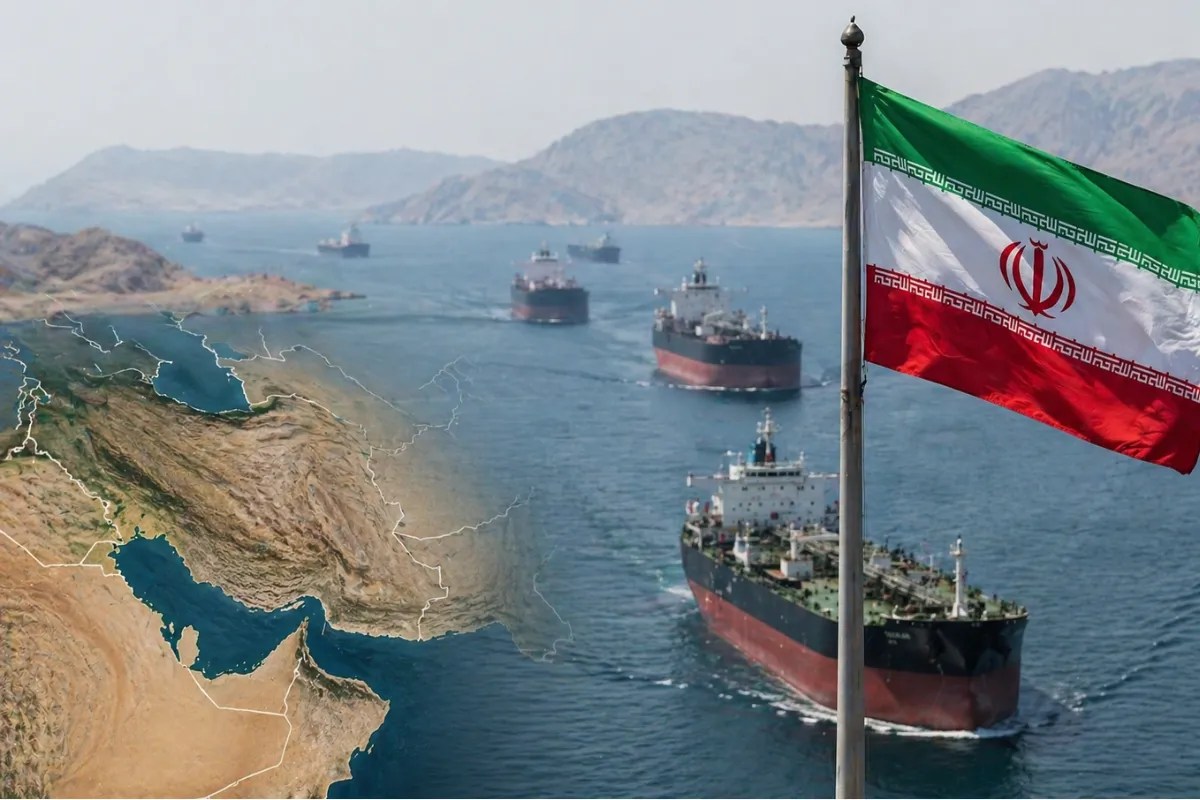
Iran has recently tightened its grip on this corridor, establishing a new "maritime control zone" that effectively redefines who gets to pass and under what conditions. To the casual observer, this sounds like a bureaucratic shift in naval policy. To the world’s superpowers, it is a chokehold.
The Strait is a geographic anomaly. At its narrowest point, it is barely twenty-one miles wide. Yet, through this needle's eye flows roughly a fifth of the world’s total oil consumption. If the global economy is a body, Hormuz is the carotid artery. Iran has just placed its fingers on that pulse.
The Ghost in the Machine
Consider a hypothetical captain named Elias. He has spent thirty years navigating these waters. In the past, the rules were governed by international norms—the freedom of navigation that allowed ships to traverse these waters as long as they stayed within the designated lanes. Now, Elias looks at his radar and sees something different. He sees the shadow of the Iranian Revolutionary Guard Corps (IRGC) manifesting not just in physical patrol boats, but in a new legal and electronic architecture designed to monitor, challenge, and potentially halt anything that moves.
This isn't just about big guns and fast boats. It’s about data. The new control zone isn't merely a line on a map; it's a sophisticated net of sensors, drones, and coastal batteries. Iran is signaling that it no longer recognizes the old "innocent passage" rules for those it deems hostile. By formalizing this control zone, Tehran has created a "grey zone" where the risk of miscalculation grows with every tide.
The American Dilemma
Across the water, the United States Fifth Fleet sits in Bahrain, watching. For decades, the U.S. presence was the undisputed stabilizer. The message was simple: keep the oil moving, or face the carrier strike group. But the old playbook is fraying.
The U.S. now faces a strategic nightmare. If they ignore the new Iranian control zone, they risk a slow erosion of international maritime law. If they challenge it directly by sailing warships through the heart of these new claims, they risk a kinetic spark in a region already soaked in gasoline. It is a game of high-stakes chicken played with vessels worth billions.
Washington’s response has shifted toward "over-the-horizon" monitoring and the deployment of unmanned surface vessels—the Task Force 59 drones. These small, solar-powered eyes on the water are meant to provide a constant stream of intelligence without risking human lives. But drones cannot negotiate. They cannot de-escalate a tense radio standoff with a defiant IRGC commander.
The Israeli Shadow
While the U.S. worries about global trade, Israel's concerns are existential and tactical. For Israel, the Strait of Hormuz is the starting point of a long, shadowy supply chain that feeds its most dangerous adversaries. They see this new control zone as a laboratory for maritime denial.
If Iran can successfully dictate terms in the Strait, they can perfect the art of the "maritime siege." Israel has already been engaged in a "war between the shadows" with Iran, a series of tit-for-tat attacks on commercial vessels across the Arabian Sea and the Eastern Mediterranean. Now, the battlefield has been codified.
The Israeli perspective is grounded in the reality of the "Axis of Resistance." From their vantage point, a controlled Strait means Iran can more easily mask the movement of specialized components for drones and missiles, moving them toward proxies while keeping the prying eyes of international inspectors at bay. The sea is becoming a wall.
The Human Cost of High Policy
We often talk about these events in terms of "geopolitical maneuvers" or "strategic pivots." We forget the person in the engine room. We forget the insurance broker in London who has to decide if a ship is even "insurable" to enter the Gulf today.
When Iran announces a new control zone, the price of shipping insurance spikes instantly. That cost doesn't stay on the water. It travels. It ends up in the price of a gallon of gas in a small town in Ohio or the cost of heating a home in a village in Germany. The "invisible stakes" are the pennies added to every transaction on earth because a few miles of water have become a contested fortress.
The tension is a physical weight. On the deck of a tanker, the crew knows that a mistake—a mechanical failure that causes them to drift into the "wrong" water or a misinterpreted radio call—could result in a multi-month detention in an Iranian port. These aren't just ships; they are hostages to geography.
The Evolution of the Chokehold
The mechanics of this new control zone are far more advanced than the mine-laying tactics of the 1980s Tanker War. Today, it is about electronic warfare. Iran has invested heavily in GPS jamming and spoofing.
Imagine Elias on his bridge. His instruments tell him he is in international waters. But the Iranian shore station insists he has crossed the threshold. His digital map says one thing; the reality on the water says another. This "digital fog" is the hallmark of the new maritime control. By creating uncertainty, Iran forces every captain to ask permission. And once you start asking for permission to use the high seas, the sea is no longer high or free.
The technology of denial has outpaced the diplomacy of access. While the UN debates the nuances of the Law of the Sea, the reality on the ground—or the water—is being dictated by whoever has the most effective coastal radar and the fastest missile batteries.
No Easy Way Out
The world is waiting for a "return to normal," but in the Strait of Hormuz, the "normal" of the last forty years is dead. Iran has realized that they don't need to close the Strait to win. They only need to own the thermostat. They can turn the heat up or down whenever they need leverage in nuclear negotiations or relief from sanctions.
The U.S. and Israel are left with a series of bad options. They can increase their naval footprint, which fuels the Iranian narrative of "foreign interference." They can lean on regional partners like Saudi Arabia or the UAE, but those nations are increasingly wary of being caught in the crossfire of a war they didn't start.
The real shift is psychological. The Strait of Hormuz has transformed from a transit point into a border. It is a frontier where the rules are written in Farsi and enforced by the proximity of land-based power.
As the sun sets over the jagged cliffs of the Musandam Peninsula, the lights of the tankers form a slow-moving constellation. Each one is a gamble. Each one is a test of a new world order where the narrowest waters are becoming the widest divides. The silence on the radio is the loudest thing in the Gulf. It is the sound of an ancient waterway becoming a modern cage.