Silence has a weight. I have felt it settle over a room like wet wool, thick enough to choke the breath from your lungs, heavy enough to keep your feet glued to the floorboards while a storm gathers outside. In Cameroon, that silence has a name, and too often, it ends in an obituary written in shorthand.
For years, the statistics have filtered through the bureaucratic machinery of the state as cold numbers on a ledger. Yet numbers do not capture the acrid smell of kerosene poured on a mattress in the dead of night. They do not record the sound of a door locked from the outside. They reduce a human life to a data point, an administrative casualty in a system that looks away until looking away is no longer possible.
Consider a hypothetical woman we will call Therese. She lives in a concrete-block house on the outskirts of Yaoundé, the corrugated iron roof humming under the merciless afternoon heat. To her neighbors, she is simply a face in the market crowd, carrying a basin of plantains on her head, trading pleasantries with the butcher. Inside her walls, however, the geometry of her world is shrinking. Every argument is a tightening noose. Every threat is a weather vane pointing toward a disaster that everyone suspects is coming, but no one has the legal architecture to stop.
When the blow finally falls, the community gasps. There are tears, brief outcries, and solemn nods at funerals. Then, the dust settles. The machinery resumes its grinding motion.
Until now.
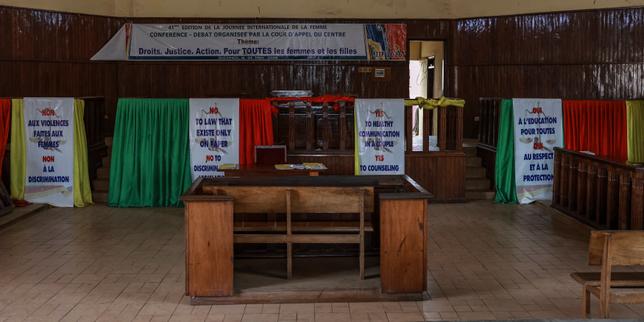
Across the country, a quiet insurgency is taking shape. It is not being fought with rifles or barricades in the streets. It is being waged in conference rooms, on university campuses, and through the persistent, exhausting labor of civil society organizations. Ordinary citizens, activists, and legal reformers are turning their collective fury into a battering ram against the doors of the National Assembly. They are demanding a fundamental pivot in how the law treats the systematic destruction of women's lives.
They are demanding a specific, uncompromising law against femicide.
Why does this matter with such crushing urgency? Because existing legal frameworks are built for strangers who cross paths in a marketplace and trade blows. They are utterly blind to the architecture of domestic terror. When violence occurs behind a closed front door, the law has traditionally treated it as a private domestic dispute, a family matter to be settled over cups of tea or hushed negotiations between extended relatives.
That distinction is a death sentence.
When a society classifies murder within the home as an interpersonal tragedy rather than a systemic crisis, it creates an invisible shield for the perpetrator. It tells the abuser that his actions are insulated by tradition, by privacy, by the sheer embarrassment of airing dirty linen in public. Civil society leaders in Cameroon are looking at this shield and saying: enough.
The pressure is mounting on parliamentarians. It arrives in the form of midnight strategy sessions, deeply researched policy briefs dropped onto mahogany desks, and relentless media campaigns that refuse to let the public forget the names of the fallen. Activists are asking lawmakers a direct, uncomfortable question. If the state exists to protect its citizens from foreign invaders and common thugs, why does it abandon its daughters the moment they cross their own thresholds?
Fear is a powerful anesthetic. Many lawmakers worry about cultural backlash, about stepping on the toes of traditional authorities who view state intervention in family affairs as an assault on custom. Others simply lack the political imagination to see beyond the next election cycle. Change is messy. Protection is expensive. Accountability requires uncomfortable conversations about power, patriarchy, and the distribution of safety in everyday life.
Yet the cost of inaction is bleeding the nation dry.
Think about the children left behind in the wake of these tragedies. Orphans of silence. They grow up with the sound of a mother’s absence echoing in their ears, navigating a world that offered protection to everyone except the person who held their hands. That is not just a legal failure. It is a moral rot that spreads through generations, teaching young boys that dominance is love and teaching young girls that survival requires shrinking into nothingness.
The legislative battle in Cameroon is therefore not merely about drafting criminal codes or increasing prison sentences. It is about redefining the social contract. It is about drawing a bright, uncrossable line in the sand that declares a human life is sacred, regardless of whether it is extinguished in a dark alley by a mugger or on a kitchen floor by a spouse.
When we look at the trajectory of human rights movements across the globe, we see a recurring pattern. Rights are rarely handed down from on high out of the sheer benevolence of rulers. They are dragged into the light by the fingernails of ordinary people who refused to accept the status quo as permanent. From the abolition of slavery to the push for labor safety standards, progress has always been born of friction.
That friction is alive in Cameroon today.
It lives in the voice of a female lawyer who spends her Saturdays counseling terrified women in cramped offices. It lives in the pen of a journalist who refuses to let a murder be buried on page four beneath advertisements for imported soap. It lives in the quiet, steady resolve of mothers who look at their daughters and determine that the world will be different by the time they reach womanhood.
The parliamentarians hold the pens, but civil society holds the mirror. And when lawmakers look into that mirror, they are forced to confront an image they can no longer ignore: a society that is slowly, painfully waking up to the realization that true sovereignty begins in the safety of the home.
The debate in Yaoundé will continue. Amendments will be debated, clauses will be contested, and compromises will be struck. But the baseline has shifted. The invisible walls of domestic impunity have been cracked, and once a wall begins to fracture, it is only a matter of time before it collapses entirely.
Outside, the rain starts to fall over the city, washing the red dirt of the streets into the gutters. Inside, somewhere down a narrow, unpaved alley, a woman sits in the dark, listening for footsteps. She does not know it yet, but an entire nation of strangers is fighting to make sure those footsteps never reach her door.


