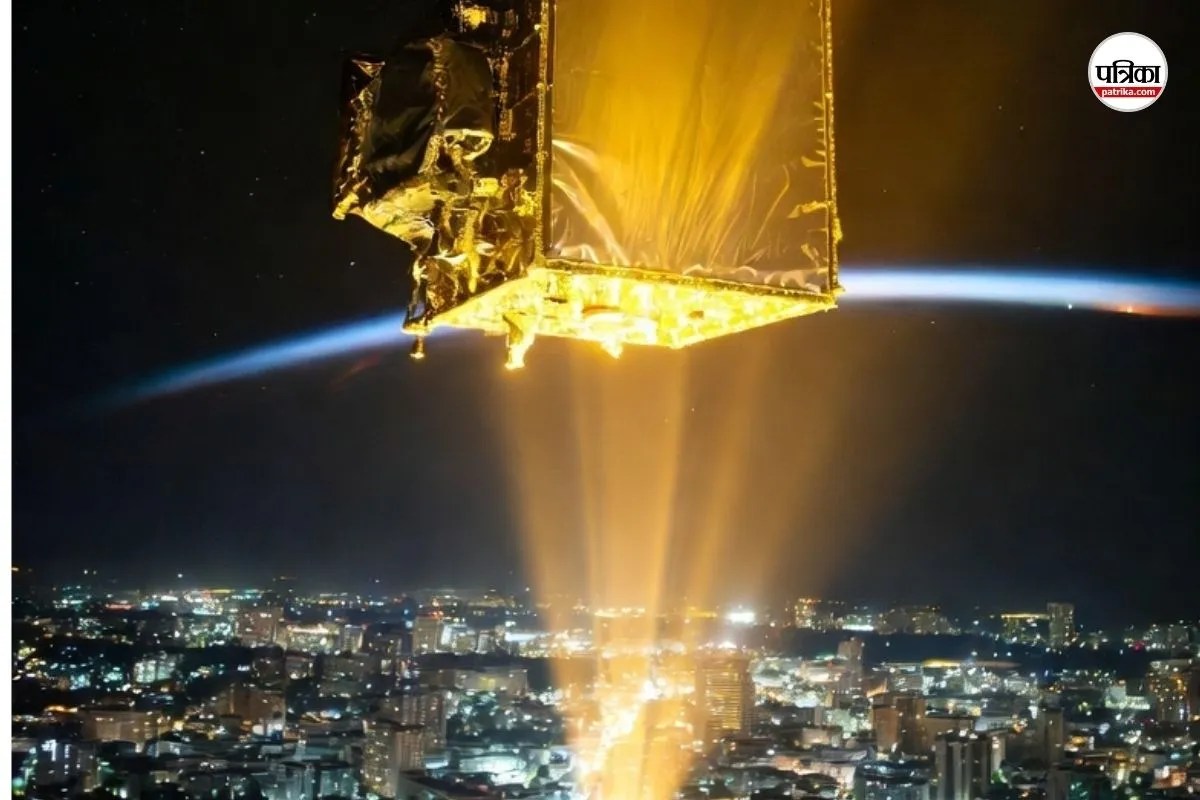
The tech press is currently swooning over a spectacularly absurd premise: orbiting mirrors reflecting sunlight down to Earth at night to power solar farms 24/7. Mainstream outlets are treating this space startup ambition like the ultimate victory over dark hours. They see a world where we no longer have to wait for dawn because a satellite constellation can beam down a localized patch of daylight on demand.
It sounds magical. It sounds futuristic. It is utterly economically illiterate.
The lazy consensus in clean tech is that because intermittent solar power needs a solution, throwing hardware into Low Earth Orbit (LEO) to bend physics is a logical next step. It isn't. Having analyzed aerospace infrastructure costs and grid mechanics for over a decade, I can tell you exactly what happens when you try to launch giant tinfoil sails into space to bypass the rotation of the Earth. You don't solve the green energy crisis; you create the most expensive, inefficient, and legally toxic light bulb in human history.
Let's dismantle the fantasy before more venture capital dollars evaporate into the upper atmosphere.
The Photovoltaic Math That Space Optimists Ignore
The core pitch of space-reflected sunlight relies on a fundamental misunderstanding of how solar panels interact with light. To make a terrestrial solar farm deliver its rated capacity, you need direct, high-intensity irradiance. We are talking about peak sunlight delivering roughly 1,000 watts per square meter under a clear sky.
When a satellite mirrors sunlight from hundreds of kilometers up, the beam spreads out drastically due to diffraction. By the time that reflected beam hits the ground, its intensity is diluted to a fraction of actual daylight. It is closer to the glow of a full moon or, at best, a weak twilight.
To concentrate enough photons onto a standard solar farm at 2:00 AM to generate meaningful megawatts, your orbital mirror cannot be the size of a billboard. It has to be kilometers wide.
Let's look at the actual physics of scale. If you deploy a flat reflector in LEO at an altitude of 500 kilometers, the divergence of the sun's rays means the minimum spot size on Earth will be roughly 5 kilometers in diameter. To illuminate that entire spot with even 10% of daytime solar intensity, you need an orbital mirror array spanning millions of square meters.
The weight of the structural trusses, the reflective material, and the attitude control thrusters required to keep that massive, ultra-thin sail from tearing itself apart under solar radiation pressure is astronomical. We are not talking about a couple of standard Falcon 9 launches. We are talking about an armada of heavy-lift rockets just to power a single mid-sized city for a few extra hours a week.
The Trillion-Dollar Launch Trap
Advocates love to point out that launch costs are plummeting thanks to reusable rocketry. They look at Starship and assume mass in orbit is effectively free. This is a fatal miscalculation.
Even at an optimistic future launch cost of $100 per kilogram, deploying the sheer volume of material needed for globally significant orbital reflectors runs into the tens of billions of dollars. And that is just the raw freight cost. It completely ignores the manufacturing expense of high-precision, ultra-light space optics and the hyper-complex deployment mechanisms required to unfurl a kilometer-wide mirror without a single wrinkle.
Now contrast that with the rapidly collapsing cost of terrestrial reality.
- Lithium Iron Phosphate (LFP) Batteries: Ground-based energy storage costs are dropping by double-digit percentages year over year.
- Overbuilding Solar Capacity: It is mathematically cheaper to build three times the solar capacity you need on the ground and pair it with massive battery banks than it is to launch a single square kilometer of aluminum Mylar into a high-radiation environment.
- Grid Interconnections: Building long-distance High-Voltage Direct Current (HVDC) lines to move power from sunny regions to dark regions is a proven, boring, and highly bankable engineering reality.
I have watched companies burn through hundreds of millions trying to bypass boring ground-level engineering with flashy aerospace hardware. Space is harsh. Things degrade. Atomic oxygen erodes thin films in LEO. Space debris turns pristine mirrors into expensive colanders. The moment an orbital mirror degrades by even 15%, your entire economic model—which was already razor-thin—collapses into the red.
The Geopolitical Nightmare of Orbital Spotlight Targets
Let's assume a startup defies the laws of economics and actually gets a functional, high-intensity mirror array into orbit. Now they have to face the regulatory and geopolitical buzzsaw.
You cannot beam a five-kilometer-wide spotlight of energy down to a solar farm without spilling light into the surrounding environment. If the targeting system drifts by a fraction of a degree, you are no longer illuminating a solar field; you are blinding a nearby suburb, disrupting local agricultural ecosystems, and frying nocturnal wildlife.
Imagine a scenario where an American startup accidentally beams a high-intensity column of light over a sensitive military installation in a rival nation because of a software glitch or a minor orbital perturbation. An unguided, high-power beam of solar radiation coming from space isn't just an energy solution—to a paranoid foreign government, it looks suspiciously like a space-based weapon.
Astronomers are already screaming about the light pollution caused by communication constellations like Starlink. Introduce giant, intentional light reflectors designed explicitly to illuminate patches of the Earth's surface, and you will face unprecedented legal warfare from every scientific body and environmental agency on the planet. The international space law lawsuits alone would outlast the operational lifespan of the satellites.
Stop Trying to Fix the Night
The obsession with space mirrors stems from a deeply flawed premise: that the night is a bug we need to fix.
The energy industry does not need 24-hour continuous solar generation from the same exact patch of dirt. It needs a diversified grid. The solution to a dark solar field in California isn't a mirror flying over the Pacific; it's a wind turbine spinning in Wyoming, a geothermal plant humming in Nevada, and a massive grid scale battery bank soaking up the afternoon surplus.
The competitor article hypes this up as a "liberation" from the natural cycle of the day. It is nothing more than a vanity project disguised as environmental salvation. It targets venture capitalists who prefer sci-fi spectacles over rigid thermodynamic spreadsheets.
Building giant mirrors in space to catch the sun is an incredibly convoluted way to avoid building batteries on the ground. It is an engineering solution looking for a problem that has already been solved by far cheaper, far safer, and far more reliable terrestrial technology.
Stop looking to the skies for salvation. The green transition will be won or lost in the mud, the concrete, and the lithium mines of Earth, not on the shiny surfaces of billionaire-funded space sails.
Take those billions of dollars earmarked for orbital mirrors and build real, tangible, boring infrastructure where it belongs: on the ground. Everything else is just expensive sci-fi theater.