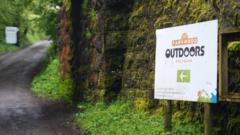
Sending your child on an outdoor school trip shouldn't require a leap of faith. You pack their bags, wave goodbye at the school gates, and expect them to return with nothing worse than muddy trousers and some good stories. But a terrifying incident in Wales reminds us that adventure activities carry real, systemic risks that aren't being managed properly.
A ten-year-old boy from Libanus Primary School in Blackwood is recovering in hospital after plunging more than 20 feet from a zip wire. The accident happened around 8pm on May 13, 2026, during an evening activity session at the Dolygaer Outdoor Centre in the Brecon Beacons, near Merthyr Tydfil. While on-site staff, teachers, and an off-duty mountain rescue professional rushed to administer first aid before paramedics arrived, the child still ended up in the Prince Charles Hospital Children's Unit with serious injuries.
This isn't an isolated mishap. It points to a broader problem with how commercial adventure centres operate under the guise of regulated educational fun. Parents deserve to know exactly what goes wrong behind the scenes and how to demand better accountability.
The Illusion of Outdoor Activity Certifications
We see logos from various adventure licensing authorities plastered across promotional brochures, and we assume everything is foolproof. It isn't. Adventure centres frequently rely on seasonal, low-wage staff to operate complex rigging systems, zip lines, and high-ropes courses.
While the Dolygaer Outdoor Centre released the standard corporate response stating they remain committed to the highest safety guidelines, these statements usually mask systemic operational gaps. When a child falls from a zip wire, the root cause almost always boils down to one of two things: mechanical failure of the equipment or human error during the safety check sequence.
Given that modern commercial zip lines use dual-line systems and redundant backup carabiners, true mechanical failure is incredibly rare. The real danger lies in the repetitive, high-volume nature of school group bookings. When an instructor has to harness 30 hyperactive ten-year-olds in a fading evening light, steps get skipped. A leg loop doesn't get tightened. A safety lanyard doesn't get clipped into the main trolley line. The result is catastrophic.
The Blind Spot in School Trip Risk Assessments
Every school trip requires a mountain of paperwork. Teachers spend hours filling out risk assessment forms, detailing everything from road transport risks to food allergies. Yet, these assessments are heavily reliant on the external provider's self-reporting.
Schools rarely have the technical expertise to evaluate the structural integrity of a zip wire platform or the training logs of the centre's staff. They trust the badges on the website. This creates a dangerous disconnect. The school thinks the centre is handling the technical safety, while the centre's staff might assume the teachers are supervising the kids' behavioral compliance on the launch platform.
When an accident occurs, the finger-pointing begins. Nicola Williams, the executive headteacher of Libanus Primary School, publicly noted that the school community is supporting the investigation into the cause of the incident. But an investigation after the fact doesn't heal a broken bone or erase the psychological trauma experienced by the young boy and his classmates who watched him fall.
What Parents Must Demand Before Signing the Consent Slip
You shouldn't stop your children from participating in outdoor education. Risk-taking is an important part of growing up, but unmanaged risk is completely unacceptable. Before you sign the next permission slip for an adventure weekend, you need to ask the school hard questions instead of just checking the "yes" box.
- What is the specific instructor-to-student ratio during high-consequence activities like climbing or zip lining? A general ratio for the trip isn't enough; you need to know the ratio on the actual ropes course.
- Does the outdoor centre use a peer-check or a double-check system for harnesses? A single instructor checking 30 kids is a recipe for distraction. A secondary staff member should always verify the connections before a child leaves the platform.
- What are the specific qualifications of the staff running the high-ropes course? Are they fully certified by a national governing body, or are they internal temporary staff trained on-site over a single weekend?
The investigation into the Dolygaer Outdoor Centre incident will eventually publish its findings, and regulations might get tweaked. But real change only happens when schools and parents refuse to accept vague safety assurances and start demanding transparent, verifiable operational practices from outdoor providers.
10-Year-Old Boy Plummets 20 Feet From Zipline
This video features a report on a strikingly similar accident where a ten-year-old fell from an indoor zip line course due to harness failures, highlighting that these traumatic incidents are a recurring issue across the adventure attraction industry.