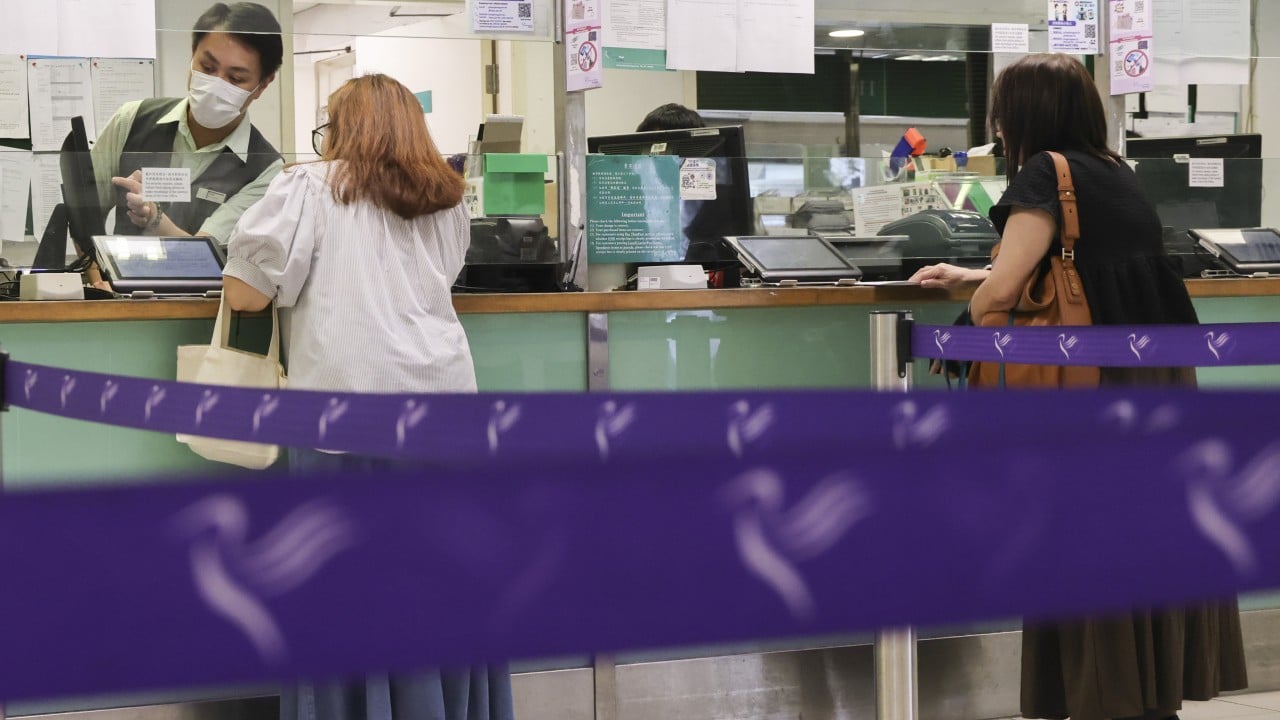
Hongkong Post is running out of money, and it's happening fast. Cash reserves are so dangerously low they won't even cover operating costs for a single year. This isn't a sudden stroke of bad luck. The government-owned postal service has logged eight straight years of deficits, bleeding nearly HK$2.9 billion along the way.
To keep the lights on, the Commerce and Economic Development Bureau just pitched a massive HK$4.6 billion lifeline to the Legislative Council. It's an emergency patch to protect basic public services, but honestly, throwing money at the problem won't fix the underlying rot. The entire business model is broken.
If you think this is just about people sending fewer birthday cards, you're missing the bigger picture.
The Brutal Numbers Behind the Decline
Traditional mail is dying, and it isn't coming back. From 2019 to 2025, the volume of mail handled by Hongkong Post plummeted by a staggering 44.5%. It dropped from over 1.1 billion items down to just 611 million. Officials expect this downward spiral to get even worse.
Compare this to the 1997-1998 financial year, when the department celebrated a peak profit of HK$1.23 billion. Today, operating under the Post Office Trading Fund (POTF)—a self-financing model established in 1995—the postal service is trapped in a financial chokehold.
Hongkong Post Financial Trajectory:
- 1997-98: HK$1.23 Billion (Peak Profit)
- 2017-25: HK$2.9 Billion (Cumulative Losses)
- 2026: Less than 1 year of cash reserves left
The growth of online shopping should have been a goldmine. Instead, nimble private commercial logistics firms swooped in and stole the market. Giants like SF Express and dedicated e-commerce delivery teams have massive resources. They built efficient networks that offer point-to-point delivery at prices the government simply cannot match.
High Costs and Heavy Bureaucracy
Why can't Hongkong Post compete? It boils down to structural baggage. Private couriers pivot in days. Hongkong Post is bound by rigid government procurement procedures and civil service remuneration policies.
An Audit Commission report previously hit out at the department's uncompetitive pricing and sluggish business habits. For instance, when the post office tried to push its local e-commerce delivery services, actual revenues fell short of internal budgets by a painful 64% to 71% over several consecutive years. They didn't even implement planned features like cash-on-delivery or automated pick-up options on time.
External factors make things worse. Terminal dues—the fees postal administrations charge each other for delivery—and skyrocketing transport costs mean the department can't cut expenses fast enough to offset the missing mail.
Where the HK$4.6 Billion Lifeline Actually Goes
The proposed rescue package isn't a blank check for salaries. It's split into two distinct financial strategies to buy time and upgrade infrastructure.
- HK$4.09 Billion Operating Support: This chunk gets spread across three financial years starting from 2027-2028. Its sole purpose is to keep local post offices open and mail carriers on the street.
- HK$510 Million Upfront Modernisation: Injected in the 2026-2027 fiscal year, this money funds a scaled-down refurbishment of the aging Air Mail Centre at Hong Kong International Airport.
The Air Mail Centre plan is telling. The government initially wanted a massive overhaul, but air mail volumes fell way short of expectations. So, they downsized. The new plan focuses on installing an automated storage and retrieval network, cutting out slow manual handling, and integrating directly with the Customs and Excise Department's digital mail clearance system.
Beyond Letters: The Social Safety Net
It's easy for tech-savvy residents to say the government should let the post office go under. But for a significant portion of Hong Kong's population, the local post office is irreplaceable.
Elderly residents rely on these branches to pay utility bills or withdraw cash via the EPS "EasyCash" system. If branches close, vulnerable communities lose a vital neighborhood anchor. The government knows this. Total privatization or aggressive branch closures would trigger a massive public backlash, which is why officials say they are keeping an "open mind" about restructuring while refusing to pull the plug.
The Global Pivot
To survive after the bailout dries up, Hongkong Post has to stop chasing local parcel deliveries that private firms do better. The official plan is to target cross-border e-commerce in specific emerging markets.
Officials are looking closely at regions with clear growth potential, specifically Southeast Asia (Asean), the Middle East, and countries tied to Beijing’s Belt and Road trade network. The goal is to position Hong Kong as a specialized regional logistics hub for public postal networks worldwide.
It's a gamble. Building these cross-border networks requires immense coordination and sharp pricing. If the department runs those programs with the same bureaucratic delay that ruined its local e-commerce attempts, the HK$4.6 billion injection will simply postpone an inevitable collapse.
If you run a local business or rely on global shipping, keep a close eye on the airport Air Mail Centre upgrades over the next two years. The automation efficiency there will tell you everything you need to know about whether Hongkong Post can actually modernise, or if it's just burning through public cash. Turn away from rigid local delivery models and look to see if the department secures concrete logistics partnerships in Southeast Asia by 2028. That's the real metric for survival.