Silence has a weight in the woods outside Deer Lakes, Pennsylvania. Not the clean, curated hush of a national park brochure, nor the polite quiet of a suburban cul-de-sac after ten o'clock. It is the heavy, damp stillness of timber reclaiming old concrete, of pine needles drifting into corners where heavy boots once pounded out rhythm against red clay and worn boards.
Walk those quiet acres today, and you are standing inside a paradox that haunts almost every corner of modern culture. We worship greatness while it is loud, televised, and profitable. We buy the sneakers, memorize the round-by-round stats, quote the press conferences like scripture. Then the lights go down. The cameras pack into pelicans. The champion goes home, or ages, or fades into memory, and the physical places where the work happened start to rot. If you enjoyed this piece, you should look at: this related article.
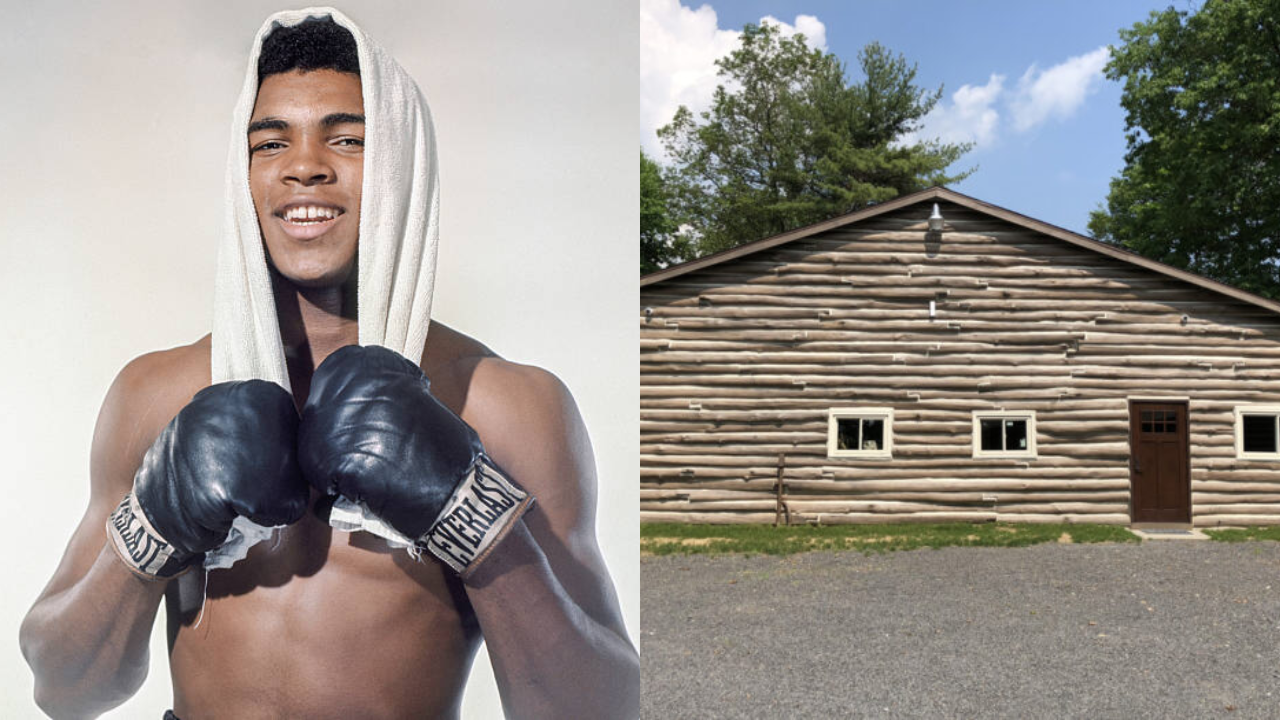
In 2016, Muhammad Ali's former training camp—the rustic sanctuary where he trained from 1972 to 1980, chopping wood, running mountain roads, hosting friends, reporters, and quiet mornings between storms—sold for $520,000. Three years later, in 2019, it reopened as Fighter's Heaven.
On paper, that is a tidy real estate transaction. A buyer steps in. A price tag appears. A door opens again. For another look on this event, refer to the recent coverage from Apartment Therapy.
Cold. Clean. Forgettable.
Anyone who has ever stood inside an abandoned room where someone poured their blood, sweat, and nerve knows the real story is never in the deed. It lives in the floorboards. It lives in whether a community decides that memory is worth the sweat of restoration or whether we let history turn into mold and scrap.
The Price Tag on a Ghost
Money does strange things to ghosts.
When a property tied to a giant like Muhammad Ali goes on the market, people immediately start arguing about numbers. Five hundred and twenty thousand dollars sounds steep if you are looking at a patch of rural Pennsylvania with aging buildings and no guaranteed cash flow. It sounds like a bargain if you are measuring it against the global gravity of one of the most famous athletes who ever lived.
Both reactions miss the point. A price tag only measures what someone is willing to pay on a given Tuesday. It cannot tell you what it costs to care for a place that belongs to everyone's imagination yet sits on private land with a leaky roof.
I have spent enough time walking through neglected spaces—old gyms with dead fluorescent tubes, community halls where the plaster curls like dried bark, forgotten training rooms smelling of mildew and old leather—to know the exact moment a building stops being a structure and starts becoming a warning. First come the broken windows. Then the squirrels. Then the local shrug: Someone ought to do something about that.
Nobody does. Until someone finally does.
To make the stakes tangible, let us trace a hypothetical visitor—call him David—arriving in the Poconos/Deer Lakes area on a gray October afternoon a few years before the gates reopened. David is not a historian with a clipboard. He is a middle-aged guy who grew up watching grainy fights on weekend television with his dad, a man whose knuckles were scarred from forty years as a pipefitter. David drives two hours just to see the place where Ali trained before Rumble in the Jungle or the fights that tested every ounce of a fighter's body and soul.
David pulls up to a gate. Weeds push through gravel. Paint peels off wood like sunburned skin. There is no grand monument, no velvet rope, no gift shop playing highlight reels. Just quiet woods and a sense that time has been left sitting out in the rain.
What does David feel in that moment? Not anger at a specific villain. Just a quiet, sinking ache. Because if the places where greatness was forged are allowed to decay, what does that say about how seriously we take the discipline behind the glory? We love the spectacle. We often neglect the grind that made it possible.
That is the invisible stake behind the 2016 purchase and the 2019 reopening of Fighter's Heaven. It is not merely about real estate or boxing trivia. It is about whether a physical place can hold onto its soul when the spotlight moves on.
Why Sanctuary Matters More Than Spectacle
Modern sports culture is built on noise. Every angle is monetized, every training montage is sliced for a fifteen-second feed, every ounce of sweat is turned into content before the towel even hits the floor. We have trained ourselves to think of athletic greatness as a product rather than a practice.
Ali's camp in Pennsylvania—often remembered alongside his better-known Deer Lake retreat—was never just a gym. Think of it as an analog sanctuary in a world that was already growing louder and more commercial. Out in the woods, away from the glare of Las Vegas marquees and Madison Square Garden spotlights, a fighter had to live with himself. He had to wake up before dawn, breathe cold mountain air, chop logs, run hills, spar in close quarters, and sit with the quiet weight of what lay ahead.
I am using a metaphor here—comparing an old-school training camp to a monastery for athletes—and like all metaphors, it has limits. Fighters are not monks. Boxing is raw, physical, violent work, full of ego, strategy, comedy, and fear. Yet the parallel holds where it counts: both require physical separation from distraction so a human being can build endurance from the inside out.
When a place like that falls into disrepair, we lose more than square footage. We lose a physical anchor for a story about effort. A photograph can show you Ali smiling in the trees or throwing combinations in front of reporters. Standing where those boots hit the ground tells your nervous system something a screen never can. You feel the isolation. You feel the distance from city lights. You understand, even if only for ten minutes, that legends are not assembled in air-conditioned comfort overnight.
The Long, Unsexy Work of Bringing a Place Back
Reopening a historic site is nothing like cutting a ribbon at a brand-new facility. New buildings smell like fresh drywall and optimism. Restored ones smell like damp wood, turpentine, elbow grease, and stubbornness.
When the camp reopened as Fighter's Heaven in 2019, that shift mattered enormously. Calling a place Fighter's Heaven is a bold choice. It carries weight. It invites visitors to step onto grounds tied to Muhammad Ali and experience a connection to boxing history without turning the entire property into a sterile glass case.
Still, I have to be honest about something that makes plenty of people uneasy: preserving history is messy, expensive, and never truly finished.
There is always a tension between keeping a place authentic and keeping it safe, accessible, and solvent. Leave everything untouched, and nature wins—rot spreads, timber sags, access becomes impossible. Over-polish every surface, and the grit disappears, leaving behind a theme park where nothing feels real. Anyone who has worked on restoration projects knows that sweet spot is narrow, and doubting whether it can be held is not cynicism. It is realism.
Yet there is something deeply moving about seeing a gate open again after years of neglect.
Imagine a young kid—let us call her Maya, another hypothetical visitor—stepping onto the grounds on a crisp spring morning after the reopening. Maya does not box. Maybe she runs track or plays soccer, or maybe she just came because her grandfather told her stories about Ali standing up for what he believed in, inside and outside the ring. She walks past the trees. She looks at the spaces where a champion once trained away from the crowds.
For Maya, history is not a date on a test or a headline from 2016 or 2019. It is spatial. It is something she can walk through, breathe in, and carry back to her own life when practice feels long and nobody is clapping.
What Stays Behind When the Crowd Leaves
Greatness is loud for a season. Memory is a lifelong negotiation.
Every generation decides which rooms to sweep out and which ones to let cave in. We can treat places like Ali's former training camp as mere footnotes—a dollar figure in 2016, a reopening date in 2019, a neat little item to skim over between errands. Or we can recognize them for what they really are: rare physical proof that discipline, solitude, and courage once lived right here in the dirt.
Some things cannot be bought for $520,000.
They have to be kept alive.
One step at a time.
In the quiet woods.