The money is staggering, but it isn’t the main story.
When lawyers announced that the Roman Catholic Archdiocese of San Francisco agreed to a $395 million settlement, the headline naturally focused on the cash. It’s a massive sum. The deal covers roughly 530 survivors who brought forward childhood sexual abuse claims against local clergy. If a federal bankruptcy judge approves the package, it will officially become the largest financial payout ever achieved within a Catholic church bankruptcy proceeding in US history.
But talk to the people who actually spent thousands of hours fighting for this, and they’ll tell you the real victory has nothing to do with bank accounts. It’s about a complete inversion of control.
For decades, the church used its institutional weight to bury allegations, protect predators, and shield its top leaders from public embarrassment. Now, a 14-point accountability plan forced into the settlement terms ensures that the secrecy machine is effectively dismantled.
Breaking the Silence in Northern California
The road to this $395 million resolution began in earnest back in 2019. That’s when California lawmakers passed Assembly Bill 218. The legislation opened a temporary, multi-year window for survivors of childhood sexual assault to file civil lawsuits that would have otherwise been blocked by aging statutes of limitations.
It triggered an avalanche of legal claims. By August 2023, facing more than 500 active lawsuits that were quickly heading toward public jury trials, the San Francisco Archdiocese took a familiar path. They filed for Chapter 11 bankruptcy protection.
Bankruptcy is a legal shield. It instantly pauses active civil litigation, freezing lawsuits in place while an organization attempts to restructure its debts. For victims, it often feels like one last corporate maneuver to delay accountability.
In this case, the survivors refused to let the bankruptcy court hide the truth.
San Francisco Archdiocese Settlement Breakdown
==================================================
Total Payout:          $395 Million
Survivors Covered:     Approx. 530
Record Achieved:       Largest bankruptcy settlement
                       by a US Catholic diocese
Legal Catalyst:        California Assembly Bill 218
The financial distribution won't be dictated by church officials. Instead, an independent allocator hired by a committee of survivors will review individual stories. Every single person gets an opportunity to share their experience, ensuring that funds are distributed equitably based on the specific, unique trauma they endured.
When Shame Changes Sides
The geographic footprint of this abuse spans decades and touches institutions across San Francisco, San Mateo, and Marin counties. The victims weren't just names on a legal docket; they were students, altar servers, and children who trusted adult authority figures.
Margie O’Driscoll is one of those survivors. She sued the archdiocese after suffering sexual abuse by a priest nearly 50 years ago while attending Marin Catholic High School in Kentfield. During a press conference following the settlement announcement, she captured the psychological toll of the decades-long cover-up.
"I, like every survivor, have carried this pain and shame along like a ball and chain for a very, very long time," O'Driscoll shared. "Ashamed and confused about what happened, scorned by the archdiocese, and sometimes not even believed by family and friends, and I think today shame is gonna change sides."
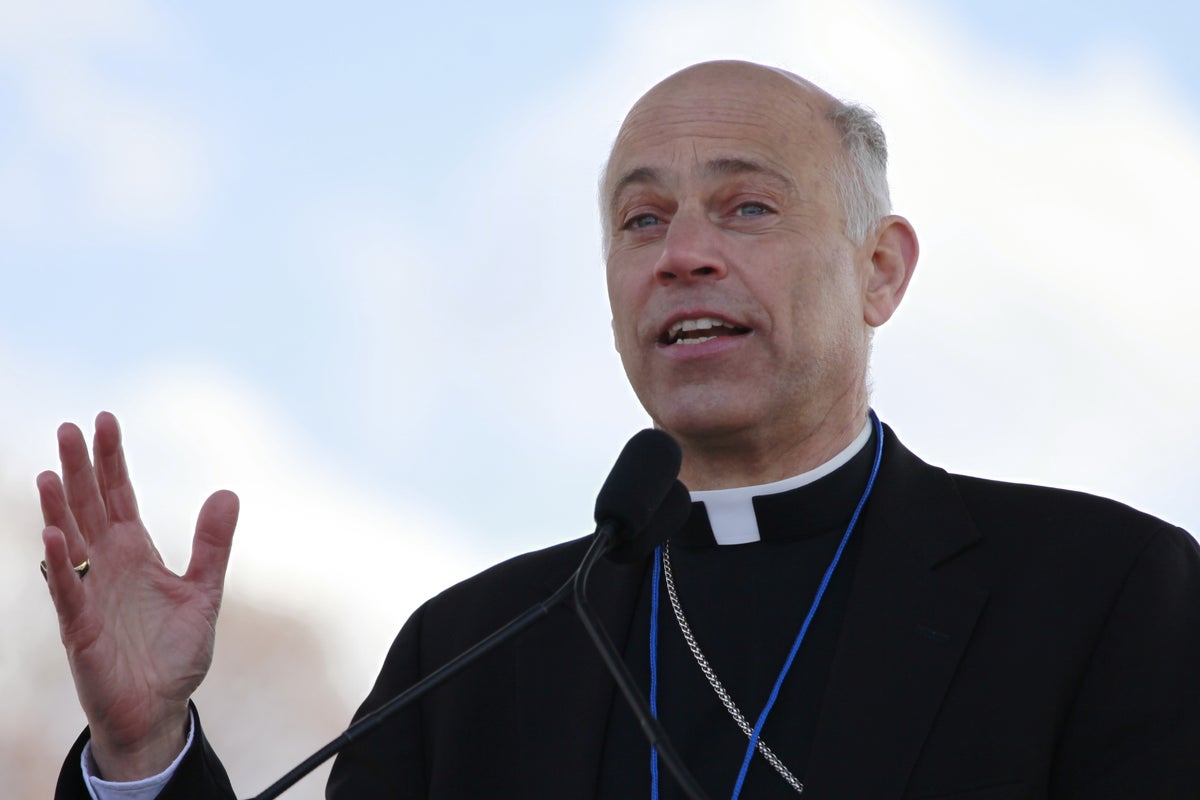
That shift is structural, not just emotional. For years, San Francisco stood out as the lone Catholic diocese in California that refused to publish a comprehensive, public list of clergy members credibly accused of sexual abuse. Archbishop Salvatore Cordileone admitted a list existed back in 2023, but the church kept it under lock and key.
The settlement strips away that protection. The archdiocese must now maintain and publish a completely transparent, up-to-date record detailing every single accused clergyman, the precise nature of the allegations, and the specific outcomes of those investigations.
Even more significant is a absolute ban on non-disclosure agreements. The church can no longer use its wealth to buy the silence of victims.
Surviving the Financial Shockwave
How does an institution actually pay out nearly $400 million without completely collapsing?
Archbishop Cordileone issued a statement acknowledging full responsibility for the historic damage, noting that the proposal offers a realistic path toward fair compensation. He also indicated that the archdiocese has no current plans to close local parishes or schools to fund the trust.
Instead, the financial pain will be shared across the entire ecosystem. Local parishes, schools, and various archdiocesan entities will be forced to contribute their own funds to meet the $395 million obligation. The archdiocese argues this shared sacrifice is required to ensure long-term legal safeguards and to force individual institutions to participate in making amends for past horrors.
While this stands as a historic bankruptcy record, it sits within a broader cascade of massive California church payouts. The Archdiocese of Los Angeles settled its non-bankruptcy claims for a staggering $880 million. The New York Archdiocese reached an $800 million deal.
The strategy of hiding behind bankruptcy protection to minimize payouts is losing its effectiveness. Survivors have learned how to use the bankruptcy process to demand systemic reforms that go far beyond financial compensation.
The New Baseline for Institutional Reform
If you're tracking how religious and secular institutions handle historical abuse claims, the San Francisco agreement establishes a brand-new playbook. The non-monetary demands negotiated by the survivors' committee are some of the most aggressive ever enacted.
The new 14-point child safety framework includes:
- Adding an actual survivor of clerical abuse to the Archdiocese Independent Review Board.
- Deploying a fully anonymous, public online reporting form for new allegations.
- Reforming internal whistleblower policies to protect employees who report misconduct.
- Creating an independently managed public record documenting exactly when church leadership learned about specific abuse allegations and what actions they chose to take.
The legal reality is clear. If you are managing an organization facing historical misconduct allegations, attempting to use Chapter 11 bankruptcy as a simple financial pause button won't work anymore. Plaintiffs' attorneys and survivor advocates now possess the blueprint to turn a bankruptcy negotiation into a forced institutional overhaul.
For the 450,000 Catholics living in the Bay Area, the coming months will reveal the true logistical cost of this settlement as individual schools and parishes begin transferring assets into the survivor trust. For the 530 survivors, the legal battle is winding down, but the work of processing a lifetime of institutional betrayal is simply moving into a new phase.
The next step requires U.S. Bankruptcy Judge Dennis Montali to formally sign off on the reorganization plan. Survivors must also vote to officially approve the details of the agreement. Anyone looking to track the rollout of the public tracker or review the upcoming changes to local parish funding can monitor updates through the U.S. Bankruptcy Court for the Northern District of California.