Diplomats sit in climate-controlled rooms talking about rebuilding cities, while miles away, air raid sirens scream through the night. It sounds like a contradiction. It isn't.
When Russia and Ukraine trade airstrikes even as reconstruction and security talks resume, they aren't abandoning diplomacy. They're actually practicing it—just with missiles instead of memos. Most casual observers see ongoing strikes during negotiations as proof that talks are failing or fake. Honestly, that's a massive misunderstanding of how modern war ends. Both Moscow and Kyiv use kinetic force during diplomatic windows to set the price of peace, lock in leverage, and prove to their domestic audiences and foreign backers that they aren't negotiating from their knees. Meanwhile, you can explore related events here: What the 2026 US Midterms Actually Mean for Donald Trump's Second Term.
If you want to understand what's really happening right now, you have to stop viewing the battlefield and the negotiating table as separate universes. They're two halves of the exact same conversation.
The Brutal Logic of Fighting While Talking
History shows us that fighting almost always intensifies right when serious talks begin. Think back to the Korean War in the early 1950s, or the final stages of the Vietnam negotiations in Paris. Nobody stops shooting just because diplomats booked flights. To explore the bigger picture, check out the detailed article by BBC News.
Why? Because the moment a ceasefire gets signed, the map freezes.
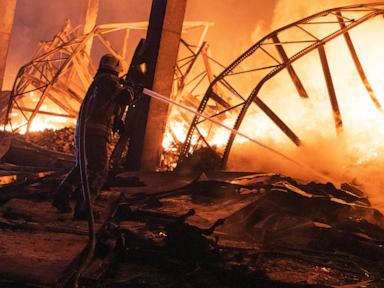
If you're a military commander in Kyiv or Moscow, and you hear that security guarantees and territorial lines are back on the agenda, your immediate instinct isn't to stand down. Your instinct is to grab every possible advantage before the whistle blows. Russia launches waves of drones and ballistic missiles at Ukrainian energy grids and logistics hubs to demonstrate that Ukraine cannot sustain a prolonged war without devastating economic pain. Ukraine responds with long-range drone strikes deep inside Russian territory, hitting oil refineries, airfields, and ammunition depots to prove that Russia's interior isn't safe either.
Each strike sends a blunt message across the table. Russia is saying, "Look at how much rebuilding your grid will cost if you don't accept our terms." Ukraine is answering, "Look at how vulnerable your war economy is if you refuse real security guarantees."
It's grim. It's exhausting. And it's completely rational from a cold, strategic standpoint.
Why Reconstruction Talks Are Happening Before the Shooting Stops
You might wonder why anyone is talking about reconstruction while buildings are still being blown up. Rebuilding a bridge while artillery is still aimed at it sounds like pouring water into a bucket with no bottom.
Yet international financial institutions, European governments, and private investors can't wait until the last shot is fired to start planning. According to assessments from the World Bank, the cost of recovery and reconstruction in Ukraine already runs into the hundreds of billions of dollars. You don't mobilize that kind of capital overnight.
There are three practical reasons reconstruction discussions run parallel to active combat:
- Securing multi-year budget commitments. Western parliaments and treasury departments operate on strict fiscal cycles. If planners don't lock in reconstruction funds and legal frameworks now, political attention will drift elsewhere once a truce is announced.
- Designing war-risk insurance mechanisms. Private companies won't touch Ukrainian infrastructure projects without sovereign-backed insurance. Negotiating those risk-sharing agreements takes months of legal legwork.
- Integrating Ukraine into European supply chains. Reconstruction isn't just about patching drywall and repaving roads. European policymakers are actively mapping how Ukraine's energy grid, rail gauges, and industrial base will connect directly to the European Union.
When officials discuss reconstruction during active airstrikes, they're also signaling permanence. They're telling Moscow that no matter how many transformers get hit this winter, Western capital is already committed to rebuilding a modern, European-aligned state.
What Security Talks Actually Mean Behind Closed Doors
The phrase "security talks" gets thrown around constantly in headlines, usually without much explanation. People hear it and assume diplomats are drafting a final peace treaty. Usually, that's not what's happening at all.
In this conflict, security talks break down into two totally different tracks.
First, there are technical de-escalation talks. These focus on narrow, specific problems—things like maritime navigation corridors in the Black Sea, prisoner exchanges, nuclear power plant safety protocols around Zaporizhzhia, or temporary pauses on hitting energy infrastructure. Notice that two countries can agree not to bomb each other's power grids while still fighting fiercely along the front lines. These limited deals test whether the other side can actually keep its word.
Second, there are long-term security guarantee frameworks. This is the core political fight. Ukraine knows from bitter experience—especially after the 1994 Budapest Memorandum failed to prevent invasion—that vague promises on paper are worthless. Kyiv wants binding defense commitments, sustained weapons pipelines, and clear integration paths with Western security structures. Russia, meanwhile, demands neutrality, limits on Ukrainian military capabilities, and recognition of its territorial claims.
Those two visions are fundamentally incompatible right now. That's why the airstrikes continue. Neither side believes the other will budge on core security demands unless forced to do so by material pain.
Common Misconceptions About Wartime Diplomacy
When news breaks that airstrikes and peace talks are happening on the same day, public commentary tends to fall into predictable traps. Let's clear up the biggest ones.
Misconception 1: Airstrikes mean the diplomats are wasting their time
Not true. Diplomats rarely expect an immediate breakthrough when they resume talks during an active war. Often, the goal is simply keeping a channel open so miscalculations don't spiral out of control, or testing minor confidence-building measures. Backchannels during the Cuban Missile Crisis and the Cold War operated while proxy wars raged globally. Talking isn't a reward for good behavior; it's a tool for managing conflict.
Misconception 2: Escalation proves one side wants endless war
Both sides have massive incentives to end the war—just on wildly different terms. Russia faces severe economic distortions, labor shortages, inflation pressures, and heavy equipment losses that can't be replaced indefinitely. Ukraine faces demographic strain, exhausted front-line brigades, and reliance on foreign aid that fluctuates with Western election cycles. Escalating airstrikes before or during talks is usually an attempt to force a faster, more favorable settlement, not an appetite for fighting forever.
Misconception 3: Reconstruction money is already flowing freely into war zones
There's a big gap between pledged reconstruction funds and disbursed cash. Right now, most international financial support goes toward keeping the Ukrainian state running—paying teachers, doctors, pensioners, and emergency repair crews—rather than launching massive, long-term mega-projects in contested regions. Heavy capital construction waits for credible air defense umbrellas and verifiable ceasefires.
The Role of Air Defense and Deep Strike Capabilities
If you look closely at the pattern of airstrikes during diplomatic windows, you'll notice a shift in targets. Early in the war, strikes were often broad and blunt. Over time, both militaries adapted their targeting to match diplomatic pressure points.
For Ukraine, securing dense, layered air defense systems isn't just a military requirement—it's a prerequisite for any economic recovery. You can't attract private investment to Odesa, Kharkiv, or Kyiv if ballistic missiles regularly slip through the net. Every Patriot, IRIS-T, or SAMP/T battery deployed around a major city directly increases the viability of reconstruction talks.
Conversely, Ukraine's development of domestically produced, long-range strike drones changed the diplomatic math in Moscow. For the first two years of the full-scale invasion, ordinary Russians felt relatively insulated from daily kinetic strikes. When Ukrainian drones began regularly reaching refineries, airbases, and industrial facilities hundreds of miles inside Russia, the Kremlin suddenly had to worry about domestic air defense gaps and fuel supply disruptions.
Suddenly, mutual restraint on infrastructure strikes became a real topic of conversation in backchannel talks. When both sides can hurt each other's economy from afar, bilateral deals to stop hitting energy assets start looking attractive to both capitals.
What to Watch Next as Talks Progress
If you're trying to read the tea leaves on whether these renewed talks will actually lead somewhere, ignore the loudest political speeches and watch concrete indicators instead.
Pay attention to target selection over the next few weeks. If both sides quietly stop hitting each other's electrical substations and oil refineries while diplomacy is underway, that's a strong sign an informal, unspoken understanding is taking hold. On the flip side, if massive barrages specifically target civilian power grids right before a scheduled diplomatic summit, someone is trying to blow up the process before it starts.
Watch the language around frozen Russian assets. A major sticking point in reconstruction talks is whether Western nations will use the principal—not just the interest—of immobilized Russian central bank reserves to fund Ukraine's rebuilding. Moscow views those funds as a massive bargaining chip. Any movement on how those assets are structured tells you how serious Western capitals are about forcing Russia to pay for the damage.
Finally, look at who sits in the room. Low-level technocrats discussing humanitarian corridors or prisoner swaps are routine. When senior intelligence chiefs, national security advisors, or close presidential confidants show up in the same city, real trade-offs are being weighed.
War doesn't end cleanly with a handshake and sudden silence. It ends messily, loudly, and violently, with negotiators arguing over maps and billions of dollars in reconstruction aid while air defenses still light up the night sky. Track the targets, follow the money, and judge both sides by what they stop bombing rather than what they promise at a podium.