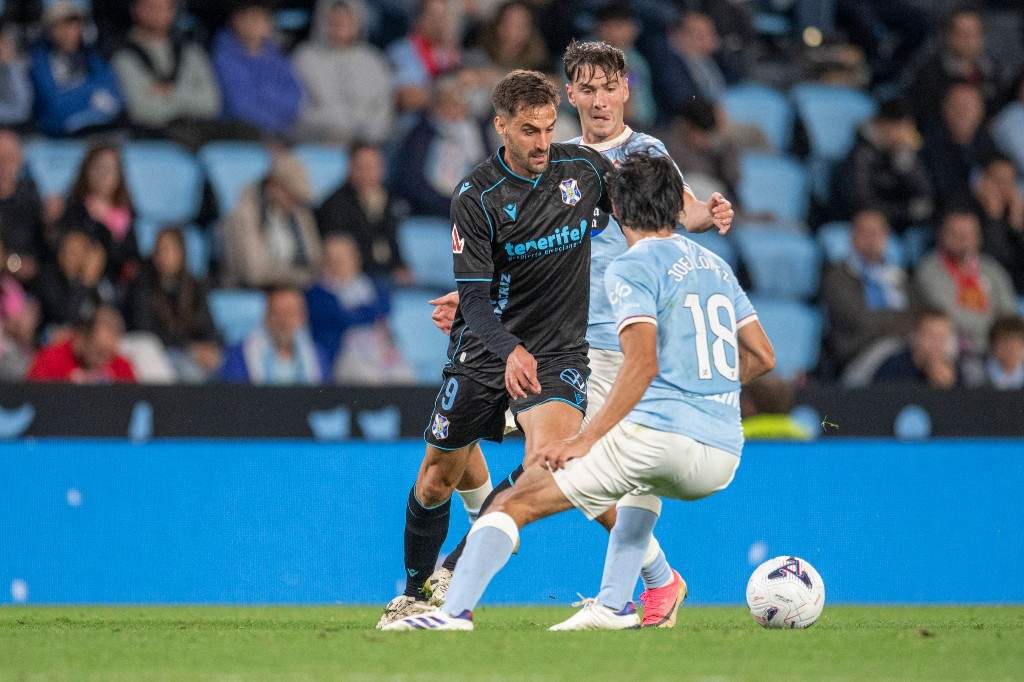
The death of a 30-year-old Spanish soccer player following an on-field collision strips away the illusion that elite conditioning makes athletes invincible. In modern professional and semi-professional football, the game is played at a velocity that turns routine physical challenges into high-impact trauma. When a veteran player dies after a match incident, the immediate headlines focus on tragedy and shock, yet the real story lies in the biomechanical forces of contemporary soccer, the limits of stadium emergency protocols, and the invisible vulnerabilities that lurk beneath peak physical fitness.
Football is rarely categorized alongside American football, rugby, or combat sports when fans debate catastrophic risk. That perception is dangerously outdated. Over the past two decades, the physical demands of Spanish and European football have shifted dramatically, with sprint distances increasing and recovery windows shrinking. Two athletes colliding at full pace generate kinetic energy comparable to a low-speed vehicular crash, except the human body absorbs that energy without helmets, pads, or crumple zones.
The Physics of a Routine Challenge
To understand how an on-field collision kills a seasoned 30-year-old athlete, you have to look at mechanics rather than bad luck. At 30, a footballer is typically at the intersection of peak tactical awareness and maximum muscular density. They know how to shield the ball, how to attack a contested space, and how to commit fully to a 50-50 challenge without flinching.
When two players converge on a loose ball—often a goalkeeper rushing off the line to meet an oncoming striker, or two defenders leaping for a set-piece clearance—neither athlete is bracing for a stationary blow. They are accelerating. Kinetic energy scales with the square of velocity, meaning a slight increase in running speed produces a massive spike in impact force.
Consider a hypothetical scenario common in weekend league matches across Spain. A winger sprints down the flank at roughly 30 kilometers per hour while an opposing fullback closes the angle at a similar speed. If their paths intersect awkwardly and a knee, hip, or skull strikes an unprotected temple, sternum, or cervical spine, the resulting trauma does not require malicious intent to be lethal.
Three Pathways to Catastrophic Trauma
Medical examiners and sports traumatologists generally point to three distinct mechanisms when blunt force on a soccer pitch proves fatal:
- Cervical Spine and Brainstem Shear: A sudden rotational whip of the head or hyperextension of the neck can sever or compress the brainstem, shutting down respiratory and cardiac signals instantly. Unlike a standard concussion, which disrupts cellular function, brainstem trauma stops basic life-sustaining reflexes before the player even hits the turf.
- Commotio Cordis: A blunt, non-penetrating blow directly over the precordium—the area of the chest wall directly over the heart—can trigger ventricular fibrillation if it lands within a 10-to-30-millisecond window of the heart's electrical cycle. The heart muscle is structurally undamaged, yet its rhythm dissolves into fatal chaos.
- Delayed Intracranial Hemorrhage: Perhaps the most insidious killer in sports. An athlete takes a blow to the head, feels dazed, perhaps even argues to stay on the pitch, and walks off under their own power. Hours later, a torn meningeal artery bleeds into the rigid confines of the skull, creating fatal pressure on the brain tissue.
The Myth of the Invincible Veteran
Fans often assume that younger, less experienced players are the ones most at risk because they lack body control. In reality, a 30-year-old veteran carries a different set of hazards. By that age, an athlete has logged thousands of competitive hours, absorbing tens of thousands of sub-concussive impacts, tackles, and hard landings.
Years of micro-trauma do not toughen the brain or the vascular system. If anything, cumulative wear can leave small vulnerabilities—an undetected vascular malformation, subtle scarring in cardiac tissue, or a neck whose stabilizing musculature is fatigued from a congested fixture list.
Spanish football culture, from the top flight down through the regional federations, also prizes resilience. Players are conditioned from academy age to bounce back up after a hard knock, to show the referee they are fine, and to avoid signaling weakness to opponents. That competitive instinct works against survival when an internal injury requires immediate immobilization.
The First Four Minutes on the Touchline
When a collision drops a player motionless onto the grass, the match ceases to be a sporting event and becomes a race against cellular hypoxia. The brain begins suffering irreversible damage roughly four minutes after oxygenated blood stops flowing. Everything depends on what happens in those 240 seconds.
In major stadiums hosting La Liga fixtures, pitch-side medical teams operate with Formula One precision. Dedicated trauma physicians, defibrillators, airway management kits, and ambulance crews sit meters from the touchline. Yet Spanish soccer is a massive pyramid, and once you step below the fully professional tiers into the Segunda Federación, Tercera Federación, or regional divisions, resources thin out rapidly.
Where Emergency Protocols Falter
Even when medical staff are present, several friction points routinely delay life-saving intervention:
- Delayed Recognition: Referees are trained to manage games, not triage trauma. A player lying face down after a collision can easily be mistaken for someone catching their breath or trying to draw a foul. Every ten seconds the referee waits before waving on the medics eats into the survival window.
- Airway Obstruction: A knocked-out athlete lying on their back frequently suffers airway blockage from relaxed tongue muscles or blood and fluids. Moving a player onto their side to clear the airway while simultaneously protecting a potentially fractured cervical spine requires practiced, two-person coordination that generalist club physios rarely drill under live-game pressure.
- Equipment Bottlenecks: Automated External Defibrillators (AEDs) are mandatory across most Spanish venues now, yet having a device locked inside a stadium medical room or behind a perimeter gate adds fatal minutes compared to having it strapped to a pitch-side responder.
The Gray Area of Concussion Substitutions
Football's lawmakers have spent years tinkering with concussion substitution protocols, attempting to remove the tactical penalty a manager faces when pulling an injured player off the pitch. On paper, giving teams an extra permanent substitution for suspected head injuries solves the problem. In practice, it remains deeply flawed.
The core issue is diagnostic uncertainty. Unlike a torn hamstring or a broken collarbone, severe internal head or chest trauma does not always present obvious external symptoms within the first two minutes. A team doctor jogs onto the pitch surrounded by twenty agitated players, forty thousand screaming fans, and a referee tapping their watch. Under those conditions, performing a thorough neurological screen is nearly impossible.
If the player answers three basic orientation questions correctly and insists their vision is clear, the pressure to let them continue is immense. Yet subdural hematomas and arterial dissections evolve slowly. By the time nausea, slurred speech, or pupil asymmetry appear in the dressing room after the final whistle, the window for simple intervention has often closed.
Temporary concussion substitutions—allowing a player to leave the pitch for ten to fifteen minutes in a quiet medical room while a temporary replacement plays—have been resisted by traditionalists who fear managers will abuse the rule to fake injuries and waste time. That resistance prioritizes tactical purity over human life. Until football accepts that a few minutes of potential gamesmanship is a negligible price to pay for accurate trauma evaluation, injured players will continue walking back into live play with ticking time bombs inside their skulls.
What Spanish Football Must Confront Now
Every fatal on-field incident triggers a familiar cycle. Federations issue statements of condolence, clubs observe a minute of silence before weekend fixtures, and commentators remark on the fragility of life. Within two weeks, the news cycle moves on to transfer rumors and title races.
Real accountability requires looking hard at the operational standards governing every sanctioned match in Spain, regardless of division or crowd size. Mandatory pitch-side trauma certification for all match-day medical personnel, non-negotiable ambulance staging with direct turf access before kickoff, and universal adoption of temporary medical substitutions would close the deadliest gaps in the current system.
Soccer will never be a zero-risk enterprise. Whenever two elite athletes launch themselves toward the same patch of grass at full speed, physics holds the final veto over human intention. The sport cannot eliminate the collision, which means its only moral obligation is ensuring that when the worst happens, the people standing on the touchline are equipped to win the four-minute war that follows.