The legal system rarely offers clean closures, and the acquittal of former Florida deputy Eddie Duran proves it yet again. When an Okaloosa County jury deliberated for a mere two hours before clearing Duran of manslaughter in the fatal shooting of U.S. Air Force Senior Airman Roger Fortson, it sent shockwaves through communities nationwide.
If you followed the case from the tragic afternoon on May 3, 2024, in Fort Walton Beach, the verdict feels jarring. Fortson was inside his off-base apartment, alone, talking on the phone with his girlfriend. Duran arrived in response to a domestic disturbance call that authorities later acknowledged was completely false. Body camera footage showed the deputy knocking, identifying himself, and within seconds of Fortson opening the door holding a legally owned handgun pointed downward, opening fire.
Why the Trial Hinged on Split-Second Perceptions
To understand how a jury reached a not-guilty verdict so quickly, you have to look closely at how criminal law treats the actions of law enforcement officers under stress. Defense attorneys argued successfully that Duran perceived an immediate, life-threatening situation the moment he saw a firearm.
During the trial, Duran testified about his state of mind, telling the court he looked into Fortson's eyes and felt entirely unwelcome and threatened. His legal team leaned heavily on standard police training doctrines, arguing that an officer isn't required to wait until a weapon is actively aimed and firing before taking defensive action.
Critics and the victim's family saw it differently. They pointed out that the department itself initially recognized the failure, firing Duran after an internal investigation concluded his use of deadly force was unreasonable. Yet, meeting the criminal standard of proof "beyond a reasonable doubt" for a law enforcement officer charged with a crime remains an exceptionally high hurdle in American courtrooms. Prosecutors acknowledged the verdict, stating that the state ultimately failed to convince every single juror that a crime had been committed under the strict confines of the law.
The Dangerous Gap Between Internal Discipline and Criminal Convictions
One of the most frustrating realities for observers of modern policing is the stark disconnect between administrative accountability and criminal accountability.
When the Okaloosa County Sheriff's Office fired Duran, it sent a clear message that his actions violated agency policy. Firing an employee requires showing a breach of professional standards. Convicting an officer of manslaughter requires overcoming legal precedents that heavily shield split-second tactical decisions made in the line of duty.
This creates a recurring public fracture. Communities watch an officer lose their job for using unjustified force, only to see a criminal jury clear them of legal guilt months later. It leaves people questioning whether the legal framework governing police use of force is fundamentally broken. When a young man can be killed in his own home after answering a knock stemming from a false dispatch report, and no criminal penalty follows, trust in the justice system frays further.
Where the Fight Moves Next
The conclusion of the criminal trial does not mean the legal battle is over. Criminal court and civil court operate under entirely different rules, burdens of proof, and legal standards.
Fortson's family, represented by prominent civil rights attorney Ben Crump, has already pressed forward with a federal civil rights lawsuit against Duran, former Sheriff Eric Aden, and other entities. Civil litigation does not carry the same standard of proof required for a criminal conviction. It focuses on constitutional violations, organizational negligence, and civil liability rather than prison time.
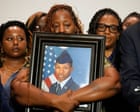
For the Air Force community, Fortson's friends, and his grieving mother Chantemekki Fortson, the criminal verdict is a devastating blow, but the demand for systemic change persists. Accountability won't arrive overnight, and it won't come via a single courtroom outcome. Watch how the civil proceedings unfold, because that arena will determine whether institutional practices face a true reckoning.
This video provides a detailed discussion and breakdown of the controversial verdict and the community reaction surrounding the Roger Fortson trial.