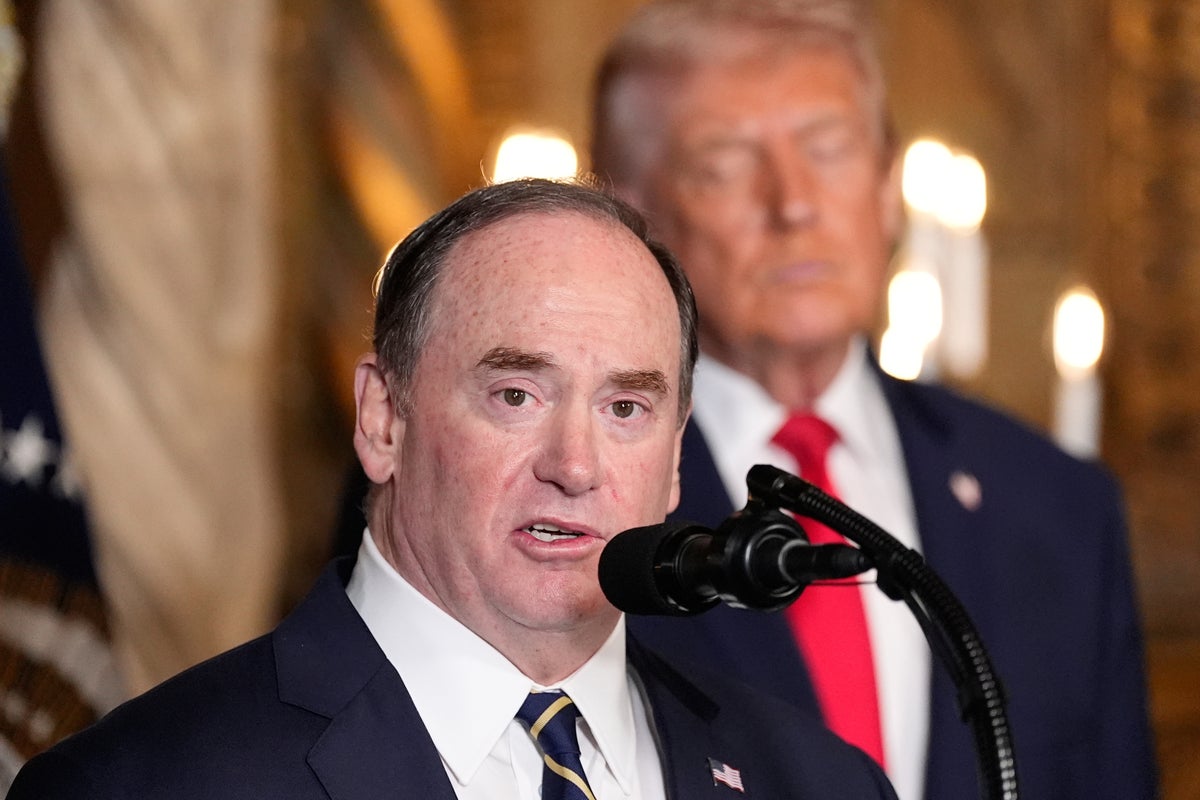
Military leadership isn’t just about barking orders and looking sharp in a uniform. It’s about a shared code, a set of rules that keep the whole machine from grinding into a halt. When Richard Spencer, the 76th Secretary of the Navy, was forced out in late 2019, it wasn't just another name on the long list of departures from the Trump administration. It was a massive collision between political will and the military justice system.
If you’re wondering why this old headline is worth your time today, it’s because the questions it raised haven't gone away. Can a Commander-in-Chief overrule the internal ethics of the elite forces? What happens when "good order and discipline" becomes a political talking point?
Spencer’s exit was messy, public, and tied directly to the case of Navy SEAL Eddie Gallagher. Understanding this isn't just a history lesson; it's a look at the fragile line between civilian oversight and political interference.
The Gallagher Case That Broke the Chain of Command
The spark that lit the fuse was Chief Petty Officer Edward Gallagher. He was a decorated SEAL, but his 2017 deployment to Iraq ended in a court-martial that read like a horror story. He was accused of stabbing a wounded, teenage ISIS prisoner to death and shooting civilians.
While a military jury eventually acquitted him of the most serious charges—murder—they did convict him of posing for a photo with the prisoner’s corpse. For the Navy, this was a stain on the "quiet professional" image they cultivate. They moved to demote him and take away his Trident pin, the literal badge of honor that marks you as a SEAL.
Then came the tweets.
Donald Trump didn't see a discipline problem; he saw a "warfighter" being treated unfairly by the "deep state" of the Pentagon. He ordered Gallagher’s rank restored. This put Richard Spencer in an impossible spot. He wanted to maintain the Navy’s internal review process—a peer board of SEALs—to decide if Gallagher should keep his pin. Trump wanted it stopped immediately.
Why Mark Esper Actually Fired Spencer
There’s a lot of noise about Spencer resigning in protest, but that’s not exactly what happened. He was fired by Defense Secretary Mark Esper. Why? Because Spencer tried to play both sides and got caught.
While Spencer was publicly insisting that the military process must play out, he was privately making back-channel deals with the White House. He reportedly told them that if they stayed out of the way, he would personally ensure Gallagher retired as a SEAL with his pin intact.
- The Problem: He didn't tell his boss, Mark Esper.
- The Result: Esper felt Spencer had lost his "candor" and undermined the chain of command.
- The Fallout: Spencer was out, and the Navy was left reeling.
It’s easy to frame this as a hero-vs-villain story, but it’s more complex. Spencer was trying to protect the institution from what he saw as "shocking and unprecedented intervention." But in doing so, he broke the very rules of transparency he claimed to defend. It's a classic example of how high-stakes politics can make even the most seasoned leaders stumble.
Geopolitical Chaos and the Timing of the Ouster
The timing of this departure couldn't have been worse. While the Navy was losing its top civilian leader, the U.S. was basically on a hair-trigger with Iran. This wasn't some distant "what-if" scenario. By early January 2020, just weeks after Spencer left, the U.S. killed Iranian General Qasem Soleimani, and Iran responded by raining ballistic missiles down on American bases in Iraq.
You don't want a leadership vacuum in the Pentagon when you’re on the brink of a hot war. The "ouster" wasn't just a personnel issue; it was a readiness issue. When the top of the pyramid is shaking, the people on the ground feel the vibrations.
The Cost of Ignoring Military Ethics
In his parting shot—a scathing op-ed in the Washington Post—Spencer didn't hold back. He said Trump "has very little understanding of what it means to be in the military."
That’s a heavy statement. It strikes at the heart of the "profession of arms." Being a soldier or a sailor isn't just a job; it’s a commitment to a specific legal framework called the Uniform Code of Military Justice (UCMJ). When that framework is bypassed because a case looks good on cable news, it tells every other sailor that the rules are negotiable.
Think about it. If you’re a mid-level officer trying to discipline a subordinate for a legitimate infraction, and that subordinate knows they can get a presidential pardon by making enough noise online, your authority is dead. That’s the "good order and discipline" Spencer was talking about.
Moving Forward Without the Noise
If you’re looking to understand the current state of military-civilian relations, start by looking at the Spencer firing. It set a precedent for how much a president can—and will—intervene in low-level military discipline.
Don't just take the headlines at face value. Here’s how to actually digest this kind of news:
- Look for the UCMJ angle: Whenever a politician talks about military justice, check if they’re respecting the established legal process or trying to bypass it.
- Watch the chain of command: Notice who is talking to whom. When leaders go around their direct superiors, it usually ends in a firing, not a solution.
- Assess the "warfighter" rhetoric: The term is often used to shield individuals from accountability. Ask if the behavior in question actually aligns with professional military standards.
The Spencer ouster was a warning. It showed that the biggest threats to military stability don't always come from foreign adversaries; sometimes, they come from inside the room where the decisions are made.


