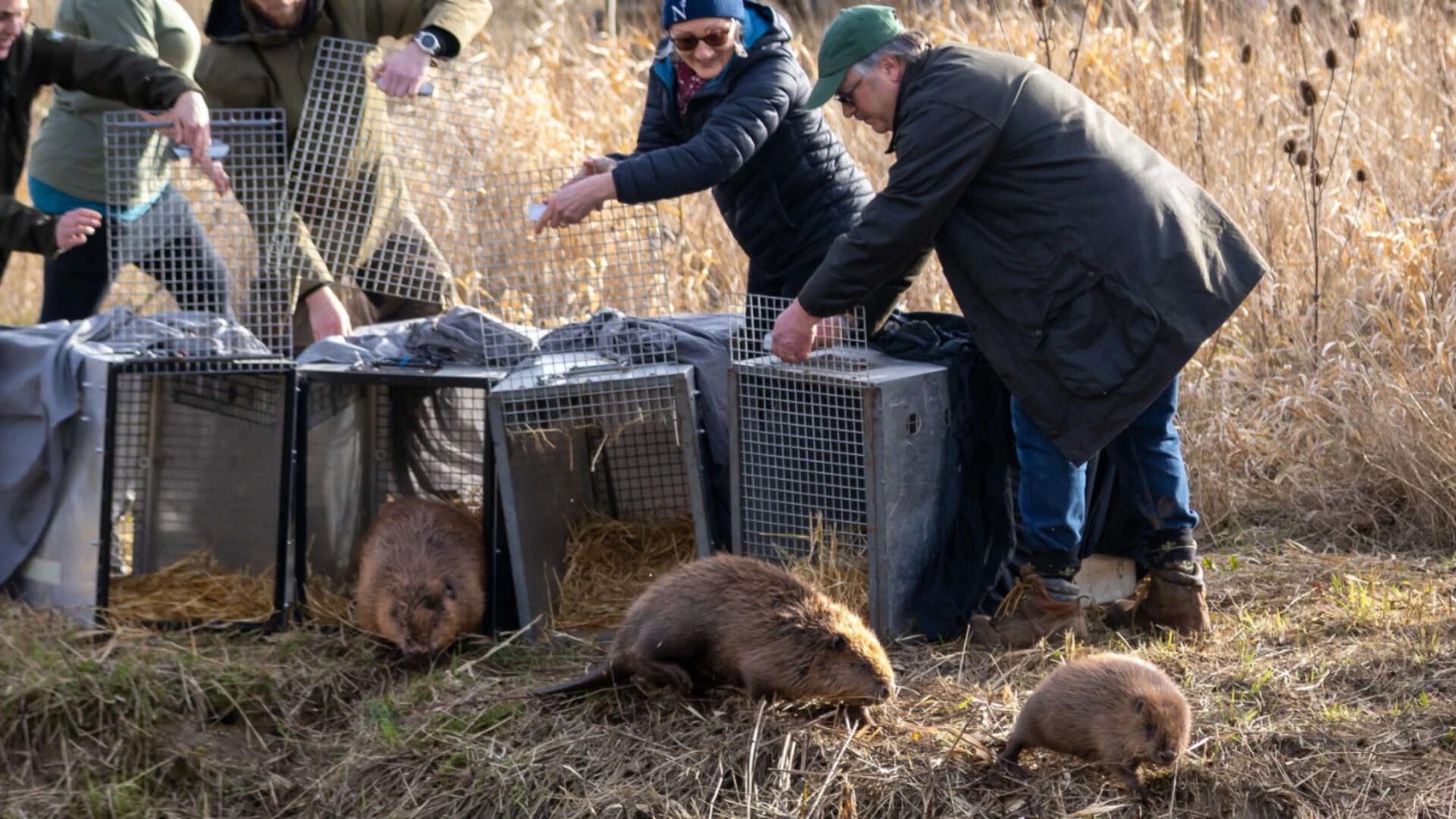
The British government bought 1,525 acres of depleted, intensive farmland at Blenheim with a radical plan to let nature take over and prove that ecological restoration can turn a profit. At the center of this experiment are beavers, deployed as low-cost hydrological engineers to revive a degraded landscape. While early results show remarkable biodiversity gains and new revenue streams from carbon credits and ecotourism, the project exposes a harsher economic reality. Rewilding is not a magic bullet for the agricultural crisis. It is a highly specialized asset-management strategy that requires massive upfront capital, decades of patience, and a willingness to absorb long-term regulatory risks that most independent farmers cannot afford.
The True Cost of Dead Dirt
For decades, the acreage in question was pushed to its absolute limits by conventional agriculture. Synthetic fertilizers and heavy machinery yielded short-term crops at the expense of long-term soil viability. The result was a classic piece of exhausted British countryside. The soil was compacted, depleted of organic matter, and virtually dead. When heavy rains hit, the ground acted like concrete. Water sheeted off the surface, carrying topsoil into local river systems and exacerbating downstream flooding.
From an economic perspective, land in this condition is a liability masquerading as an asset. The inputs required to squeeze a profit from dead dirt grow more expensive every year. When the government stepped in, the objective was to test whether biological intervention could repair this broken system cheaper and faster than mechanical engineering.
Enter the Eurasian beaver. Once native to Britain before being hunted to extinction four centuries ago, these mammals are being reintroduced not out of sentimentality, but for their structural utility.
Hydrological Warfare on a Budget
To understand why beavers are financial assets, you have to look at the cost of traditional flood mitigation and water management. Engineering a concrete retention basin or installing complex drainage networks costs millions. Beavers do equivalent work for the price of a few willow branches.
When introduced into a degraded river catchment, beavers immediately begin building dams to create deep water refuges. These structures alter the entire landscape.
- Flow Attenuation: Beaver dams slow down the velocity of water during peak storm events. This reduces the peak flow downstream, mitigating flood risks for nearby towns that would otherwise require state-funded flood defenses.
- Silt Traps: The ponds created behind the dams act as natural settling filtration systems. Suspended sediment and agricultural runoff settle out of the water, cleaning the channel before it moves downstream.
- Water Retention: By holding water high in the landscape, beavers re-wet the surrounding fields, raising the local water table and creating a buffer against summer droughts.
The ecological transformation is swift. Insects return, followed by birds, amphibians, and small mammals. The lifeless farmland becomes a functioning wetland ecosystem within a few seasons.
The New Balance Sheet
A beautiful wetland does not pay the bills on its own. The commercial transition of the Blenheim site relies on monetizing ecosystem services, a market that is still finding its footing in the UK.
The primary revenue driver comes from Biodiversity Net Gain (BNG) credits and voluntary carbon markets. Under current UK planning laws, developers must ensure their projects leave the natural environment in a measurably better state than before. If they cannot achieve this on-site, they must buy biodiversity units from landowners who have created ecological value elsewhere. By transforming 1,525 acres of dead dirt into a thriving wetland, the project generates high-value BNG units that can be sold to corporate buyers.
Ecotourism and educational programming provide secondary income streams. People pay to see a wilded landscape and glimpse a species that hasn't walked these lands in hundreds of years. Guided tours, photography blinds, and rustic accommodations turn ecological restoration into a service industry.
The operational overhead drops significantly once the initial infrastructure is established. There are no tractors to fuel, no expensive chemical fertilizers to purchase, and no seeds to buy. Nature handles the labor.
The Hidden Risks of the Rewilding Model
The financial narrative looks clean on paper, but independent farmers who attempt to replicate this model quickly hit a wall. The math changes when you do not have the financial backing of a state treasury or a massive charitable trust.
First, the transition period involves a total collapse of traditional revenue. When fields are taken out of production, crop income drops to zero immediately. Biodiversity markets and carbon credits do not pay out instantly; they require rigorous baseline surveying, validation, and long verification periods. A family farm cannot survive a three-year cash flow desert while waiting for the local beaver population to build enough dams to qualify for a credit payout.
Second, there is the problem of border friction. Beavers do not respect property lines. A dam built on a rewilded estate can easily back up water onto a neighbor's active potato field, ruining their harvest. This creates intense local conflict and potential legal liabilities. In a densely populated country like Britain, managing the interface between wild spaces and commercial agriculture requires constant, expensive human intervention.
+------------------------------------+------------------------------------+
| Traditional Agriculture            | Rewilding Strategy                 |
+------------------------------------+------------------------------------+
| High annual input costs (chemical) | High initial capital setup costs   |
| Predictable seasonal cash flow     | Delayed, speculative credit income |
| Degrades asset base over time      | Appreciates natural capital values |
| Vulnerable to commodity pricing    | Vulnerable to regulatory shifts    |
+------------------------------------+------------------------------------+
The regulatory framework is similarly volatile. The market value of a BNG credit depends entirely on government mandates. If a future administration decides to ease restrictions on developers to spur housing construction, the value of those environmental credits could crater overnight. Relying on government policy to sustain a business model is a high-risk gamble.
The Limits of Biological Engineering
The Blenheim experiment proves that nature can repair itself with remarkable efficiency if human activity steps out of the way. It demonstrates that dead agricultural land can be repurposed into a functioning asset that generates alternative revenue streams.
It does not, however, solve the wider systemic challenge of food production. Every acre of land converted from agriculture to wetland is an acre that no longer produces calories. Britain already imports a significant portion of its food. Widespread replication of this model simply shifts the environmental burden of intensive farming to other nations, often with weaker ecological regulations.
Rewilding is a viable luxury asset class for institutional investors, public bodies, and ultra-wealthy landowners looking to diversify their portfolios and capture green subsidies. For the average working farmer holding a mountain of debt, a family to feed, and a tractor that needs parts, the beaver is not a savior. It is a wild animal that floods the south pasture and threatens the year's yield. Turning dead land into a profitable wilderness requires wealth, time, and scale. Without those three ingredients, the project remains an exceptional anomaly rather than a blueprint for the future of the British countryside.