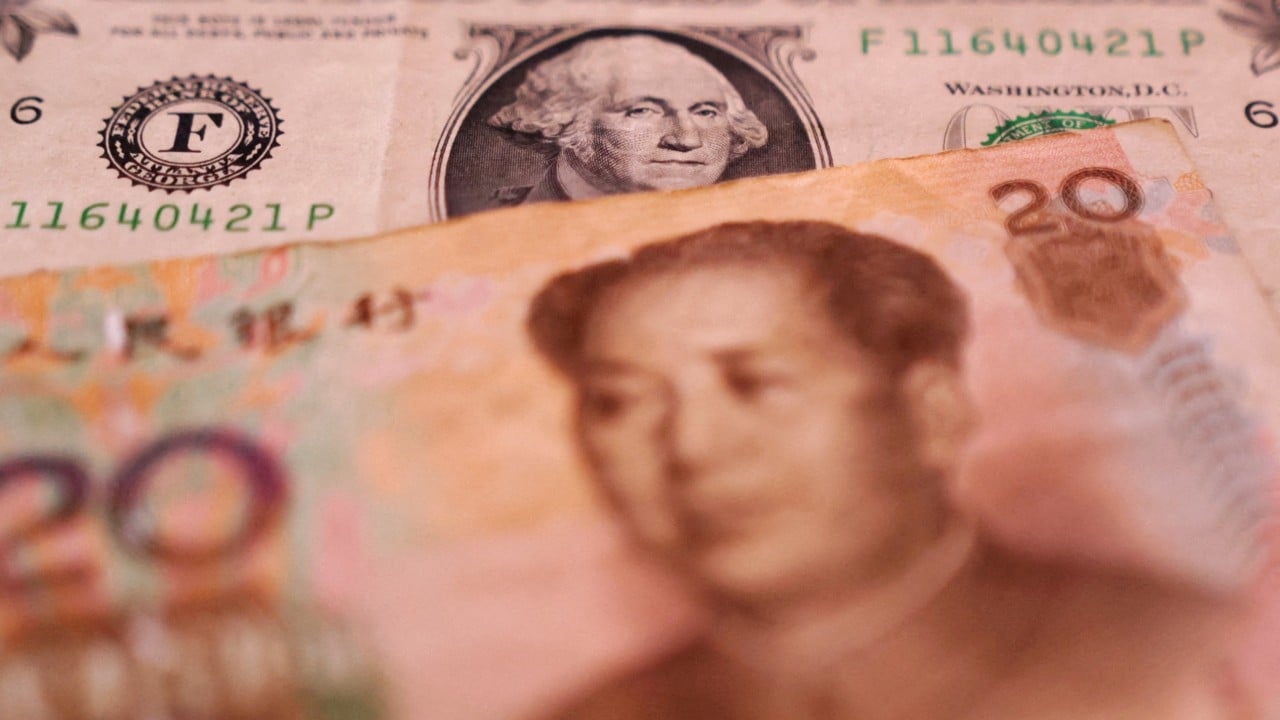
Everybody loves to panic when interest rate spreads blow wide open. Right now, the yield gap between Chinese and US government bonds sits at a massive 300-plus basis points, with American ten-year Treasuries pushing near 4.8 percent while Chinese equivalents hover much lower. For standard financial commentators, this spread spells immediate doom. They look at the low returns on mainland debt compared to American assets and immediately scream capital flight. They are missing the entire plot.
A yawning yield gap isn't just a vulnerability for Beijing. It creates an accidental opening to rewrite the rules of cross-border finance. If you look past the standard mainstream panic, you will see a structural window for the internationalization of the yuan that very few people are talking about.
Why Cheap Money Changes the Trade Game
Money flows where it earns the highest return. If US Treasuries offer hefty yields while Chinese government bonds trade significantly lower, capital should theoretically stampede out of the mainland. Yet, that catastrophic capital flight hasn't materialized in the way bears predicted. Why? Because the mechanics of borrowing and investing operate on two completely different rulebooks.
While lower yields hurt passive asset allocation, they create a paradise for borrowers. High US interest rates make dollar-denominated debt punishingly expensive to service. When you need cash to fund global supply chains, manufacturing operations, or green energy projects across developing markets, borrowing cheap currency beats paying top dollar every single time.
Beijing's top policy thinkers have started viewing this dynamic through a different lens. Instead of obsessing over matching Federal Reserve rate hikes—which would choke domestic growth inside China—the People's Bank of China can lean into its monetary independence.
Think about how global trade actually moves. When a corporate conglomerate in Asia or Europe needs credit to finance multi-million dollar shipments, they look at the bottom line. If they can issue dim sum bonds or tap offshore yuan financing at a fraction of the cost of US dollars, the choice becomes simple economics. Corporations aren't ideological. They follow the lowest cost of capital. High US financing costs are pushing borrowers straight into alternative currency channels.
The Plumbing Problems That Still Need Fixing
Before you assume the yuan is about to dethrone the dollar overnight, let's inject some reality into the conversation. China still faces massive hurdles that low yields alone cannot fix. Capital controls remain tight. Full convertibility is still a distant dream. Global institutional investors cannot treat yuan-denominated assets the same way they treat US Treasuries because they cannot pull their cash in and out of the mainland without running into regulatory friction.
Foreign ownership of Chinese government bonds hovers below five percent. Compare that to the deep, hyper-liquid markets of Wall Street, and you realize that market depth matters more than a temporary interest rate advantage. A low yield gap only works if the plumbing underneath is sturdy enough to handle massive volume without breaking.
To turn this yield gap into a permanent shift, Beijing has to upgrade its offshore financial architecture. That means expanding hedging instruments, scaling up offshore clearing banks in financial hubs, and giving international firms better ways to park and recycle surplus yuan without hitting bureaucratic roadblocks.
What the Data Actually Tells Us
Official figures reflect the scale of the challenge. The yuan makes up just over two percent of global official reserves, while the US dollar still commands more than half of the total pie. You cannot bridge that gap through interest rate differentials alone.
As market analysts point out, the yuan's low-interest cost advantage can only become a long-term driver of internationalization if it gets deeply embedded in real economy and trade activity. Improving liquidity, transaction convenience, and the collateral function of yuan-denominated assets matters far more than simply chasing yield levels.
The next time you read a headline panicking over the widening bond spread, remember that global currency shifts happen through utility, not just returns. If Beijing plays its cards right, expensive dollars might just hand the yuan its greatest opening yet.