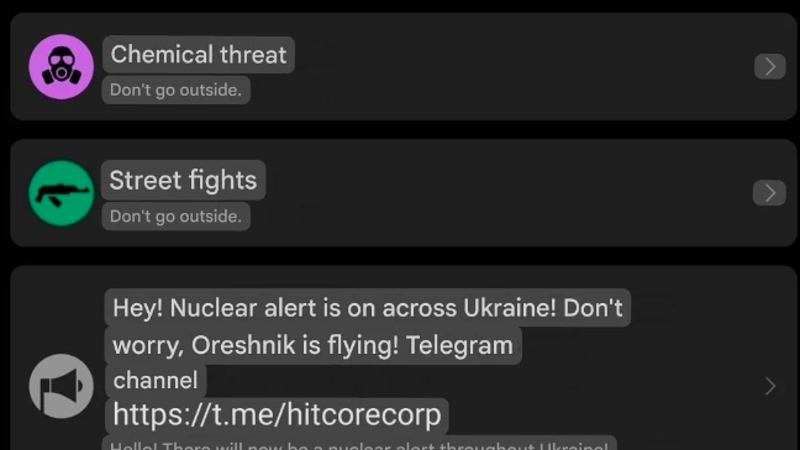
Imagine sitting down with your morning coffee, flipping on the radio or television, and hearing a piercing air-raid siren followed by a calm voice telling you to put on a gas mask and head to the nearest bomb shelter immediately because a missile strike is underway. That exact scenario played out for millions of ordinary citizens across multiple Russian cities—and it wasn't a drill authorized by the Kremlin.
When headlines broke about Russians being sent a terrifying alert warning of an imminent nuclear attack, the internet immediately went into overdrive. People assumed World War III had started. Others thought Moscow was staging a psychological operation to rally domestic support for the war in Ukraine. Both guesses were wrong. What actually happened was a coordinated cyberattack targeting commercial radio stations and regional television networks, exploiting glaring vulnerabilities in Russia's emergency broadcasting infrastructure.
If you want to understand modern hybrid warfare, you don't need to look at hypersonic missiles or tank columns. Look at how easily hackers hijacked the airwaves to induce mass panic across a nuclear-armed superpower.
How the Fake Nuclear Alert Hijacked Russian Airwaves
The incident wasn't an isolated glitch in one town. Between February and March 2023—and in several recurring waves afterward—hackers breached the servers of major commercial media holding companies, including Gazprom-Media, which owns popular outlets like Relax FM, Avtoradio, Humor FM, and Comedy Radio.
Suddenly, mid-broadcast, the music stopped. Listeners in cities like Moscow, Belgorod, Voronezh, Kazan, Nizhny Novgorod, and Krasnodar heard the unmistakable wail of a civil defense siren. A synthesized voice cut in: "Attention, attention, an air raid alert is being announced. Everyone immediately proceed to shelters. Attention, attention, threat of a missile strike."
Days later, a second wave hit regional television channels. Viewers watching morning shows in Moscow and Sverdlovsk saw their screens replaced by a black-and-yellow radiation warning symbol. The accompanying audio instructed residents to take potassium iodide pills, put on gas masks, and seal their windows.
Russia's Ministry of Emergency Situations (EMERCOM) scrambled to put out statements on Telegram, insisting the alerts were completely fake and the result of a server hack. By then, the damage was done. Social media feeds were flooded with dashcam videos of drivers pulling over in confusion and residents filming their TV screens in disbelief.
Why Commercial Broadcasters Were the Weak Link
You might wonder how random hackers could trigger a national emergency broadcast. Surely nuclear warning systems are air-gapped and locked behind military-grade encryption, right?
In theory, yes. In practice, modern civil defense relies heavily on commercial infrastructure to reach the public quickly. Under Russian law, private television and radio networks are required to integrate automated emergency override systems into their broadcasting pipelines so state authorities can push urgent warnings out during disasters.
Here's the problem with that setup. While the core government command centers might be heavily fortified, the satellite feeds and IP-based studio-to-transmitter links used by private radio conglomerates are nowhere near as secure. Hackers didn't need to breach the Kremlin's nuclear command network. They only needed to compromise the commercial server infrastructure feeding audio and video streams to local transmitters. Once inside, injecting a pre-recorded emergency broadcast file was remarkably straightforward.
The Real Purpose Behind Information Warfare
Let's be honest about what the attackers were trying to achieve. Nobody launches a cyberattack on commercial radio stations expecting to destroy physical military hardware. The target wasn't infrastructure—it was the psychological state of the Russian public.
For months prior to these hacks, Russian state media had been framing the conflict in Ukraine as a distant "special military operation" that wouldn't disrupt daily life in major cities like Moscow or St. Petersburg. The Kremlin spent immense effort projecting an image of total stability and invulnerability at home.
By hijacking the emergency alert system, the attackers shattered that illusion in thirty seconds. Suddenly, the war wasn't something happening hundreds of miles away on a news ticker. It was right there in your kitchen, telling you to grab your kids and run to the basement.
- Erosion of trust in official channels: When fake alerts go out repeatedly, citizens stop believing real ones. If an actual drone strike or industrial accident occurs later, people hesitate before taking cover.
- Exposure of state incompetence: Having to publicly admit on Telegram that your national emergency broadcast network got hijacked is deeply embarrassing for a government that prides itself on tight information control.
- Psychological exhaustion: Constant low-level anxiety wears down public morale far more effectively than foreign news broadcasts ever could, especially since independent media inside Russia had already been largely banned or blocked.
Ukrainian officials didn't formally claim credit for the broadcasts, though Ukrainian cyber-activist groups and sympathetic hackers widely celebrated the chaos online. Regardless of who typed the commands, the operation proved that a small team with modest technical resources could trigger nationwide anxiety without firing a single shot.
Why False Nuclear Alarms Are Terrifyingly Common
If you think Russia is the only country vulnerable to catastrophic alert failures, think again. Emergency warning systems around the world have a troubling history of human error, software bugs, and security flaws.
Look at January 2018 in Hawaii. Residents across the islands received a push notification on their phones reading: "BALLISTIC MISSILE THREAT INBOUND TO HAWAII. SEEK IMMEDIATE SHELTER. THIS IS NOT A DRILL." People lowered their children into storm drains. Drivers abandoned their cars on highways. It took thirty-eight agonizing minutes for the Hawaii Emergency Management Agency to issue a correction. That wasn't even a cyberattack—an employee simply clicked the wrong dropdown menu option during a shift-change drill and had no quick way to undo it.
A few days after the Hawaii debacle, Japan's public broadcaster NHK accidentally sent out a mobile news alert claiming North Korea had launched a missile and urging citizens to take shelter. They corrected it within five minutes, blaming an operator error.
Even back during the Cold War, automated warning systems nearly ended civilization multiple times. In 1979, a technician at NORAD loaded a training tape simulating a full-scale Soviet nuclear strike into the live operational computer system. For six tense minutes, U.S. bomber crews scrambled to their planes and missile silos prepared to launch before radar operators confirmed no Soviet missiles were actually in the air.
The common thread across every single one of these incidents isn't evil genius. It's the friction between speed and verification. Emergency alert systems are specifically engineered to bypass normal bureaucratic delays because, in a real nuclear strike, you have maybe ten to fifteen minutes before impact. If you require five layers of authorization to send a warning, everyone dies before the message goes out. If you streamline the system so one person—or one compromised server—can push an alert instantly, you invite false alarms and cyber hijacking.
How to Spot a Fake Emergency Alert Before Panicking
Living in an era where state-sponsored hackers, deepfakes, and compromised broadcast networks are routine realities means you can't afford to blindly trust every alarming message that flashes across a screen. At the same time, ignoring a legitimate warning can get you killed.
If you ever hear an air-raid siren or receive an unexpected emergency notification warning of a missile strike or radiation leak, your response needs to be fast, methodical, and grounded in reality rather than panic.
- Cross-check multiple independent channels immediately. A genuine nuclear or large-scale military alert will never appear on just one radio station or a single local TV channel. Check your mobile phone's government wireless emergency alert system, tune into state-run national broadcasters, and check official municipal social media feeds simultaneously. If your favorite music station is screaming about missiles while the main national news channel is airing a cooking show, you're listening to a hack.
- Look at the formatting and audio quality. Official emergency broadcasts follow rigid, standardized templates. Hacked alerts frequently feature slightly unnatural synthesized voices, mismatched graphic aspect ratios, or outdated civil defense symbols pulled from internet image searches. In the Russian TV hacks, keen-eyed viewers noticed the radiation warning graphic looked amateurish compared to standard EMERCOM broadcasts.
- Move to an interior room while verifying. You don't need to freeze in place while checking your phone. Walk away from windows toward an interior hallway, bathroom, or basement while you verify the information. Taking basic physical precautions costs you nothing and protects you from shattered glass if an actual blast occurs.
- Ignore forwarded screenshots on messaging apps. During a crisis or a cyberattack, Telegram, WhatsApp, and X become breeding grounds for recycled footage from old drills, video game clips, and deliberate disinformation. Rely strictly on primary official sources rather than panicked group chats.
The New Reality of Digital Civil Defense
Cybersecurity researchers have warned for years that critical civilian infrastructure is dangerously exposed. Power grids, water treatment plants, hospitals, and broadcast networks were built for reliability and convenience, not to withstand relentless digital warfare.
Following the broadcast hacks, Russian authorities announced emergency audits of regional telecom providers and pushed through stricter network segmentation rules to isolate emergency override channels from commercial studio servers. Other nations took quiet notes, too. When you digitize civil defense to make it faster and cheaper to run, you automatically expand the attack surface for anyone with an internet connection and a grudge.
The next time a major geopolitical crisis flares up, don't expect the first shot to come from a missile silo. It'll probably come through your speakers, disguised as a warning from the very people supposed to keep you safe. Keep a battery-powered AM/FM radio in your emergency kit, know where your nearest concrete shelter or basement actually is before you ever need it, and train yourself to verify before reacting when the sirens start wailing.