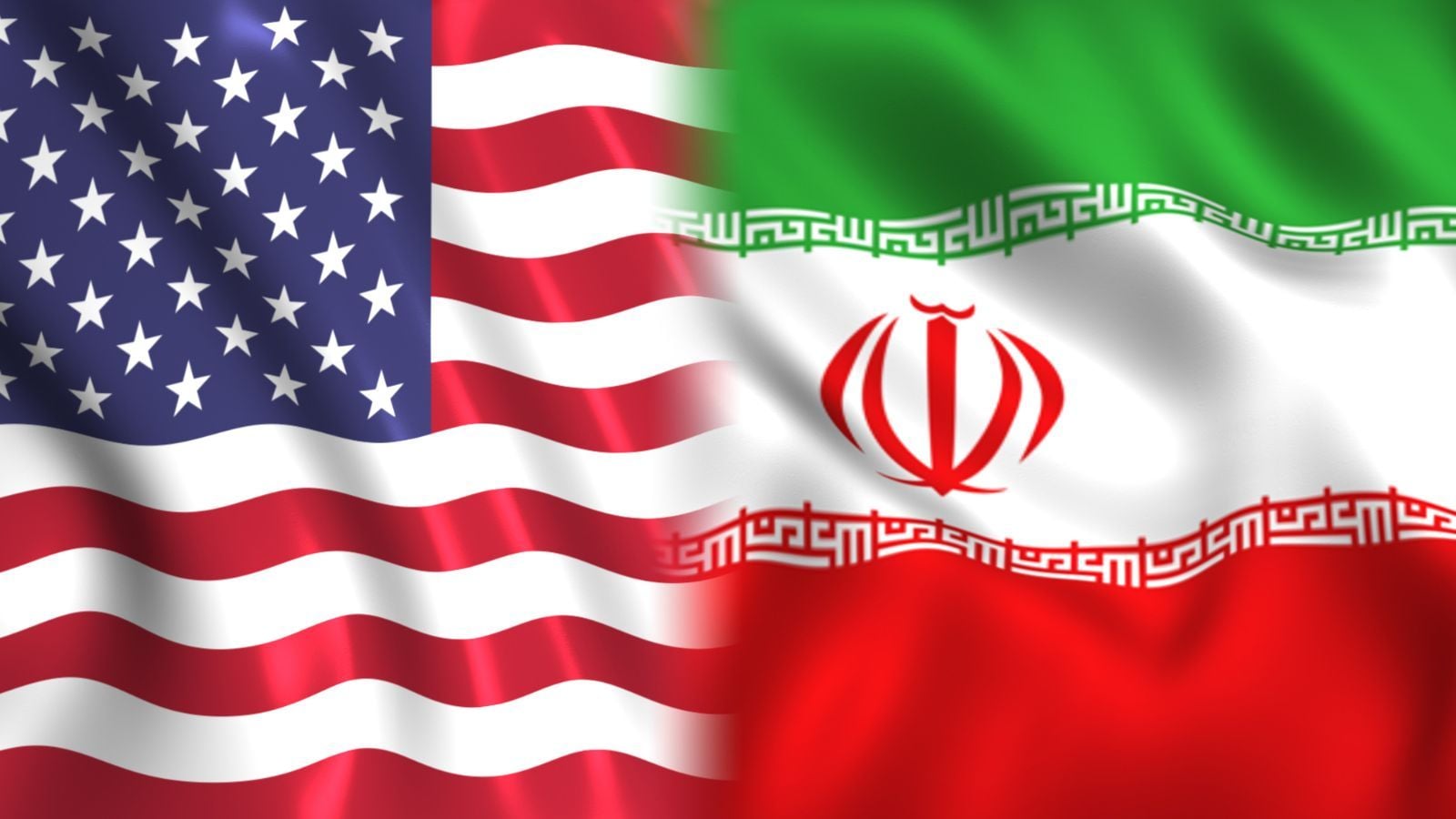
Vice President JD Vance insists that Donald Trump will never allow a US-Iran conflict to spiral into another American "forever war," framing the administration's posture as one of decisive deterrence rather than open-ended nation-building. That is the political promise. Yet the structural realities of Middle Eastern asymmetric warfare, global energy chokepoints, and decentralized proxy networks mean that starting a kinetic campaign against Tehran is vastly easier than dictating when—or how—it ends.
Washington has heard this guarantee before. Every modern president who ordered strikes in the Persian Gulf or the Levant promised limited objectives, surgical precision, and a clean exit. The problem is that war is not a unilateral software update where one side clicks "execute" and then closes the window. Once missiles fly across the Persian Gulf, the adversary gets a vote on the timeline.
The Illusion of the Clean Strike
The core thesis behind the Vance-Trump doctrine is straightforward. Traditional Washington hawks spent two decades trying to remake Middle Eastern societies at the barrel of a rifle, bleeding trillions of dollars and thousands of American lives in Iraq and Afghanistan. The current administration rejects that playbook entirely. Instead, the strategy relies on overwhelming, localized force—hitting hard, degrading specific capabilities, and walking away before American boots get stuck in the mud.
On paper, this looks like ruthless pragmatism. In practice, it assumes Iran operates like a conventional 20th-century nation-state that will absorb a heavy blow, calculate the unfavorable balance of power, and sue for peace.
Tehran does not play that game. For over four decades, the Islamic Republic has built its military doctrine specifically to survive and retaliate against a vastly superior conventional superpower. Iran knows it cannot win a head-to-head air or naval battle against the United States. So it refuses to fight one.
Instead, Iranian military planners rely on strategic depth and horizontal escalation. If Washington strikes nuclear facilities, missile depots, or leadership targets inside Iran, Tehran does not need to sink an American aircraft carrier to declare victory or inflict intolerable pain. It only needs to widen the geographic footprint of the conflict until the economic and political costs force Washington back to the negotiating table—or pull the Pentagon deeper into the quagmire it swore to avoid.
How Regional Proxies Break the Escalation Ladder
To understand why a limited US-Iran conflict rarely stays limited, look at the Axis of Resistance. This is not a rigid chain of command where a general in Tehran pushes a button and every militia salutes. It is a loose, resilient franchise of heavily armed non-state actors stretching from the Red Sea to the Mediterranean.
Consider the mechanics of a hypothetical exchange. Suppose the United States conducts a three-day air campaign to neutralize specific Iranian ballistic missile sites. Washington declares mission accomplished and pulls its bombers back.
Two days later, Houthi forces in Yemen launch anti-ship ballistic missiles at commercial tankers transiting the Bab el-Mandeb Strait. Simultaneously, Shia militias in Iraq and Syria fire rockets at bases housing American advisors, while Hezbollah threatens northern Israel with precision-guided munitions.
At that moment, the White House faces an impossible choice:
- Absorb the hits and look weak domestically while global shipping insurance rates skyrocket and American service members take casualties.
- Retaliate across four different countries, instantly transforming a "limited" strike on Iran into a multi-front regional campaign with no clear exit ramp.
This is the exact trap that turns surgical strikes into multi-year entanglements. You cannot deter an ideologically driven militia with a one-off bombing run, especially when their domestic legitimacy depends on absorbing punishment and continuing to fire.
The Strait of Hormuz and the Global Economy
Any serious analysis of a US-Iran conflict has to leave the Pentagon briefing rooms and look at maritime insurance markets in London and oil trading desks in Singapore. Roughly a fifth of the world's petroleum liquids consumption passes through the Strait of Hormuz, a narrow waterway between Oman and Iran that narrows to just 21 miles wide at its tightest point.
Iran does not need to permanently blockade the strait to trigger a global financial shock. Mining the shipping lanes, seizing a handful of supertankers, or swarming vessels with fast-attack craft and explosive drones is enough to make commercial maritime insurance prohibitively expensive overnight.
When tankers stop moving, crude prices spike. When crude prices spike, inflation roars back across Western economies.
For an administration whose political capital is heavily tied to domestic economic performance, cheap energy, and fighting inflation, a sustained closure or disruption of the Strait of Hormuz is an existential threat. Clearing sea mines and suppressing mobile coastal anti-ship missile batteries along Iran's rugged, 1,500-mile coastline is not a weekend operation. It requires weeks or months of continuous naval and air operations, constant intelligence, surveillance, and reconnaissance patrols, and the suppression of inland logistics hubs.
Before anyone realizes it, "no forever wars" becomes a permanent naval blockade and an open-ended air campaign just to keep oil flowing to global markets.
The Nuclear Threshold Dilemma
There is another, darker paradox built into the promise of a short, sharp conflict. For years, Iran has maintained a status known as nuclear latency—possessing the technical knowledge, enriched uranium stockpiles, and centrifuge capacity to build a weapon, while stopping just short of assembling one.
If the United States launches major conventional strikes against Iran without committing to full-scale regime change or ground occupation, what lesson does the surviving leadership in Tehran draw?
History offers a grim answer. Leaders who give up nuclear ambitions or remain non-nuclear—like Muammar Gaddafi in Libya or Saddam Hussein in Iraq—often end up dead or deposed following Western military intervention. Leaders who cross the nuclear threshold—like Kim Jong Un in North Korea—become virtually untouchable by conventional military force.
A limited American bombing campaign that damages, rather than completely obliterates, deeply buried facilities like Fordow risks pushing hardliners in Tehran to make the final political decision to sprint for a bomb. Once the inspection regimes are dead and the centrifuges are moved to undisclosed, fortified tunnels, Washington is left with two bad options: accept a nuclear-armed Iran, or launch a massive, sustained military campaign to prevent it. Neither option looks like a quick win.
Domestic Politics and the Sunk Cost Trap
Political rhetoric is designed for the campaign trail and the Sunday morning talk shows; military reality is governed by friction, miscalculation, and human psychology. JD Vance is tapping into a genuine, bipartisan exhaustion among American voters who are tired of policing the Middle East while domestic infrastructure crumbles and strategic competition in the Indo-Pacific demands attention.
That exhaustion is real. So is the administration's desire to avoid repeating the catastrophic mistakes of 2003.
Yet history shows that presidents rarely enter conflicts intending to stay for a decade. Lyndon Johnson did not want a forever war in Vietnam. George W. Bush did not campaign on nation-building in Afghanistan. Barack Obama promised to end wars, only to find himself ordering air campaigns in Libya, Iraq, and Syria.
Wars expand because of sunk costs and credibility traps. Once American blood is spilled—a downed pilot captured on state television, a destroyer hit by an anti-ship missile, a barracks struck by a drone—the political calculus shifts instantly. Walking away ceases to look like restraint and starts looking like defeat. Advisors demand proportionality, allies demand reassurance, and the military asks for expanded authorities to protect forces already in theater.
The Leverage Problem in Coercive Diplomacy
Coercive diplomacy—using the threat or limited use of force to compel an adversary to change behavior—only works when the target believes two things: that the pain will stop if they comply, and that the pain will get exponentially worse if they do not.
When an administration publicly declares that it will never allow a conflict to become a long war, it inadvertently hands the adversary a strategic roadmap. Tehran hears that Washington has a low tolerance for prolonged casualties, drawn-out timelines, and economic disruption.
Iranian strategists do not need to defeat the United States military; they simply need to outlast the White House's political attention span. By dragging out negotiations, absorbing initial strikes, and maintaining a steady drumbeat of low-level harassment across the region, Tehran can test whether Washington's pledge to avoid a forever war actually means a willingness to blink first when things get messy.
True deterrence requires ambiguity, credible staying power, and the willingness to bear sustained costs—the exact things politicians promise voters they will never have to pay. Until Washington reconciles its desire for low-cost hegemony with the brutal realities of asymmetric warfare, the gap between promising a short war and actually fighting one will remain perilously wide.