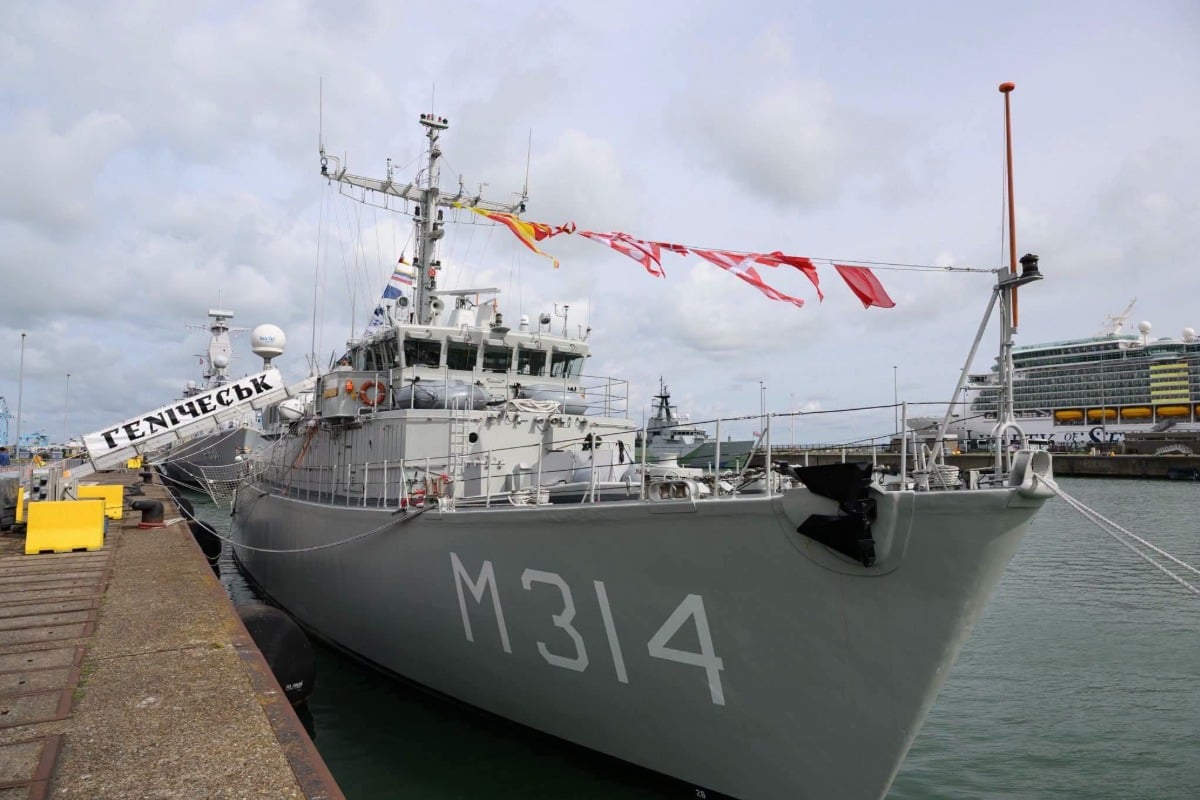
Ukraine has just secured its fifth mine-countermeasures vessel, quietly expanding a specialized fleet that cannot currently enter the Black Sea. While headlines trumpet each acquisition as an immediate boost to Kyiv's maritime power, the tactical reality on the water is entirely different. This is not a fleet built for the current hot war. It is an expensive, high-stakes gamble on the post-war economic survival of a nation.
The arrival of these warships, primarily transferred from European allies like the United Kingdom and the Netherlands, represents a long-term strategy to break Russia’s economic stranglehold. Right now, international maritime law blocks these vessels from passing through the Turkish Straits. Yet, Kyiv continues to accept them, train crews, and fund their maintenance in foreign ports.
Understanding this paradox requires looking past the immediate battlefield and focusing on the black mud of the Danube and the deep waters of the Bosporus.
The Bosporus Bottleneck
A warship without access to the sea is a floating classroom. Under the 1936 Montreux Convention, Turkey holds the keys to the Black Sea, regulating the passage of naval vessels through the Dardanelles and Bosporus straits.
When Russia launched its full-scale invasion, Ankara invoked Article 19 of the convention. This effectively barred warships belonging to belligerent nations from transit. The rule applies to Russian reinforcements, but it equally blocks Ukraine’s newly acquired mine-clearing vessels from entering their home waters.
Consequently, Ukraine’s fifth minehunter is trapped in Western Europe.
Crews are training in the North Sea and the English Channel. They are learning the intricate mechanics of specialized sonar, remote-controlled underwater vehicles, and clearance diving. It is a highly technical discipline. A single mistake means detonation. While this training builds vital institutional knowledge, it does nothing to clear the estimated hundreds of sea mines currently drifting near Odessa or clogging the vital shipping lanes used for grain export.
The Economic Ghost Fleet
Why spend precious military capital on ships that cannot fight today? The answer lies in maritime insurance and sovereign survival.
Ukraine’s economy relies heavily on agricultural exports. When the full-scale war disrupted traditional shipping routes, global insurance syndicates raised premiums to prohibitive levels. A commercial vessel risking a journey through a combat zone faces catastrophic financial liability. Even if Ukraine completely pushes Russian forces back, the Black Sea will remain a graveyard of drifting naval mines for years, if not decades.
Black Sea Shipping Risk Factors:
+------------------------------------+------------------------------------+
| Immediate Threat                   | Long-Term Economic Impact          |
+------------------------------------+------------------------------------+
| Drifting contact mines             | Insurers refuse hull coverage      |
| Subsurface acoustic mines          | Grain silos bottlenecked inland    |
| Targeted missile strikes           | Foreign commercial fleets avoid    |
|                                    | regional ports                     |
+------------------------------------+------------------------------------+
Commercial shipping companies will not return to Ukrainian ports at scale until the waters are certified clean. By assembling a five-ship mine-countermeasures fleet now, Kyiv is shortening the timeline between the cessation of hostilities and the restoration of normal trade. They are buying future economic stability with today's diplomatic capital.
The Technical Reality of Modern Mine Warfare
Sea mines are the improvised explosive devices of the maritime world. They are cheap to produce, easy to deploy, and extraordinarily difficult to find.
The vessels Ukraine is acquiring use specialized glass-reinforced plastic hulls. This non-magnetic construction prevents the ships from triggering magnetic influence mines. Standard steel hulls would be suicide in a modern minefield.
These ships operate like floating laboratories. They slow to a crawl, using high-frequency hull-mounted and towed sonar arrays to map the seabed. When an anomaly is detected, operators do not send divers first. They deploy remote operated vehicles (ROVs) equipped with cameras and specialized sensors to identify the object.
Clearance Methods
- Acoustic Disruption: Emitting specific sound frequencies to trick smart mines into detonating prematurely.
- Mechanical Sweeping: Towing cutting wires to sever the mooring cables of old-fashioned contact mines, forcing them to the surface where they can be destroyed by small arms fire.
- Mina Disposal Systems: Deploying small, disposable underwater drones that carry a demolition charge directly to the mine, destroying both the drone and the hazard in a controlled blast.
This is tedious, frustrating, and agonizingly slow work. Clearing a single square mile of ocean can take days of methodical scanning.
The Geopolitical Counter Weight
Russia’s naval strategy in the Black Sea has shifted from active dominance to asymmetric denial. After losing several high-profile surface combatants, including the cruiser Moskva, Moscow pulled its major surface vessels back to the safety of Novorossiysk.
Instead of traditional naval battles, the Kremlin relies on subsurface denial. Submarines can still seed the waters with modern acoustic and pressure-sensitive mines. This creates a invisible blockade that does not require a massive surface fleet to enforce.
          [Submarine/Aircraft deploys mine]
                        |
                        v
          [Mine settles on seabed or floats moored]
                        |
       +----------------+----------------+
       |                                 |
       v                                 v
[Magnetic Sensor]                 [Acoustic Sensor]
(Triggers on steel hull)          (Triggers on engine noise)
       |                                 |
       +----------------+----------------+
                        |
                        v
                   [Detonation]
Western allies understand this dynamic. Providing Ukraine with air defense systems keeps cities alive today; providing them with minehunters ensures the state can feed itself tomorrow. It is a division of labor that satisfies the immediate tactical needs of the Ukrainian armed forces while laying the groundwork for a massive post-conflict clearing operation that Western nations prefer not to send their own sailors to conduct.
The Logistics Crisis in Exile
Maintaining a navy in exile introduces massive bureaucratic and logistical headaches. These five ships require spare parts, specialized ammunition, and continuous dry-dock maintenance.
Currently, this burden falls on host nations in the United Kingdom and Northern Europe. Ukrainian sailors are living abroad, operating under foreign logistics networks, and burning through training budgets provided by international donors. This setup is sustainable only as long as Western political will remains intact.
If political tides shift and funding dries up, Ukraine risks owning a fleet of highly advanced, non-operational museum pieces sitting in Scottish or Dutch harbors. The cost of maintaining these ships without an active domestic naval infrastructure is a quiet drain on Kyiv’s resources.
The Dangerous Transition Period
The day the war ends, the race begins. The Montreux Convention restriction will lift for Ukrainian vessels returning to their home ports. However, sailing five small, lightly armed minehunters from the North Sea, through the Mediterranean, and into the Black Sea is a logistical journey fraught with risk.
Russia will still possess a significant submarine capability. The transit route will be monitored closely. Furthermore, entering the Black Sea is only the first step. The ships will immediately face a dense environment of legacy Soviet mines alongside modern variants dropped during the conflict.
The first operational deployment of this fleet will not be a victory lap. It will be an incredibly perilous clearance operation conducted under the eyes of a hostile neighbor that retains the ability to re-contaminate the water at a moment's notice. Ukraine's five-ship fleet is a calculated gamble that the future peace will last long enough for them to clear a path toward economic survival.