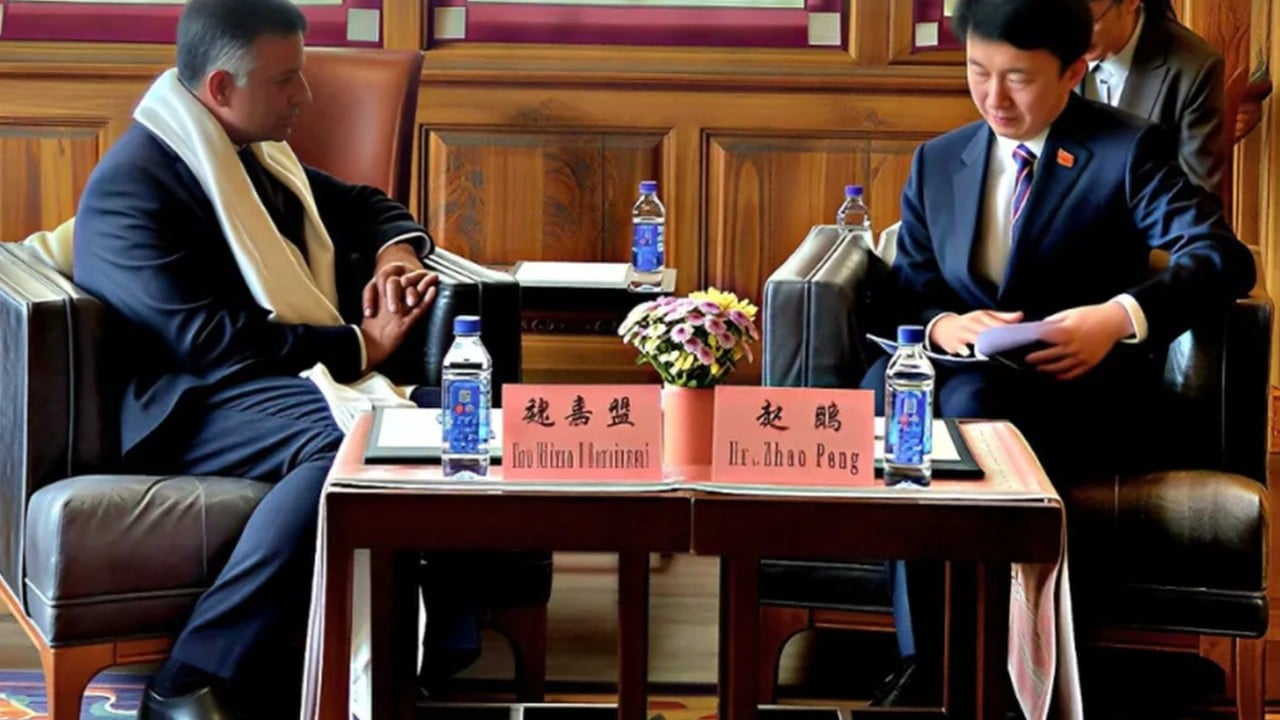
India has quietly dispatched its newly appointed Ambassador to China, Vikram Doraiswami, straight into the highly sensitive Tibet Autonomous Region. Ostensibly, the diplomat arrived in Lhasa to inspect municipal infrastructure and review logistics for the upcoming Kailash Manasarovar Yatra pilgrimage. However, the timing of this high-profile expedition—occurring just weeks after Doraiswami assumed his post in Beijing—signals an intentional diplomatic maneuver that extends far beyond coordinating tourist buses and pilgrim rest houses. By placing its top envoy on Tibetan soil immediately after resetting relations, New Delhi is testing China's post-standoff diplomatic flexibility while securing its strategic interests in the critical border zone.
The trip represents a calculated utilization of religious diplomacy to anchor state-to-state relations. It follows the dramatic resolution of the four-year military standoff along the Line of Actual Control (LAC) late in 2024, which had frozen high-level contact and halted bilateral interactions. Don't forget to check out our previous coverage on this related article.
The Cloak of Pilgrimage
Securing safe passage for thousands of Indian nationals crossing into Chinese-controlled territory for the Kailash Manasarovar Yatra is a legitimate, high-stakes consular responsibility. The pilgrimage only resumed last summer after a grueling five-year hiatus caused by the pandemic and the 2020 Galwan Valley clash. When Doraiswami sat down with Zhao Peng, the vice-chairman of the Tibet Autonomous Region, the official agenda focused on medical stations, high-altitude safety, and emergency communication networks.
Yet, using cultural and religious commonalities to manage geopolitical friction is an ancient statecraft mechanism. If you want more about the background here, Associated Press offers an informative breakdown.
For New Delhi, the pilgrimage offers a legitimate, non-provocative reason to demand access to a region that Beijing keeps under tight lock and key. Foreign diplomats are routinely denied independent travel to Tibet. By insisting on personal oversight of the yatra route, India ensures its diplomatic eyes are physically on the ground in Lhasa and the surrounding border infrastructure. It forces the Chinese regional apparatus to brief Indian officials directly, establishing a line of administrative contact that bypasses the rigid filters of the Ministry of Foreign Affairs in Beijing.
The Mandarin Factor and Regional Access
Doraiswami brings a distinct tool to this assignment. He is a fluent Mandarin speaker who previously served early-career stints in Hong Kong and Beijing. His adoption of the Chinese name "Wei Jiameng"—meaning one who forms an excellent alliance—and a recent viral social media video touring the Indian embassy in fluent Mandarin have been heavily publicized by Chinese state media.
This linguistic capability alters the dynamic of regional diplomacy.
When an envoy can converse directly with provincial authorities without the mediation of state-appointed interpreters, the nature of information gathering changes entirely. In a closed political ecosystem like Tibet, nuance is everything. Direct communication allows New Delhi to read between the lines of bureaucratic briefings, assessing the true mood of regional administrative leaders and the logistical realities of China’s western frontier.
The Border Infrastructure Undercurrent
Behind the polite diplomatic smiles and shared dinners in Lhasa lies the unyielding reality of the Indo-Tibetan border. While the military standoff along the LAC officially thawed following the meeting between Prime Minister Narendra Modi and President Xi Jinping at the Kazan SCO summit in late 2024, the structural rivalry has not vanished. Both nations have spent the last half-decade aggressively fortifying the Himalayas.
China has transformed the Tibetan plateau through a massive campaign of dual-use infrastructure development, constructing:
- Military-grade airfields capable of operating in high-altitude environments.
- All-weather highway networks running parallel to disputed border sectors.
- Highly organized border villages designed to solidify territorial claims.
India has countered this build-up with its own accelerated infrastructure program along the northern frontier.
By stepping onto the Tibetan plateau so early in his tenure, the Indian envoy is conducting an invaluable reconnaissance of the operational environment. Observing the quality of infrastructure, the efficiency of local transportation networks, and the general state of development in Lhasa provides the Indian state with empirical data to verify Beijing's compliance with recent border stabilization agreements.
Managing the Resumption of Ties
The diplomatic choreography of this visit is delicate. Following the late 2024 resolution, both nations have gingerly restored vital channels, including flight connections and regular visa processing. Yet public sentiment in India remains deeply skeptical of Beijing's long-term intentions, while China watches India’s growing defense alignment with Western powers with deep suspicion.
A direct visit to Tibet allows India to address these complexities simultaneously. It signals to the domestic Indian audience that New Delhi is actively defending its cultural rights and ensuring the safety of its citizens abroad. Concurrently, it signals to Beijing that India views Tibet not merely through an abstract geopolitical lens, but as a practical neighborhood reality requiring hands-on engagement.
The move demonstrates that India refuses to be frozen out of discussions regarding a territory that directly abuts its northern borders. It asserts an enduring Indian stake in the stability, accessibility, and management of the Himalayan frontier.